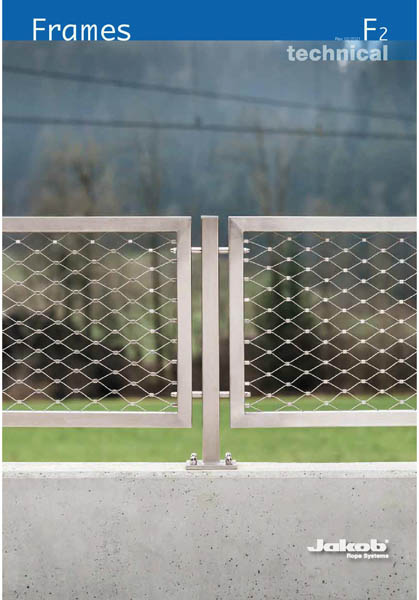
The Mesh You Don’t Notice
What One Material Decision Costs (or Saves) You Over the Life of the Facade
The Decision Behind the Invisible Mesh: Why Stainless Steel Grade Is the Only Spec That Matters Long-Term
One line item on a spec sheet decides whether your mesh disappears or dominates over the life of the facade.
Somewhere in a materials schedule, a specifier has to choose a steel grade for a wire mesh infill. Against the bigger decisions on the project — the building’s structure, the glazing, the steel frame — the cost of that choice is almost nothing, a rounding error in the budget. But it’s the one decision on an architectural mesh system whose consequences don’t show up at substantial completion. They surface years later, on a maintenance report, long after everyone who specified it has moved on.
Webnet mesh is fabricated from woven stainless steel strands, and the grade behind that mesh — AISI 316 marine-grade stainless — isn’t a premium upsell. It’s the variable that determines whether the mesh you specified is still reading as “open space” or has quietly become a maintenance line item.

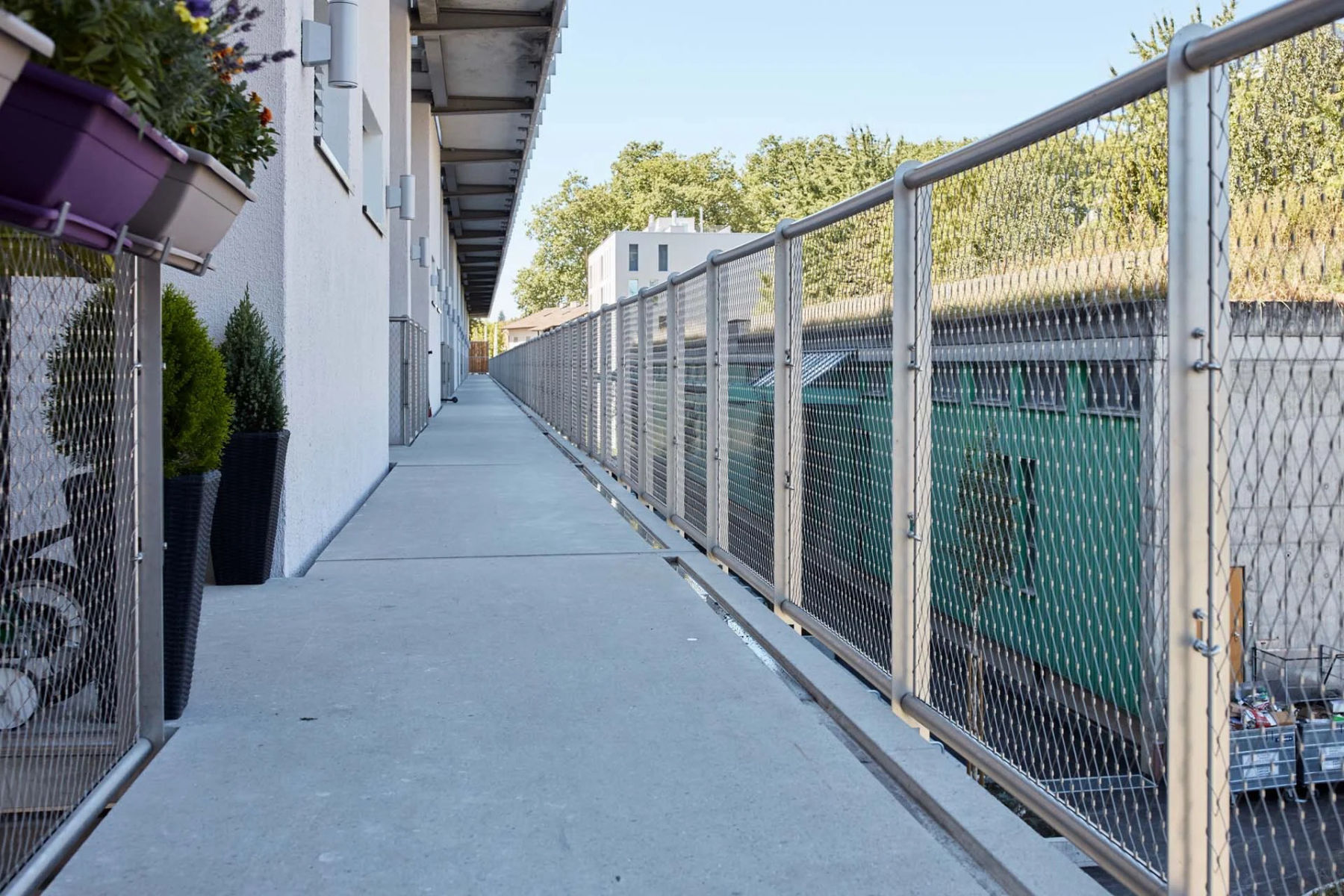


The decision: marine-grade stainless vs. coated or lower-grade alternatives
Commodity wire mesh systems often use galvanized steel or lower-grade stainless with a protective coating. It performs fine on day one — same diamond pattern, same tensile feel, same transparency in the render. The difference is in what happens to the surface over time, not the geometry.
AISI 316 is a different material decision entirely: it’s chosen because coatings degrade and galvanizing sacrifices itself to corrosion, while 316 resists it at the molecular level. That’s the whole bet a specifier is making when they write it into the schedule instead of accepting a “stainless-look” substitute.
What the difference looks like over time
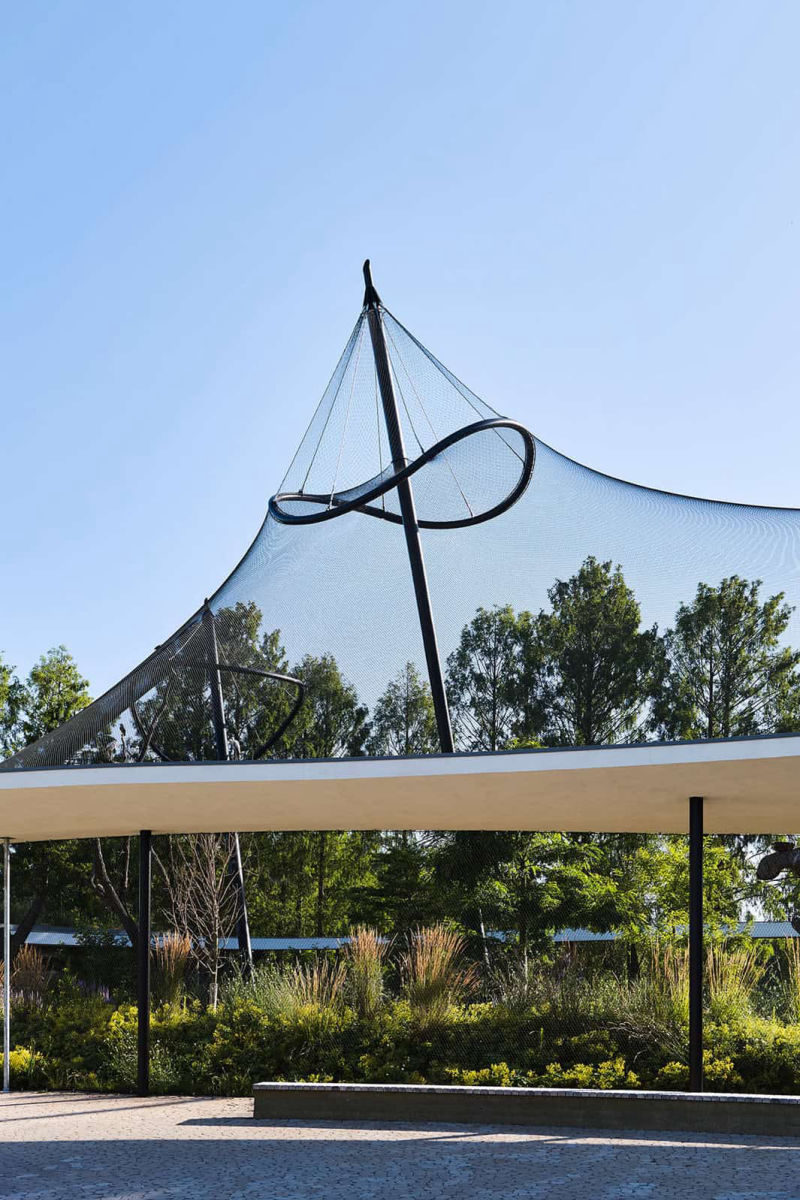
A coated or galvanized mesh is on a clock the day it’s installed. Coatings weather and galvanized layers are sacrificial, so on an exterior facade or balustrade — especially in coastal or high-moisture air — a lower-grade system eventually dulls, streaks, and corrodes at cut ends and connection hardware, and needs a maintenance cycle to keep looking presentable. Marine-grade 316 doesn’t work that way. In salt-spray testing (720 hours, DIN EN ISO 9227), it showed only superficial marks that wipe off, with no effect on the mesh’s mechanical properties. In the field, Jakob has coastal Webnet in service that hasn’t required a single corrosion repair since it opened. That’s not a marketing line — it’s the entire reason marine-grade stainless gets specified for zoo enclosures, coastal facades, and bridge safety netting, where access for repair is expensive or impossible.
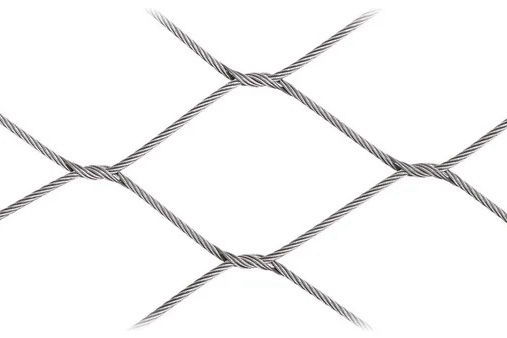
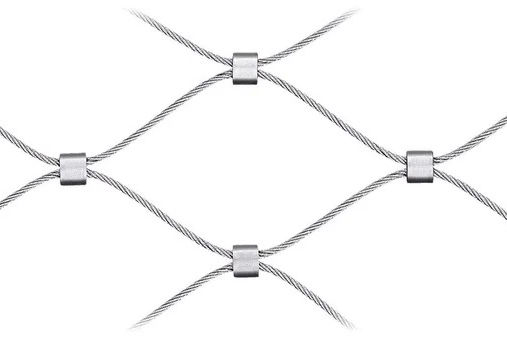
Why the grade is the whole design bet
The appeal of Webnet — a facade trellis, a stair infill, a zoo enclosure barrier — depends on the mesh staying visually secondary to what it’s protecting or supporting. A mesh that’s corroding, discoloring, or sagging stops being invisible; it becomes the thing you notice. A 316 mesh keeps doing the quiet work it was hired to do: holding the opening, preserving the sightline, disappearing into the architecture.
This is also where Jakob’s fabrication model matters. Because Webnet panels are built to customer specification — with mesh orientation, aperture, and even RAL color or black dye finish decided at the factory rather than field-adapted — there’s no compromise built into the mesh to correct for later. What ships is what was engineered, at whatever shape and size the opening required. Explore the range at Webnet, and for projects pairing mesh with living systems, see how the same stainless logic carries into Green Solutions trellis applications.


Is your mesh spec built for day one or for the life of the facade?
If you’re weighing a coated mesh against a marine-grade stainless system, the honest answer depends on exposure, access for maintenance, and how long the client actually expects the facade or enclosure to look untouched. We’re glad to walk through your project conditions directly — and if a lighter-duty system genuinely fits better, we’ll say so.