When the Mesh Is the Cable
How Jakob Engineered Webnet as a Load-Bearing Structure at Himmelhausmattesteg
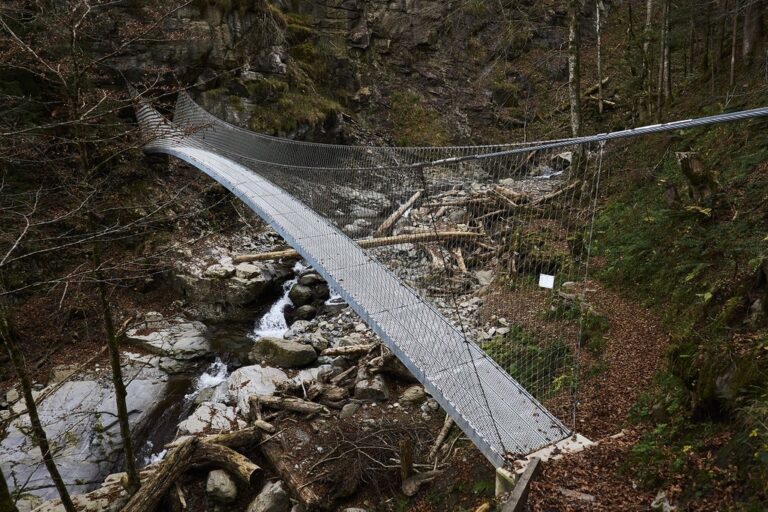
The First Bridge Where Mesh Took On the Cable’s Job: Himmelhausmattesteg in Trubschachen
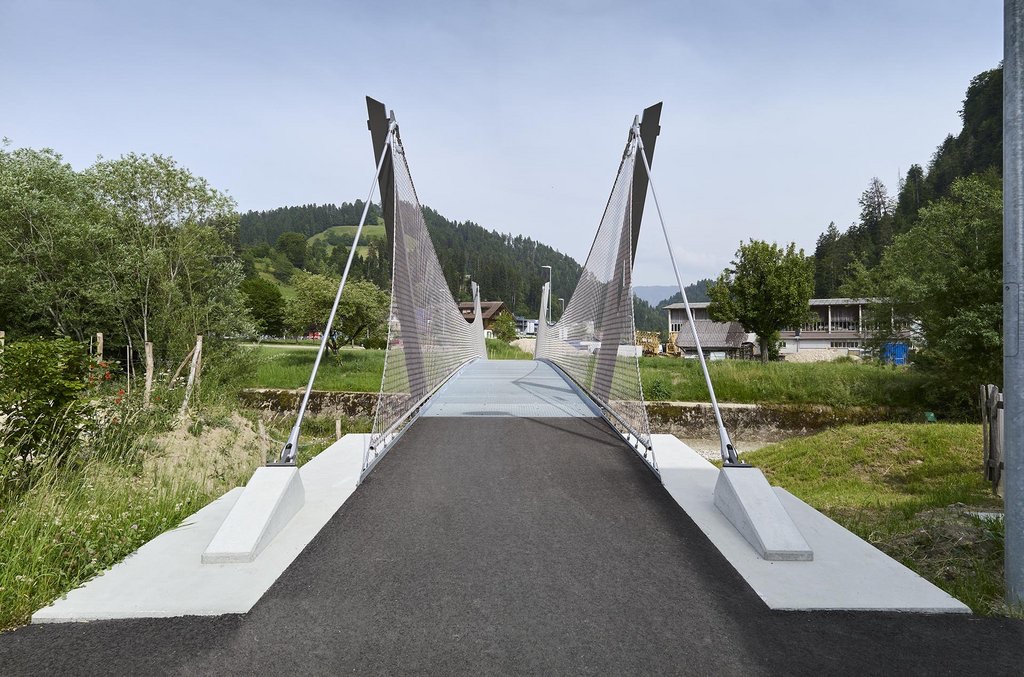
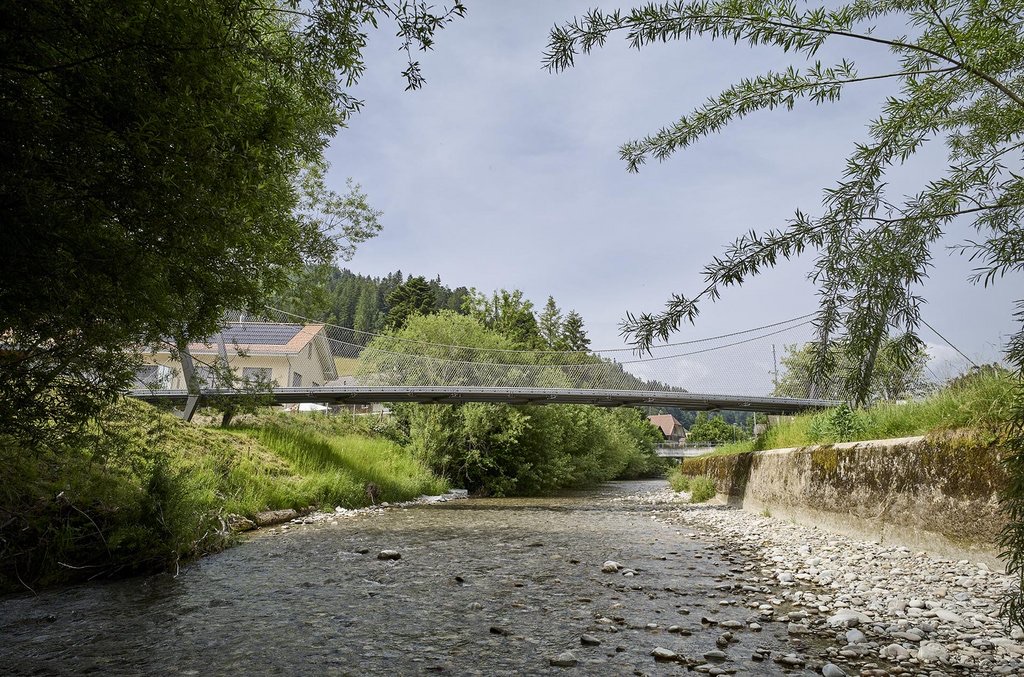
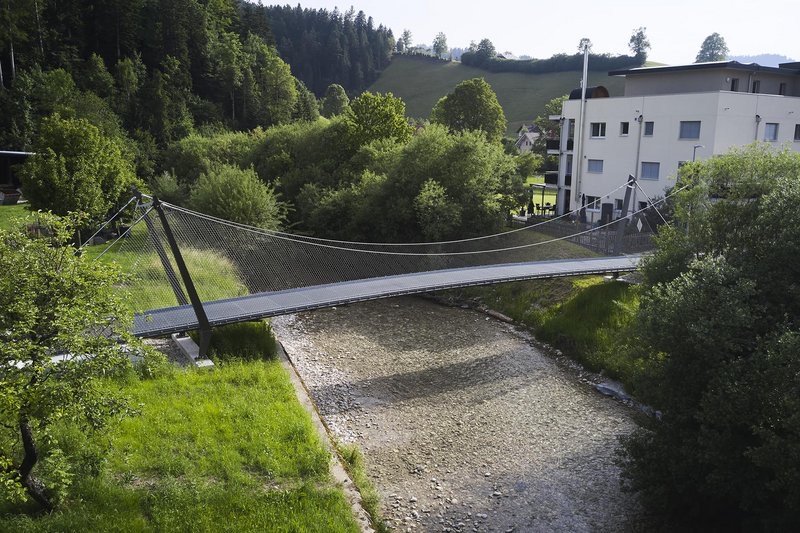
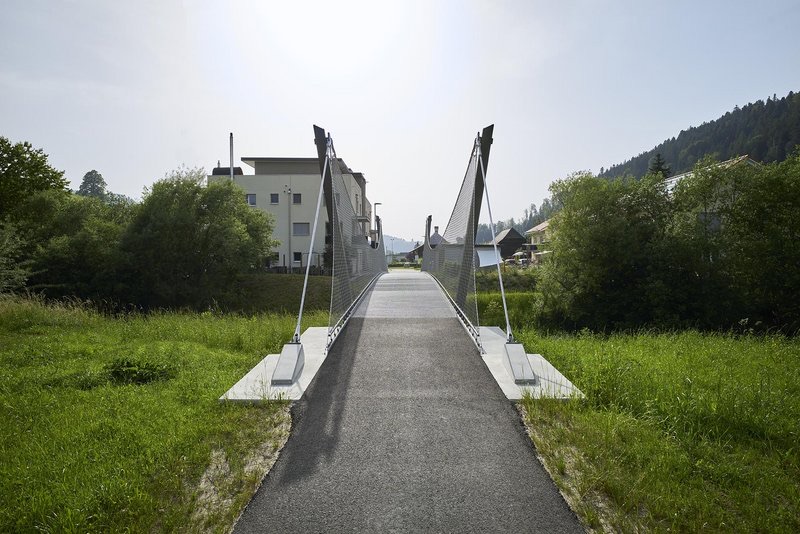
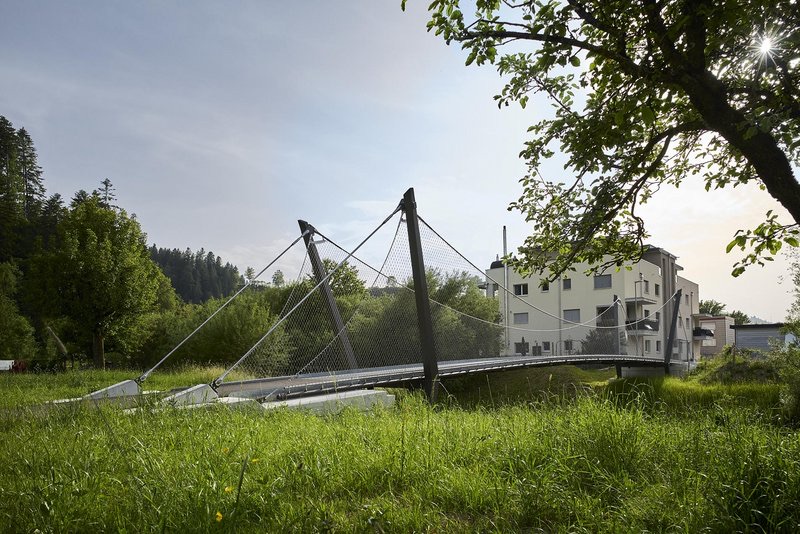
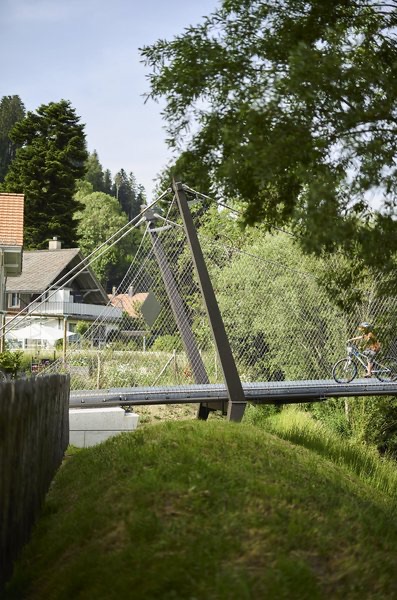
A suspension bridge with no visible suspension cables — because the mesh is doing that job.
Every suspension bridge you’ve ever specified follows the same division of labor: cables carry the load, and a separate railing or infill system keeps people safe. Two systems, two sets of connections, two things competing for visual real estate. The Himmelhausmattesteg over the Trub river in Switzerland’s Emmental region breaks that division. It’s the first bridge where a load-bearing Webnet stainless steel mesh network — fixed directly to the bridge’s carrying cables — took on the structural role conventional suspension cables usually carry alone.
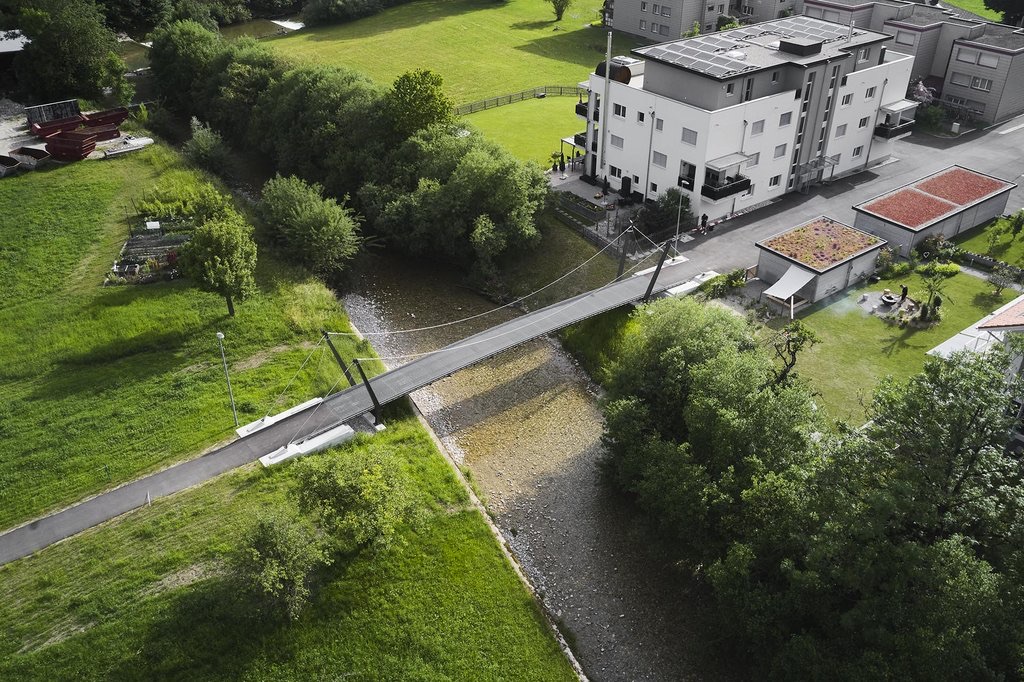
The municipality of Trubschachen needed to close a gap in the national hiking and cycling network while securing a safe school route across the river. Sponsors including Kambly SA and Thuner Bau AG wanted a structure that was both sound enough for daily foot and cycle traffic and light enough not to dominate its riverside setting. The answer came from rethinking what a suspension cable has to look like in the first place.
The Problem With Separating Structure From Safety
Conventional suspension bridges treat the load path and the fall protection as two different design problems solved by two different components. That separation adds weight, adds parts, and adds the visual bulk of railing sitting on top of an already-visible cable system. For a project meant to disappear into an Emmental valley rather than announce itself, that bulk was the wrong answer.
How Jakob Engineered Mesh Into the Load Path
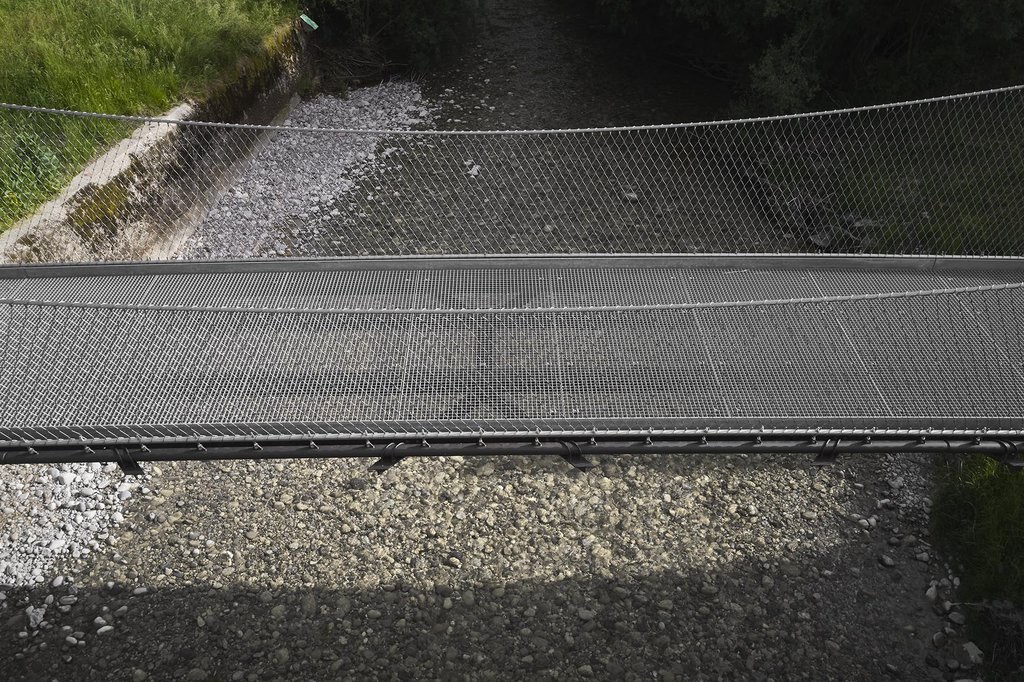
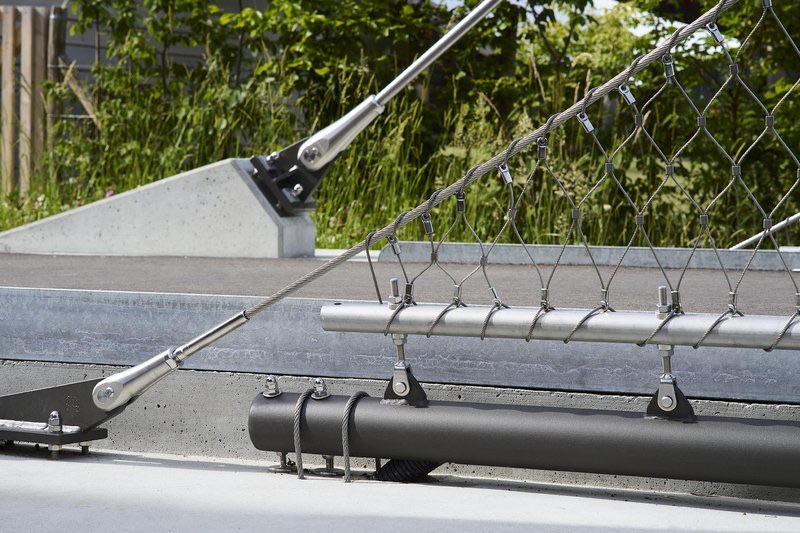
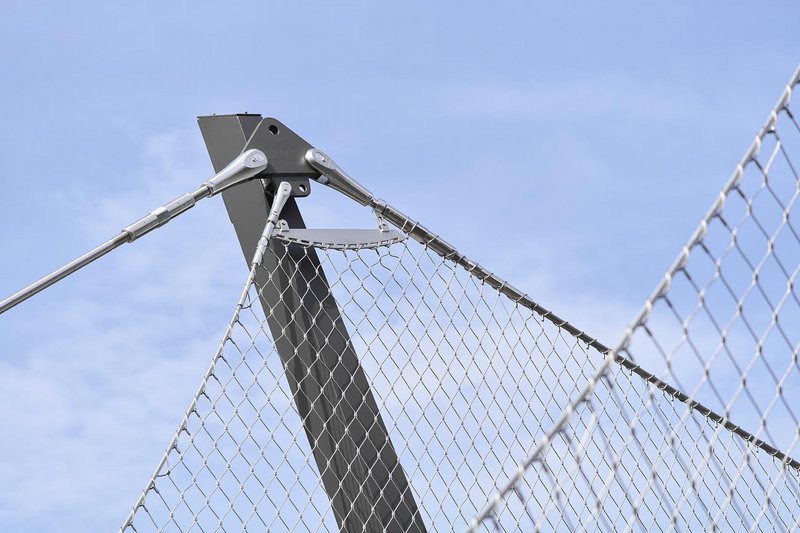
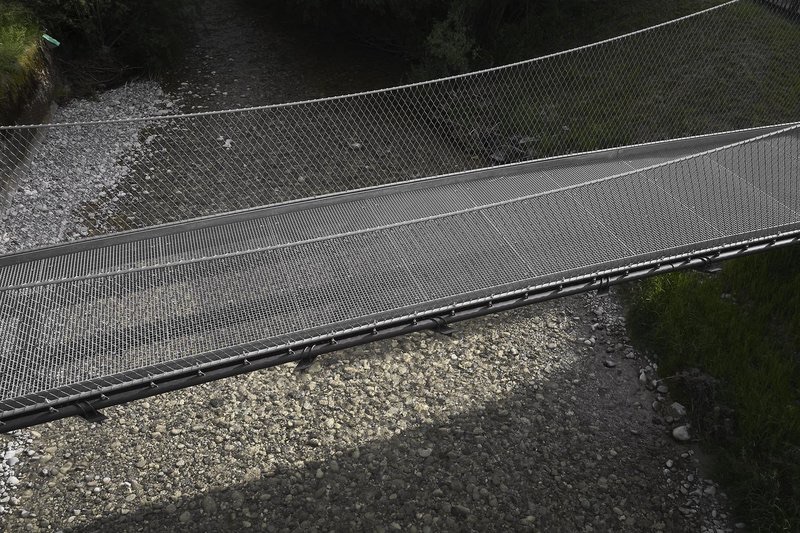
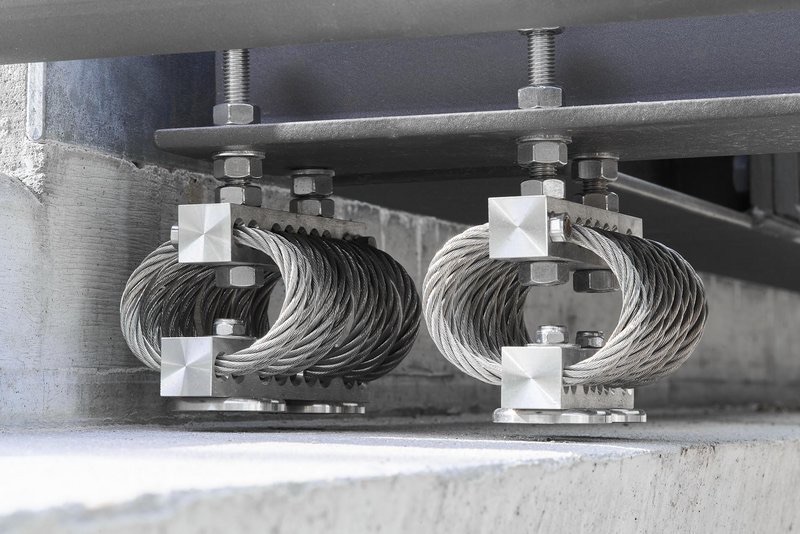
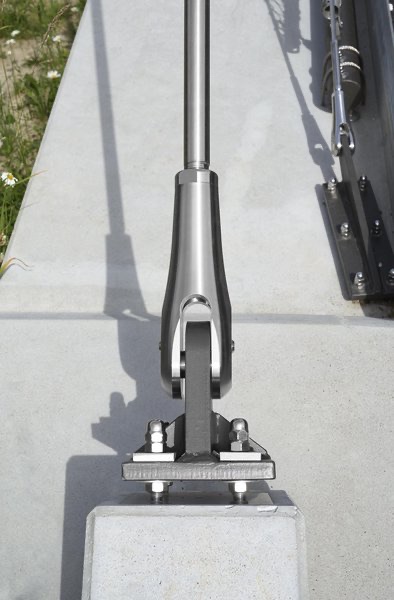
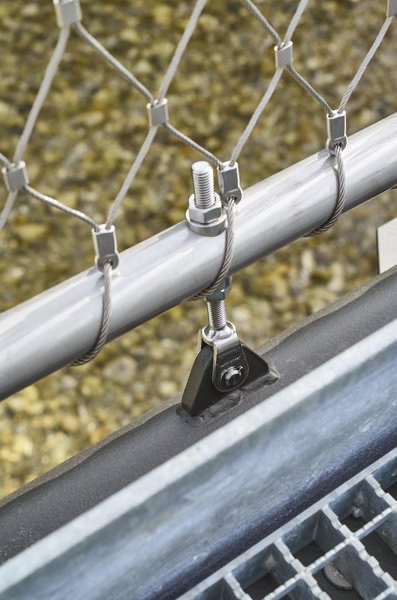
Jakob’s engineering team designed the mesh geometry and its connections as part of the structural system from day one — not as an add-on fastened to separate suspension cables after the fact. The bridge runs on carrying cables (26 mm, 1×37 construction) with Forte terminations and tie rods (M36, also with Forte). But the Webnet mesh itself — 3 mm wire, 80 mm fixed mesh width — carries structural load in addition to functioning as railing and fall protection.
That dual function eliminates the need for a separate railing system entirely. Fewer components means fewer connections to maintain and fewer places for problems to start. It also means a lighter, more transparent structure than a conventional cable-plus-railing suspension bridge could ever achieve. Jakob’s scope on the project covered design, planning, structural calculation, material supply, and installation — one engineering team responsible for the calculation and the hardware that has to prove it out in the field.
The bridge spans 25.75 m overall, with a clear span of 21.40 m and a cable span of 23.72 m, at 2.20 m wide with a sag of 2.41 m (f/l = 1/10). It was completed in 2019–2020, sitting in Jakob’s own home municipality of Trubschachen.
Why This Matters Beyond One Bridge
This isn’t an isolated experiment. Jakob has since applied the same principle at the Steibrücke suspension bridge in Giswil, where Webnet stainless steel net again serves simultaneously as active load-bearing element, railing, and fall protection — proof that mesh-as-structure is a repeatable engineering approach, not a one-off. It’s the same logic behind Jakob’s bridge safety work more broadly: transparent net structures configured with different rope diameters and mesh sizes, supported by efficiently placed primary ropes, doing double duty as both protection and structure without adding visual weight.
For architects and engineers, the implication reaches past bridges. Anywhere a project has treated structure and safety as two separate specs — a balustrade, a guardrail retrofit, an elevated walkway — there’s a question worth asking: does it have to be two systems, or can one element, engineered correctly from AISI 316 marine-grade stainless, do both jobs at once?
Does your project treat structure and safety as two separate problems?
If a lighter, more integrated structural approach could work for your site, Jakob’s engineering team can walk through the load path with you — including telling you honestly when a conventional cable-and-railing system is still the right call.