When the Railing Carries the Bridge
What Two Swiss Footbridges Prove About Stainless Steel Mesh Railing as a Structural Element
Stainless Steel Mesh Railing That Does More Than Guard the Edge
On two Swiss footbridges, Webnet mesh stopped being an add-on and became the load path itself.
Most specifiers think of mesh railing as a safety layer — the thing that keeps a fall protection code inspector happy without blocking the view. That’s a fair assumption most of the time. It’s also incomplete. On two recent Swiss footbridge projects, Jakob Rope Systems engineered stainless steel Webnet mesh to carry structural load directly, not just contain a fall. One rebuilt a gorge crossing destroyed by storm damage. The other did something no bridge had done before: the mesh, fixed directly to the carrying cables, took over the structural role conventional suspension cables usually carry alone.
Neither project treated mesh as an afterthought bolted onto a finished structure. In both cases, the mesh geometry and its connections were part of the load path calculation from day one — which is a materially different engineering problem than sizing infill panels for a code-compliant guardrail.
That distinction matters for anyone specifying railing on a project where sightlines, weight, and structural economy are all competing for the same decision.
The Standard Split: Cable Carries, Mesh Guards
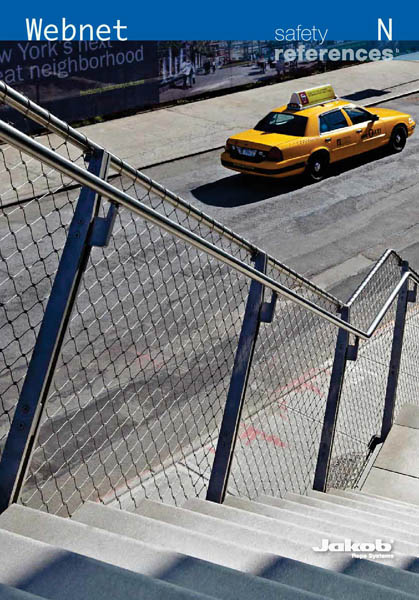
On most cable-and-mesh bridge work — including a number of Jakob’s own Swiss references — the division of labor is clean. Carrying cables take the structural load. Mesh, whether Webnet or a vertical cable system, handles railing infill and fall protection. It’s a proven split, and it’s the right call for the majority of pedestrian bridge and elevated-walkway projects.
Giswil and Himmelhausmattesteg show the other end of the spectrum: what happens when an engineering team asks the mesh to do the cable’s job too.

Giswil: Rebuilding a Gorge Crossing With Mesh in Triple Duty
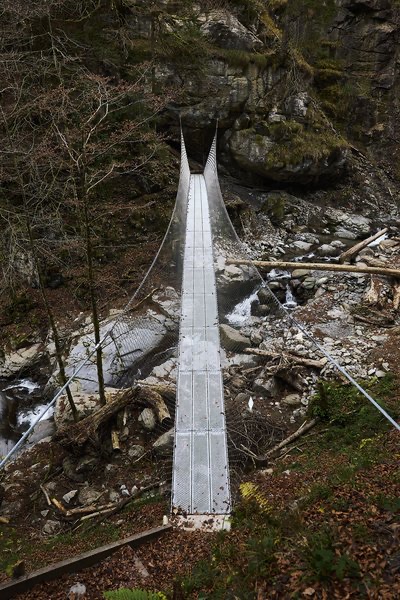
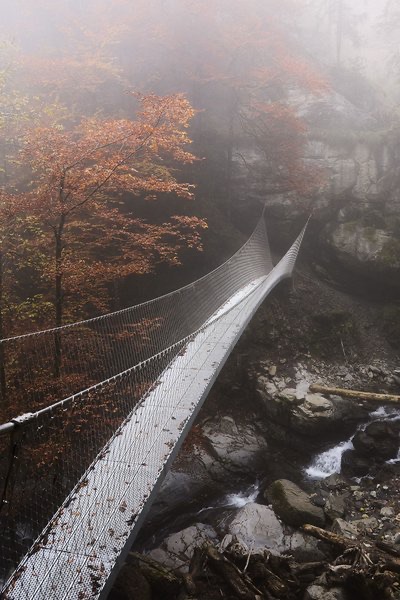
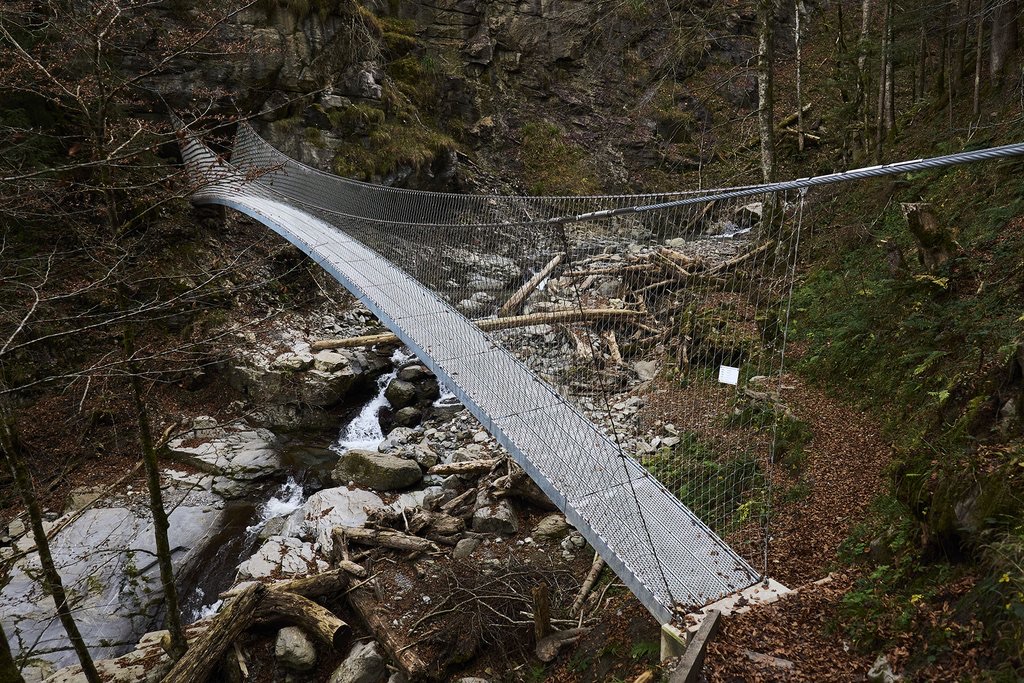
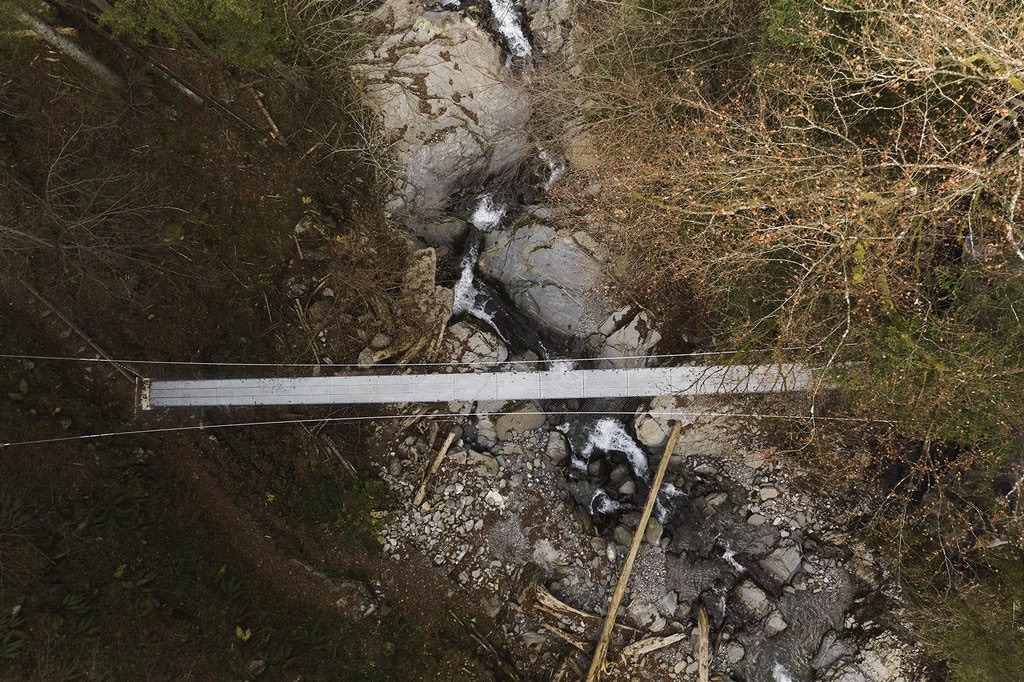
A storm destroyed the footbridge crossing the Altibach gorge in Giswil, a link on a hiking route between Zopfwald and the Sakrament chapel. The rebuild needed a suspension design that kept abutments clear of the debris zone in a narrow, steep-sided ravine — not a straightforward site.
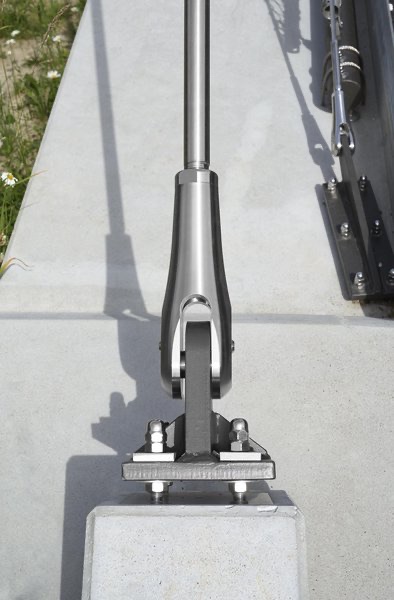
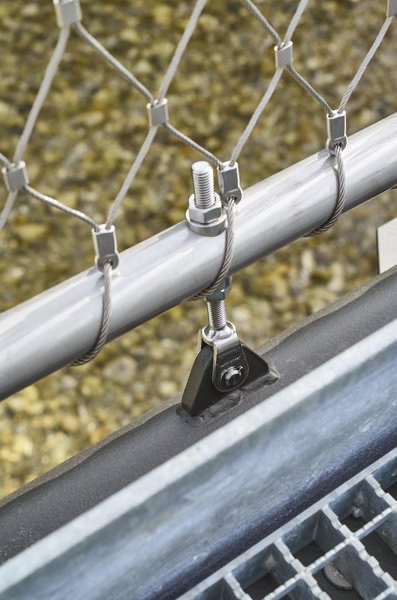
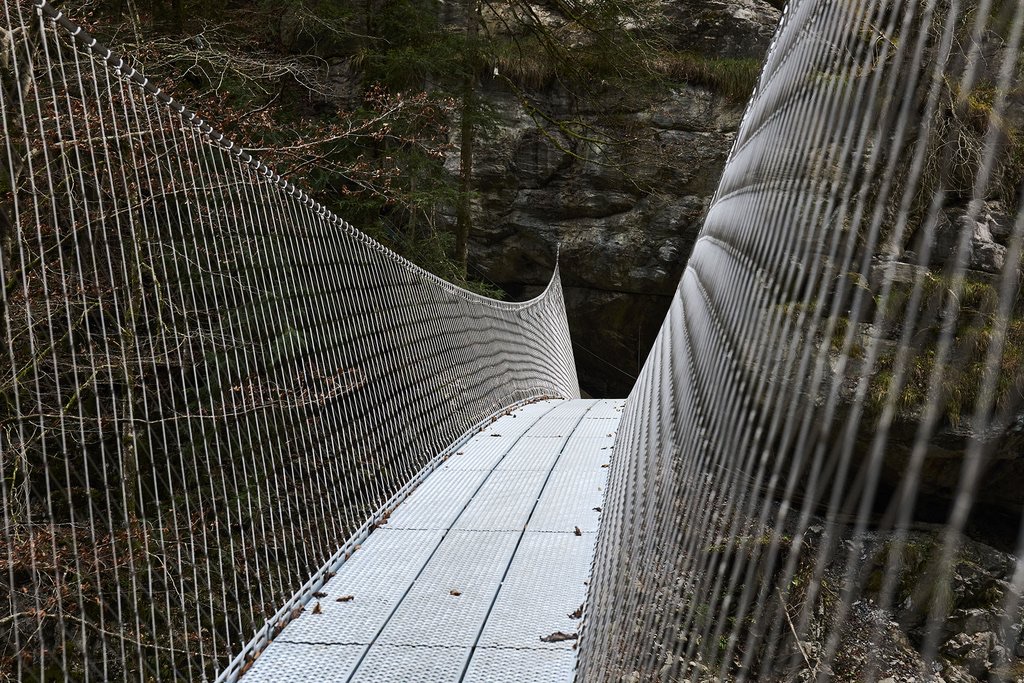
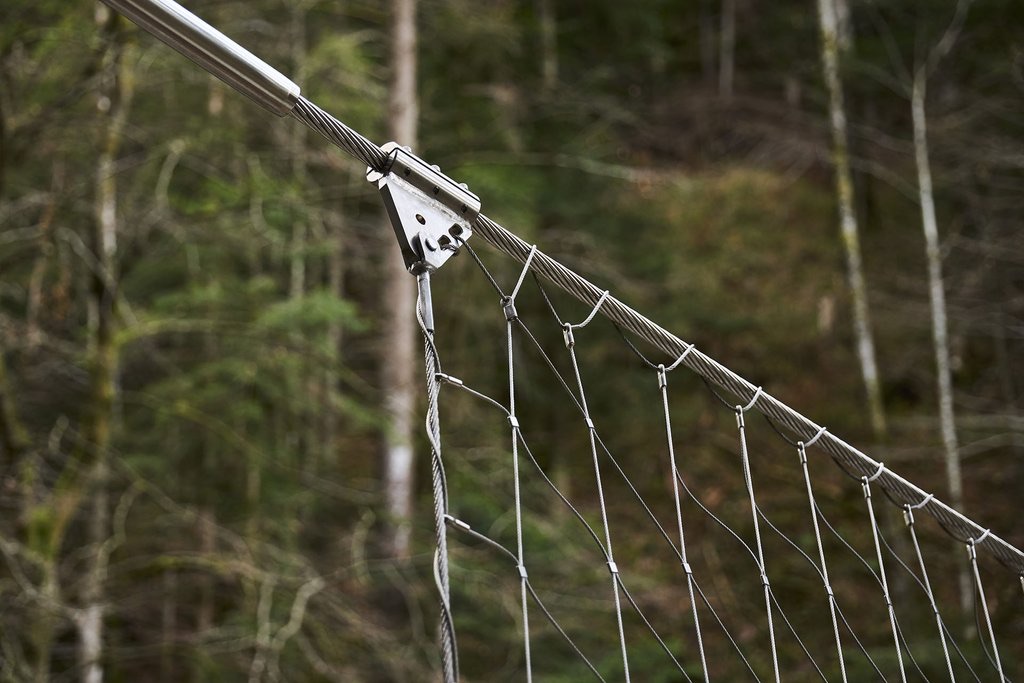
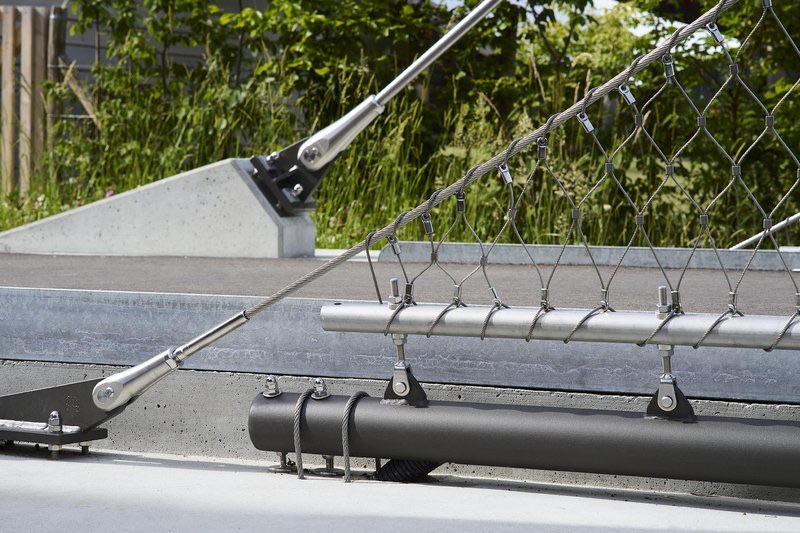
Jakob dimensioned and supplied the carrying cables and the stainless steel Webnet mesh, with the mesh doing three jobs at once: active load-bearing element, railing, and fall protection, with variable mesh openings tuned for stability and efficiency. The system uses two 22 mm open spiral carrying cables, two 16 mm tensioning cables below deck level, and a radial Webnet layout in 3 mm wire — sized specifically for this load-sharing role, not a standard infill spec.

Trubschachen: The Bridge That Hangs From Mesh, Not Cable
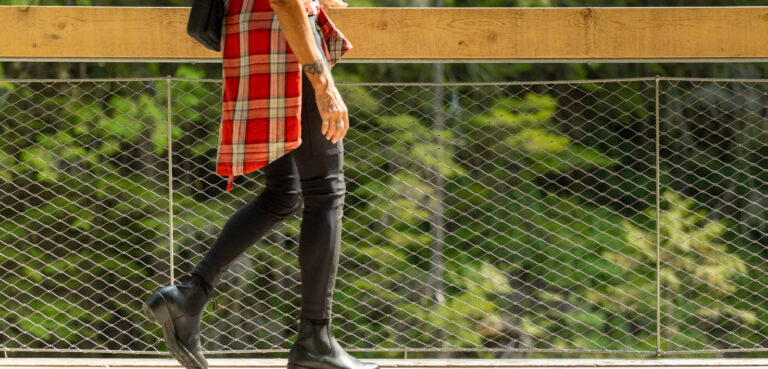
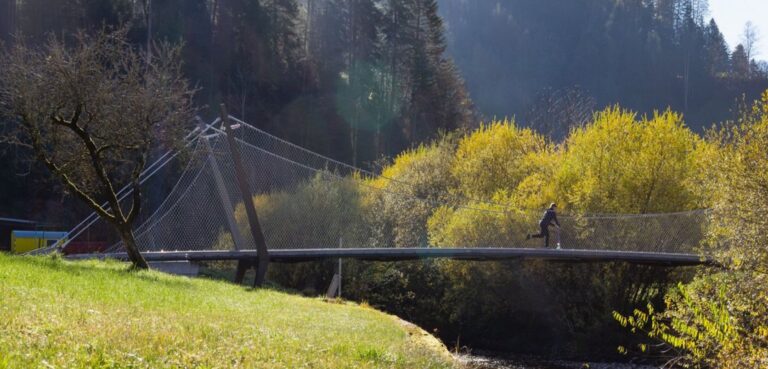
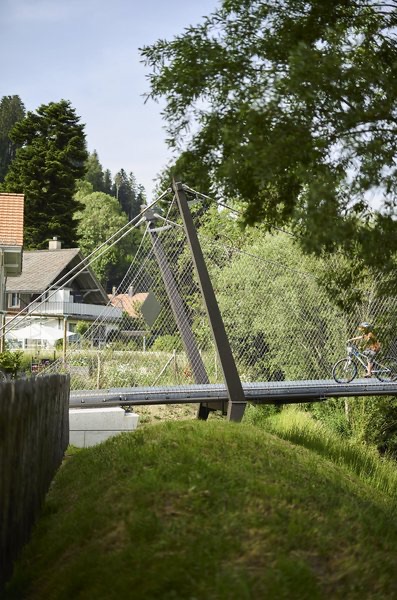
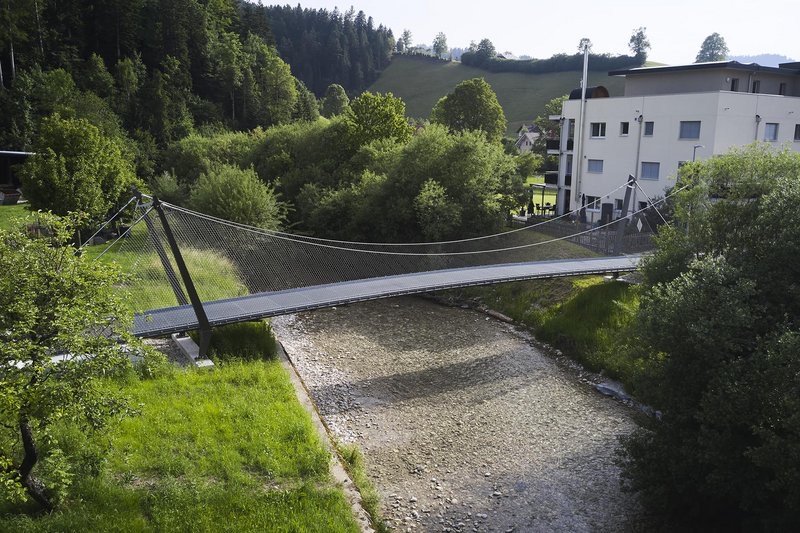
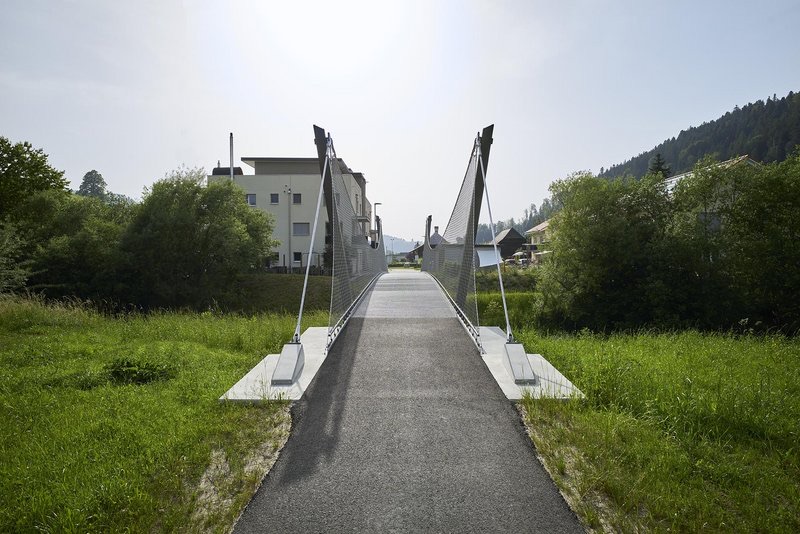
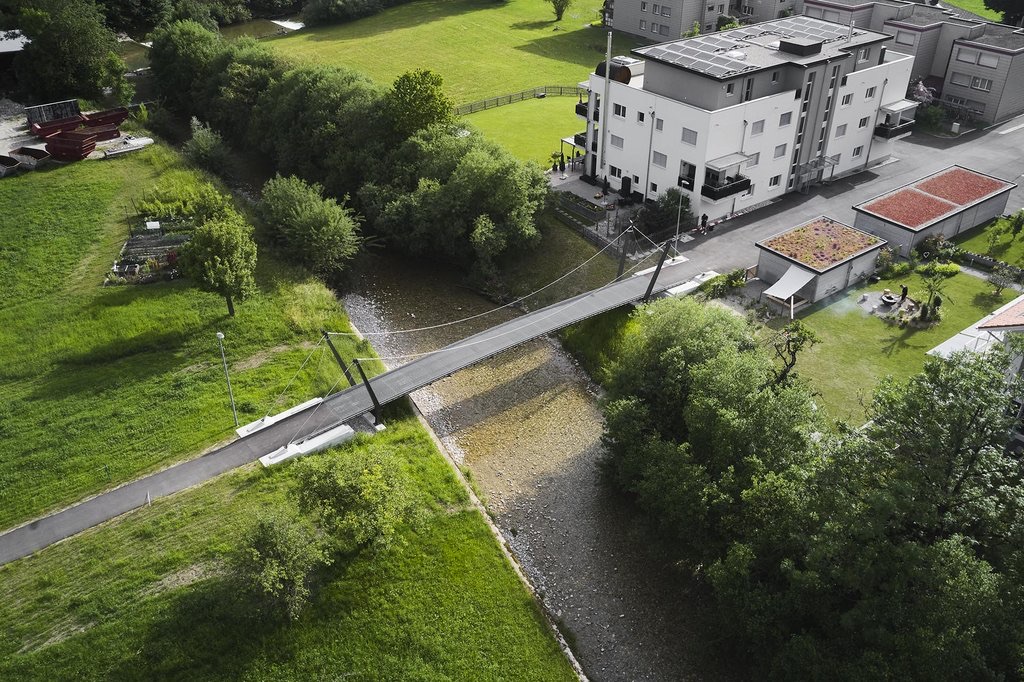
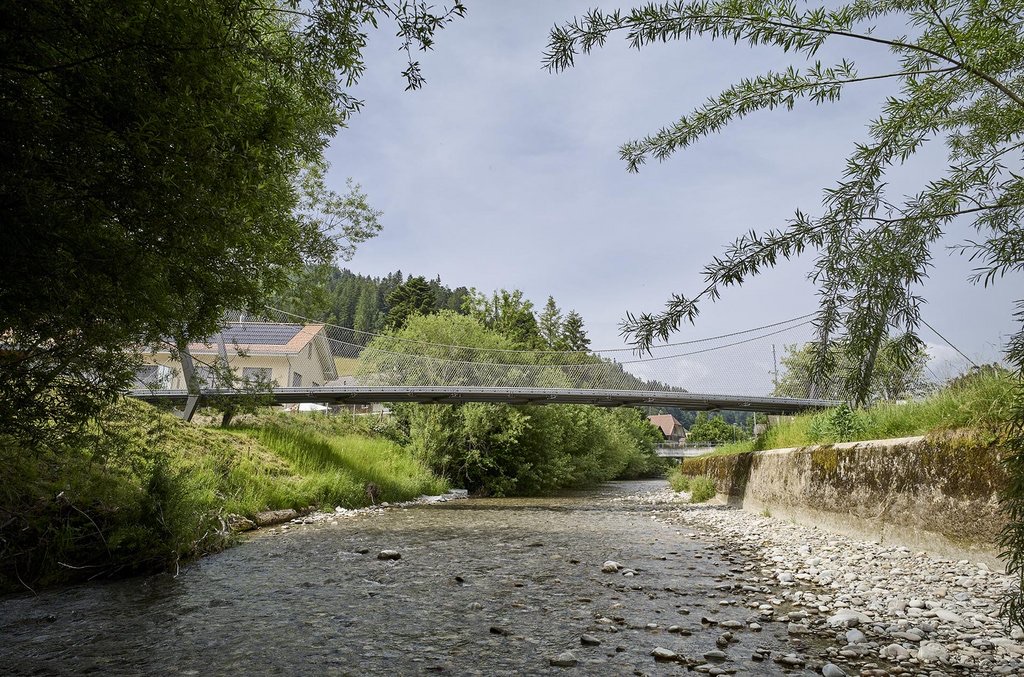
The Himmelhausmattesteg over the Trub river, completed in 2019–2020, is the more consequential of the two projects. For the first time, load-bearing Webnet mesh — fixed directly to the bridge’s carrying cables — took on the structural role conventional suspension cables usually handle alone, while doing double duty as lateral fall protection. That eliminated the need for separate railing elements entirely, producing a structure that’s lighter and more transparent than a conventional cable-and-infill design would allow.
The bridge spans 21.40 m clear, with a 23.72 m cable span and a sag ratio of 1/10 — numbers that only work because the mesh was calculated as structure from the start, using 3 mm woven wire at an 80 mm fixed mesh width with carrying cables and tie rods sized to match. It now connects Himmelhausmatte with the train station in Trubschachen, securing a school route and closing a gap in the national hiking and cycling network.
What This Means for Architects Specifying Railing
Neither of these is a cable railing job in the residential or commercial deck sense — they’re bridge-scale structural engineering. But the underlying principle scales down cleanly: when stainless steel mesh railing is specified as part of the structural system rather than dropped in as infill after the fact, it opens design options — lighter structures, fewer redundant elements, cleaner sightlines — that a cable-only or infill-only approach simply can’t reach. It’s the same logic that applies whether the mesh is holding up a footbridge in the Emmental or wrapping a stair, a balcony, or a green facade trellis on a commercial building here.
The material doesn’t change. AISI 316 marine-grade stainless steel behaves the same whether it’s guarding a stairwell or carrying a pedestrian bridge over a gorge. What changes is how early the engineering gets involved in the load calculation — and that’s a decision made at the spec stage, not on site.
Does your project need mesh that guards, or mesh that carries?
If you’re weighing a mesh or cable system where structural load-sharing might change the design entirely — a long span, a weight-sensitive structure, a site where fewer elements means a cleaner outcome — that’s a conversation worth having before the spec is locked. We’ll give you a straight read on what’s structurally viable, including when a standard infill system is genuinely the right call.