The Longest Span in Graubünden
Inside La Pendenta, a Nearly 300-Meter Suspension Bridge Built Without a Single Oversized Cable
La Pendenta Bridge in Disentis/Mustér: Engineering the Longest Suspension Span in Graubünden
A footbridge nearly 300 meters long doesn’t get there by scaling up a standard design.
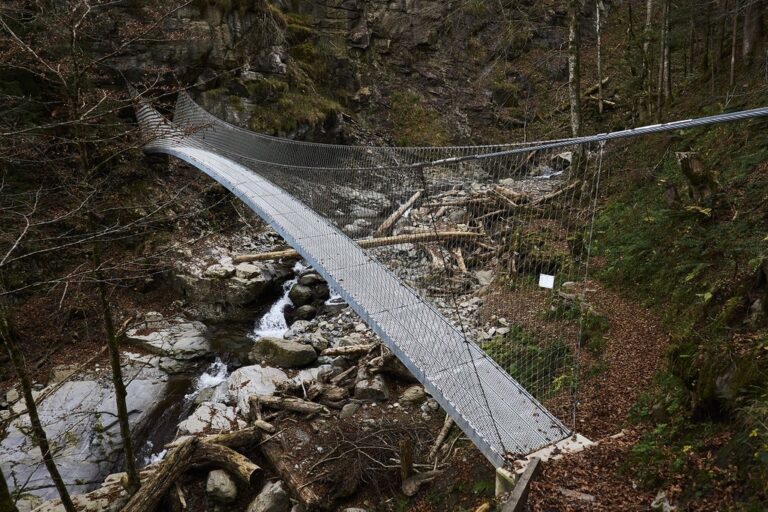
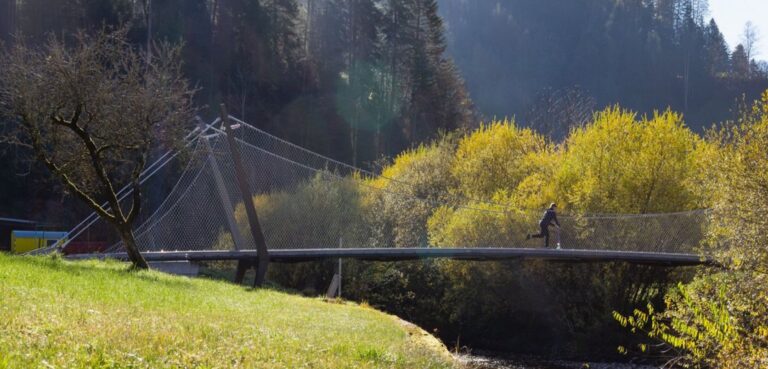
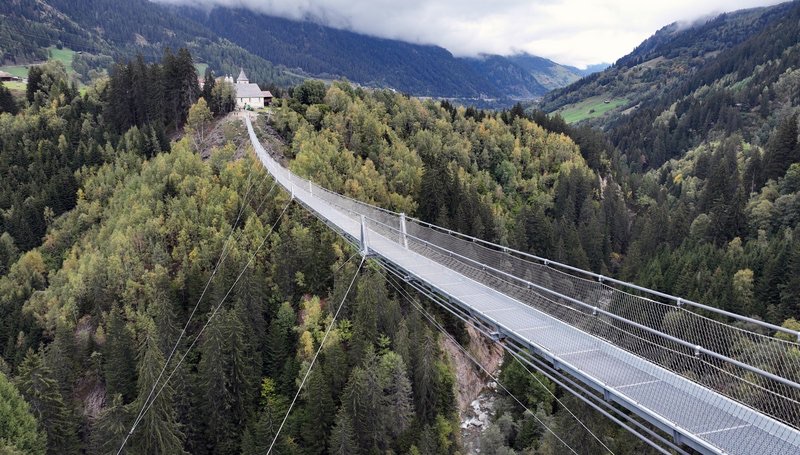
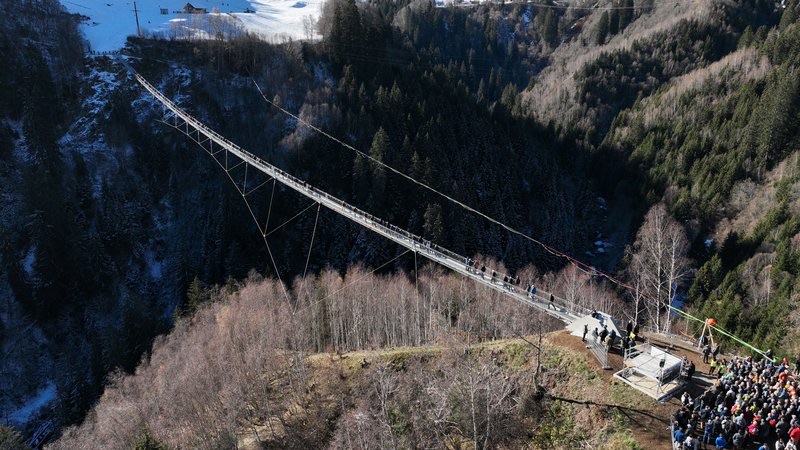
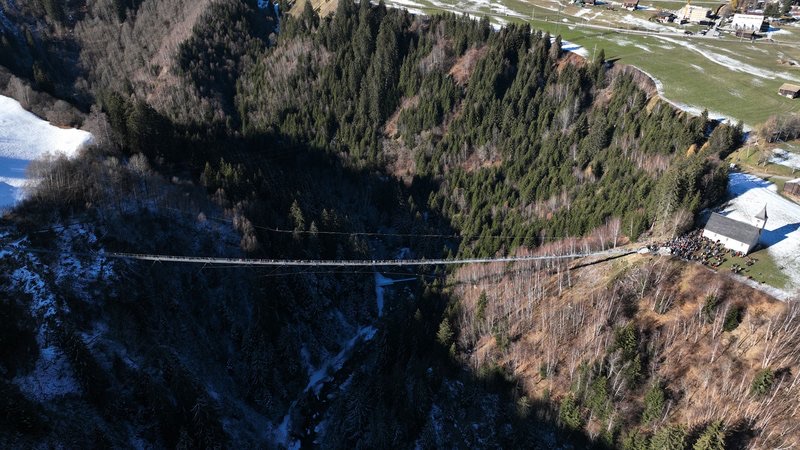
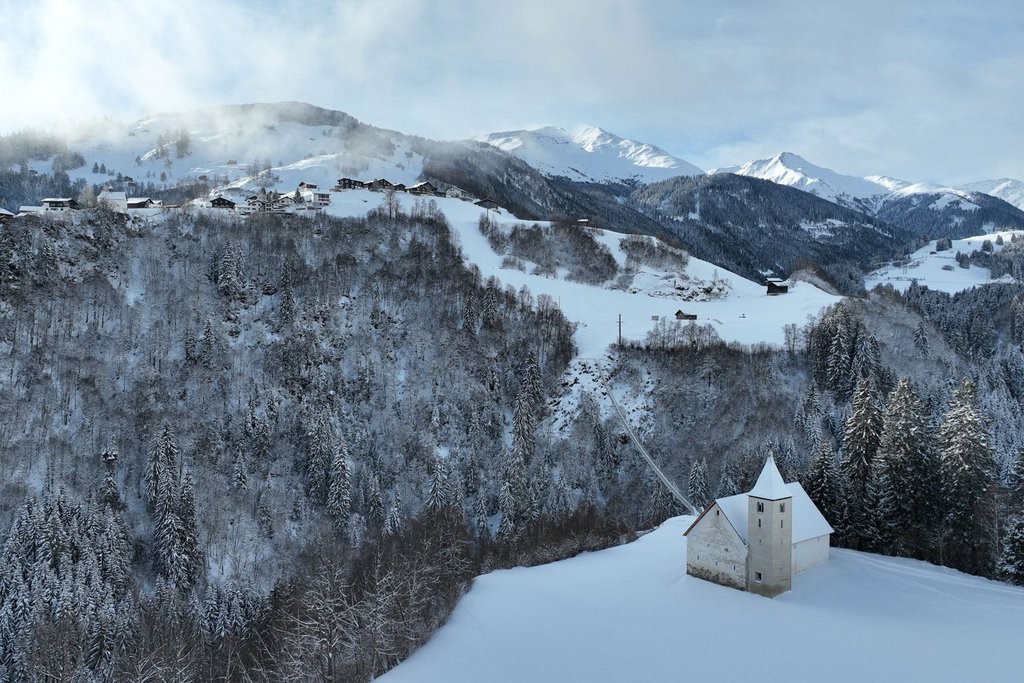
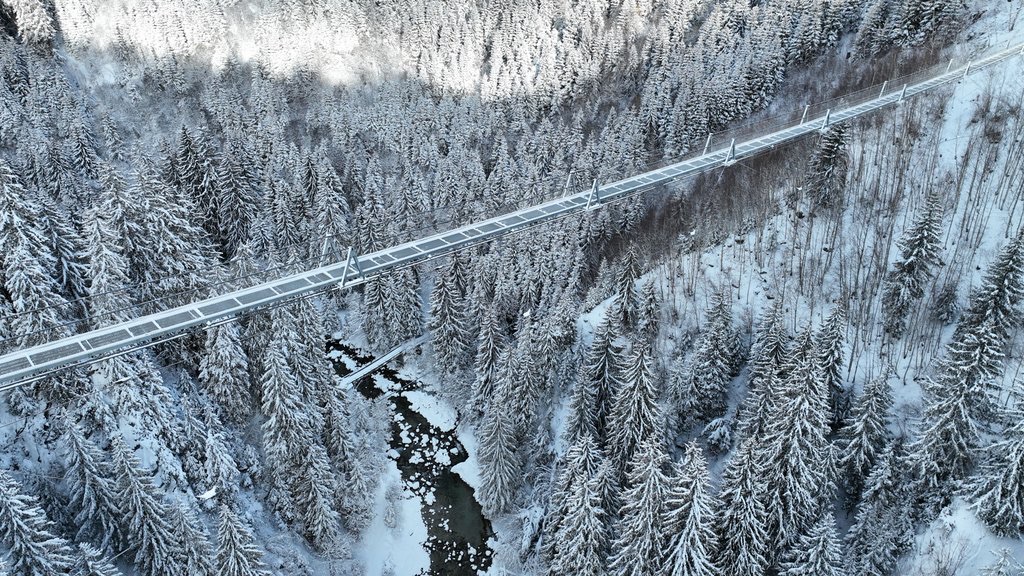
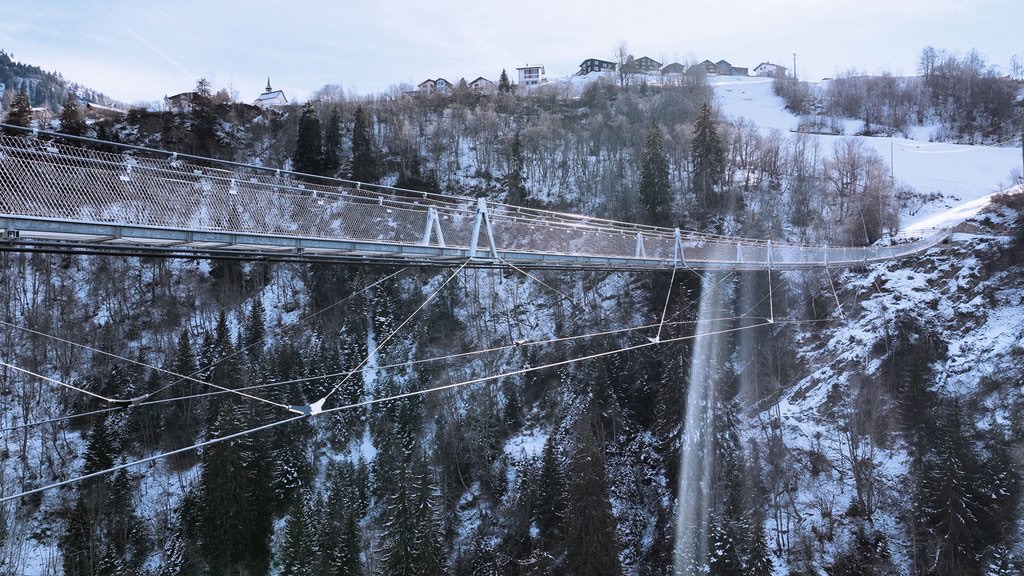
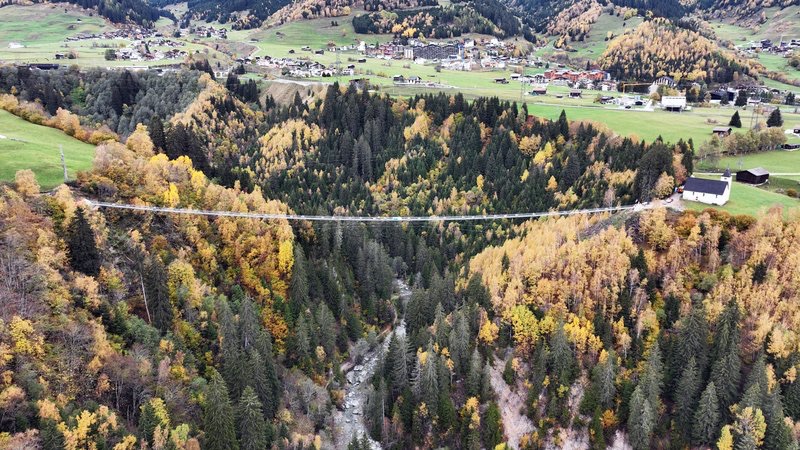
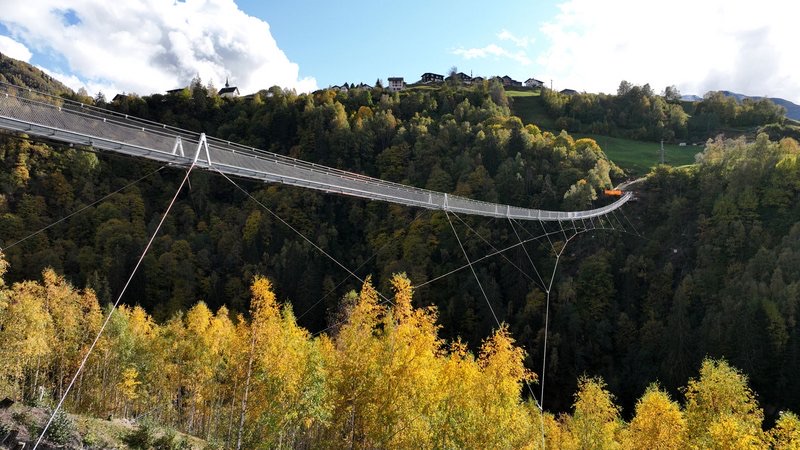
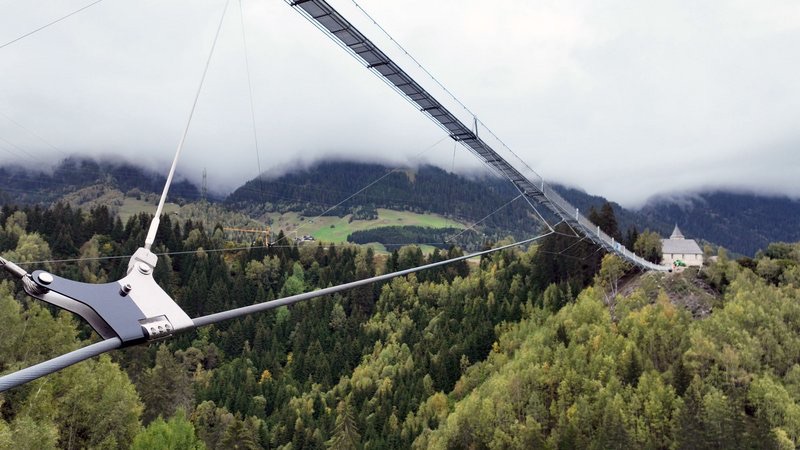
At close to 300 meters, “La Pendenta” is now the longest suspension bridge in the Swiss canton of Graubünden — connecting the municipality of Disentis/Mustér with the hamlet of Mumpé Medel, which now has reliable year-round access for the first time. The project was privately initiated rather than run through a standard public works program, and it sits immediately beside the protected Sontga Gada church, in a landscape with zero tolerance for structural overreach.
What makes it relevant to anyone specifying a long-span or site-sensitive structure isn’t the length record. It’s what that length forced the engineering to become.
Why Standard Suspension Proportions Don’t Scale to 300 Meters
Cable sag, tensioning behavior, and deck stiffness don’t scale linearly. A two-cable configuration sized for a 60-meter footbridge doesn’t just get “bigger” at five times the span — it becomes structurally and visually unworkable, especially next to a protected building. Jakob Rope Systems, in a joint venture with Pfeifer Structures and Von Rotz & Wiedemar AG, carried the project from bridge engineering through construction, which meant the cable system had to be designed around the span from the start, not adapted to it.
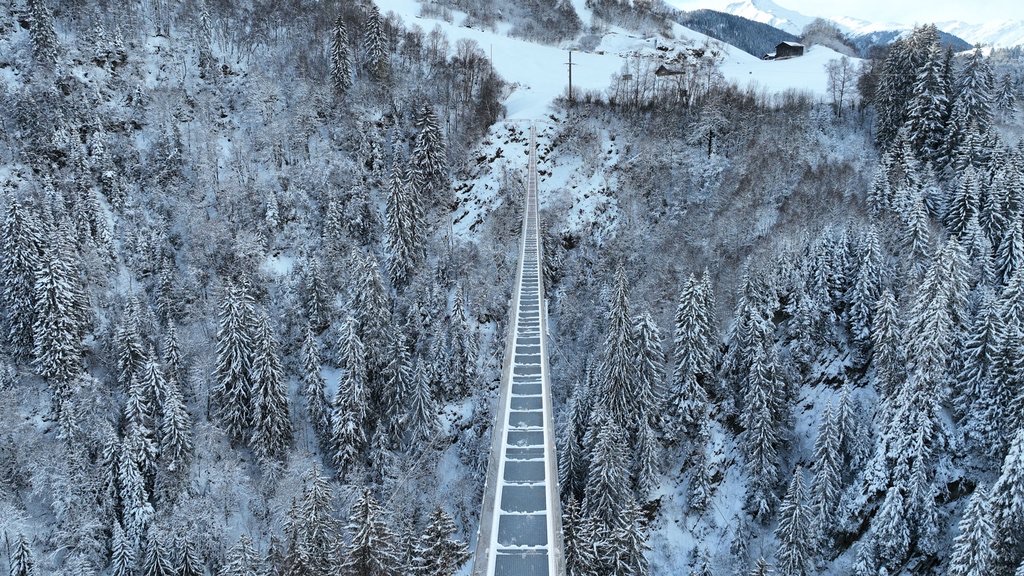
A Parametric Cable System, Not a Bigger Cable
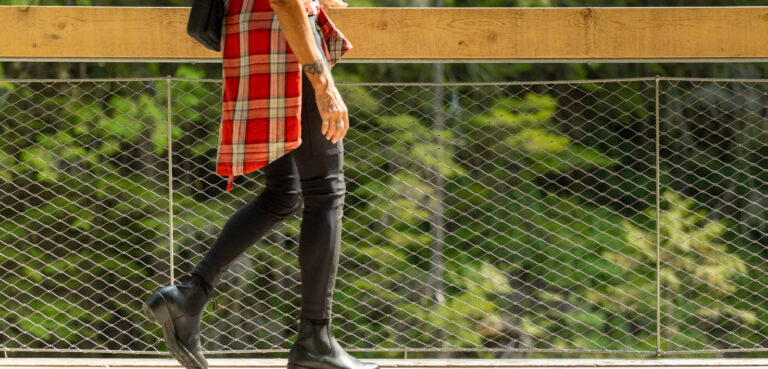
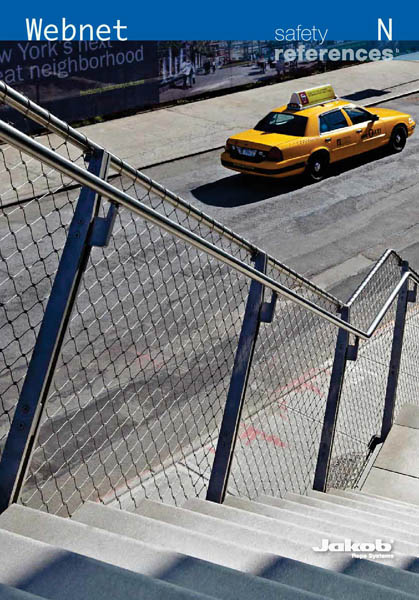
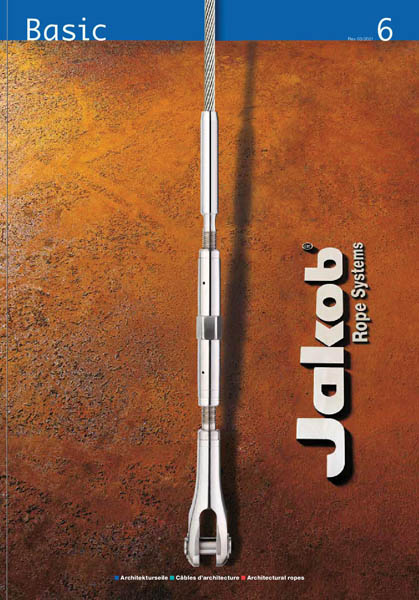
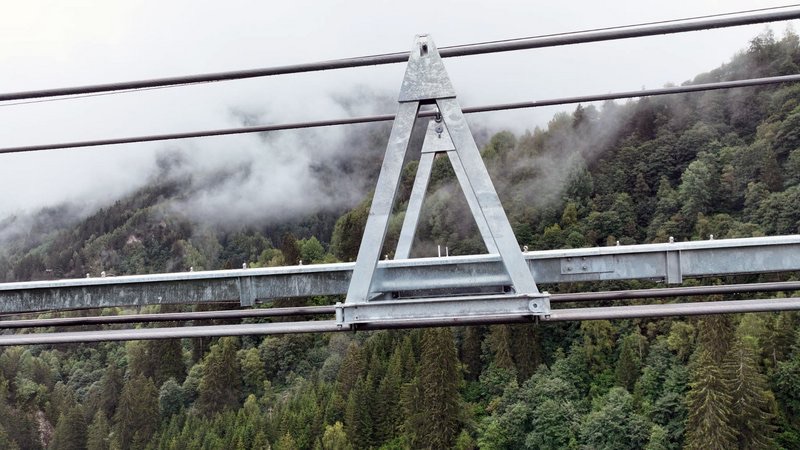
Instead of two oversized carrying cables, La Pendenta runs on a parametrically optimized configuration: four carrying cables (45 mm, VVS construction) below deck level, two more carrying cables (45 mm, VVS) at railing height, stranded cross-bracing cables (30.9 mm, OSS), and coupling cables ranging from 12 to 19 mm. Fall protection comes from a Webnet railing infill — 2 mm wire, 60 mm mesh, vertical pattern — the same Webnet mesh system Jakob supplies for architectural and safety applications across the range, from balustrades to zoo enclosures to bridge railing like this one. Every rope and mesh component is AISI 316 marine-grade stainless, which is the only reasonable choice for a structure exposed to alpine weather cycles for decades.
The result is a load path distributed across multiple, moderately sized cables rather than concentrated in a few large ones — the difference between a bridge that looks heavy and one that reads as a thin line across the gorge.
Proven on Site, Not Just on Paper
A parametric design this far outside conventional proportions isn’t something you certify by calculation alone. The completed structure was validated with a load test unmatched anywhere else in Switzerland — a direct physical check against the model, not a substitute for it. That’s consistent with how Jakob has approached other suspension projects in difficult terrain: the rebuilt Steibrücke bridge over the Altibach gorge in Giswil, for instance, uses suspension ropes and Webnet stainless steel net as load-bearing structure, railing, and fall protection in one integrated system, sited above the flood zone specifically to reduce risk from the terrain. The Balmberg rope bridge near Solothurn follows the same logic — stainless suspension and tension ropes with Webnet infill, engineered to sit lightly in a landscape it can’t compete with visually.
A Precedent for Long-Span, Landscape-Sensitive Work
None of these projects are standard public infrastructure jobs. They’re cases where the site — a protected church, a gorge, a rockfall zone — set constraints that a conventional cable layout couldn’t meet, and the engineering had to be built around the constraint rather than around a catalog span. If your project involves a long pedestrian span, a protected or sensitive site, or a structure that needs to disappear visually while still passing a real load test, this is the category of problem Jakob’s parametric approach and full product range — Webnet mesh, architectural cable, and green facade trellis systems alike — is built to solve.
Does your project push past standard span or site assumptions?
If you’re working on a footbridge, walkway, or railing system where conventional cable proportions won’t hold up — structurally or visually — it’s worth a technical conversation before the design locks in. We’ll give you a straight read on what’s achievable, including when a lighter, more conventional solution is the honest answer.