When the Net Is the Bridge
Rebuilding the Steibi Footbridge in Giswil After the Storm Took It Down
Rebuilding After the Storm: How Webnet Mesh Rebuilt the Steibi Footbridge in Giswil
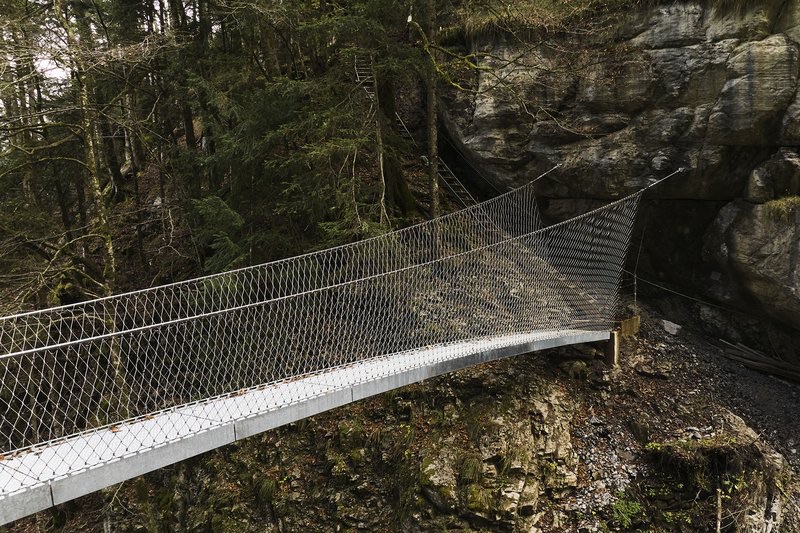
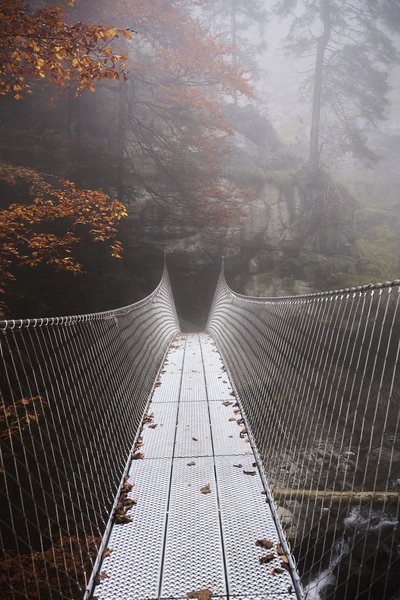
A storm doesn’t ask permission before it takes down a bridge. In the summer of 2024, one destroyed the metal footbridge crossing the Altibach gorge near Giswil, in the Swiss canton of Obwalden — a link hikers relied on between Zopfwald and the Sacrament Chapel. Whatever replaced it had to survive the exact conditions that had just proven the site’s limits.
The municipality didn’t rebuild what was there before. It rebuilt smarter — and the engineering that made that possible is worth understanding, whether you’re specifying a pedestrian bridge, a balustrade, or a safety net a continent away.
A Gorge That Doesn’t Forgive Design Mistakes
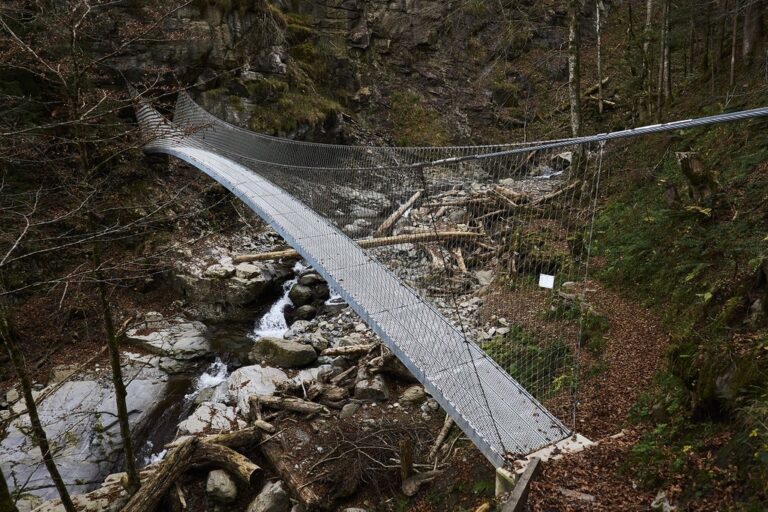
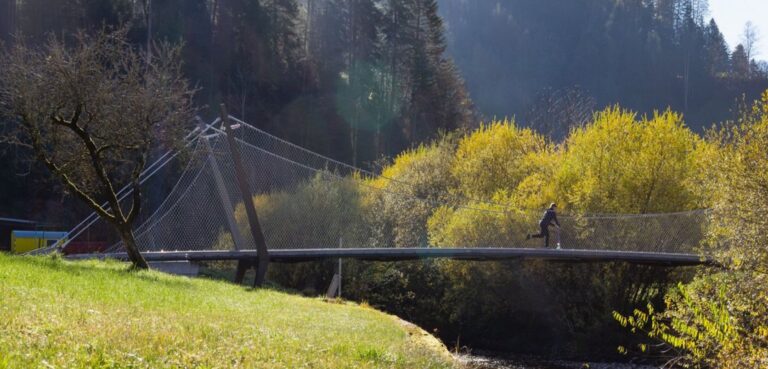
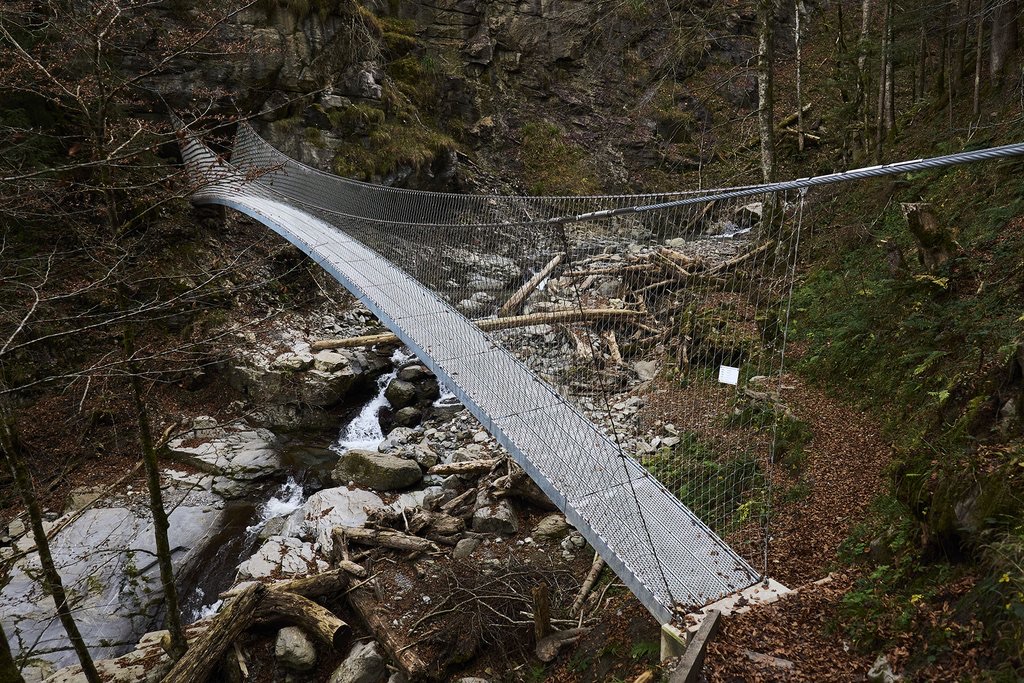
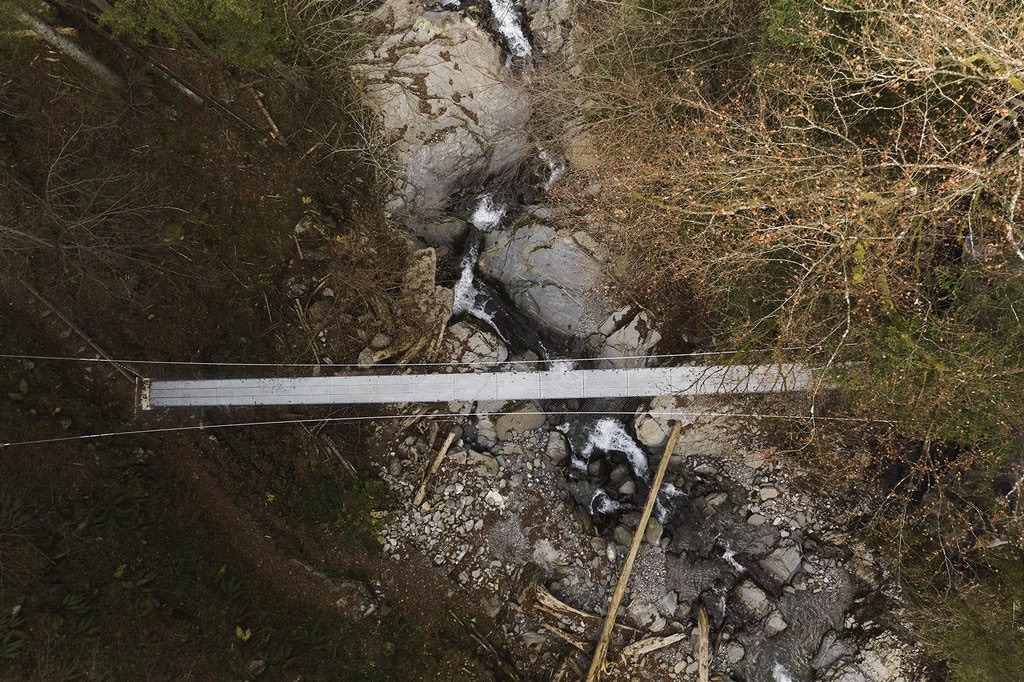
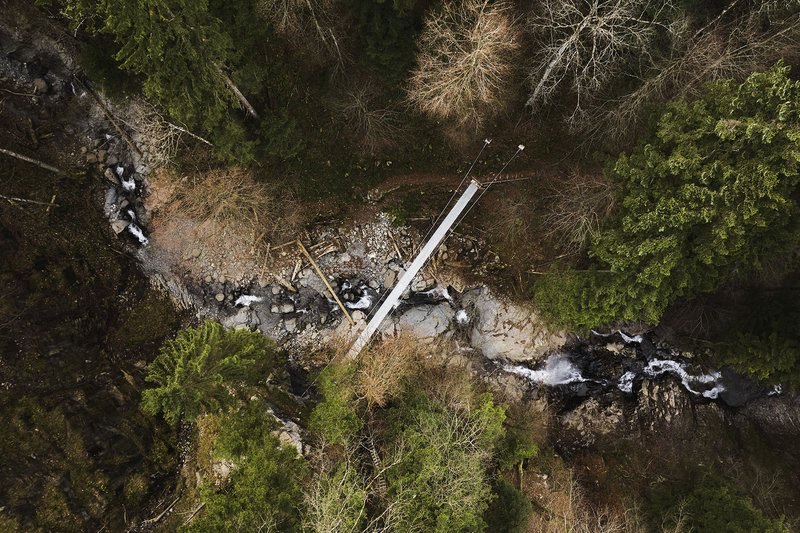
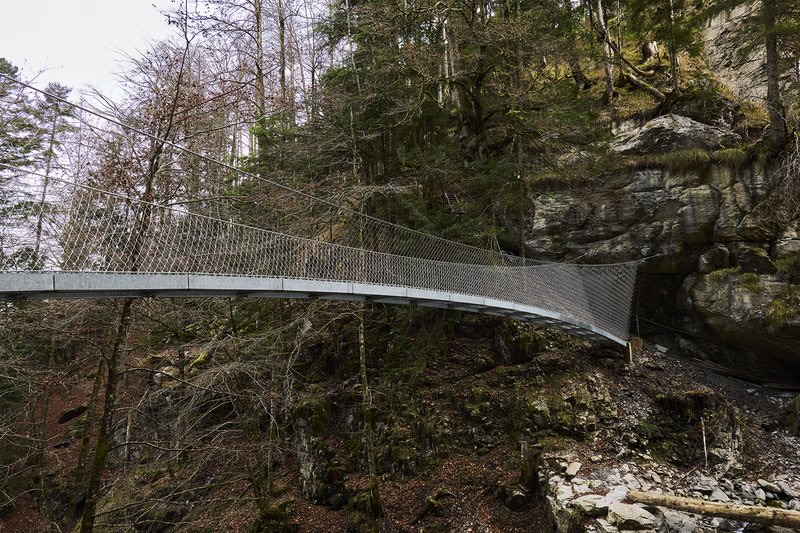
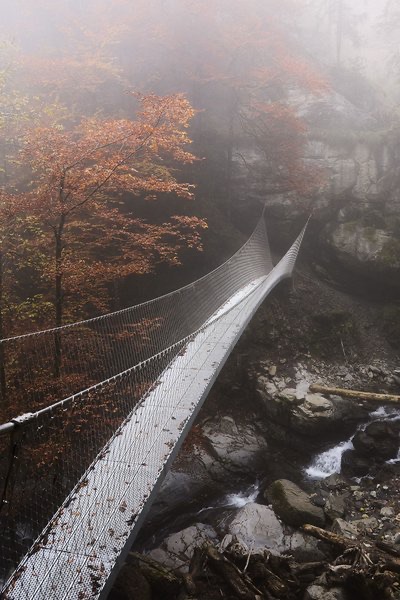
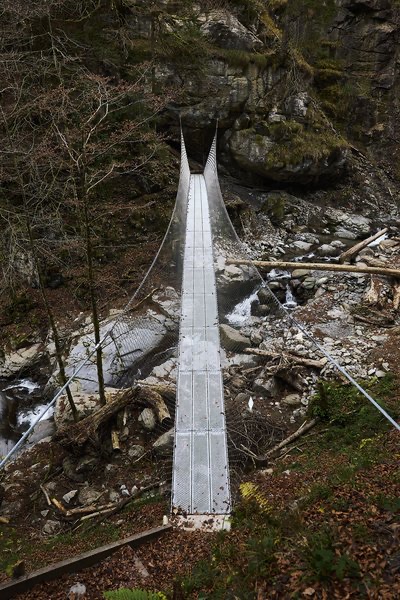
The Altibach gorge is steep-sided, narrow, and prone to debris movement after storms — the same forces that destroyed the original structure. A conventional replacement would have meant heavy foundations and structural elements the site couldn’t comfortably absorb. Instead, the design team at Von Rotz & Wiedemar AG opted for a suspension bridge, with abutments set outside the flood and debris zone and the entire span lifted well above the streambed. Jakob Rope Systems was brought in to dimension and supply the rope and mesh system carrying the structure.
One System, Three Jobs
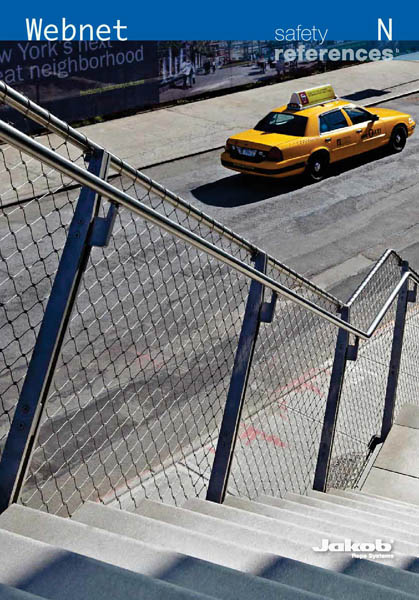
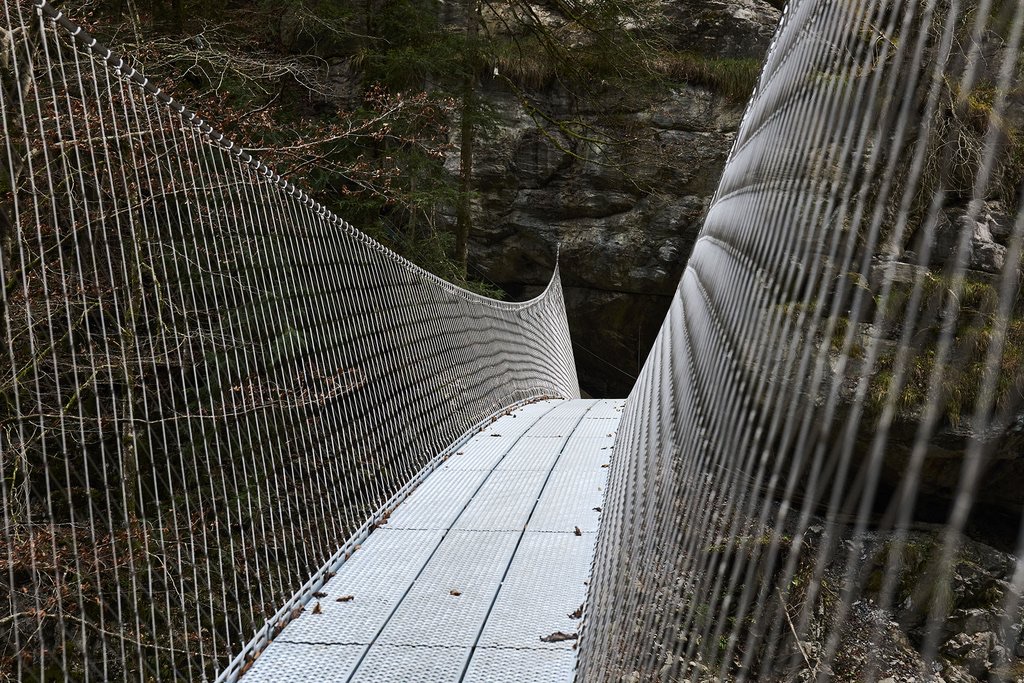
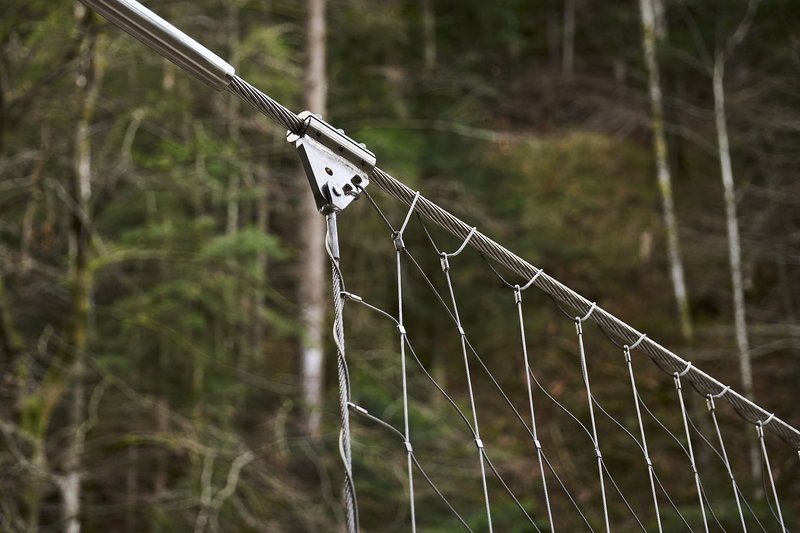
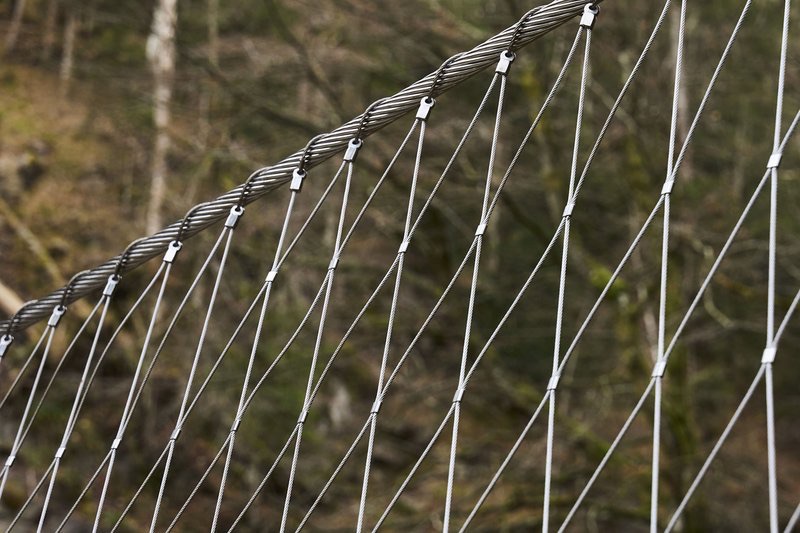
Here’s the part that separates this from a standard cable-and-infill build: the Webnet stainless steel mesh isn’t a railing bolted onto a structural frame. It’s the load path itself. The same net that keeps a hiker safely on the walkway is also doing structural work — carrying, bracing, and containing in a single continuous system.
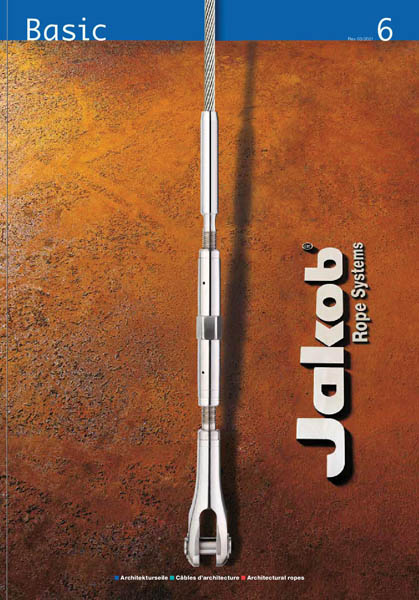
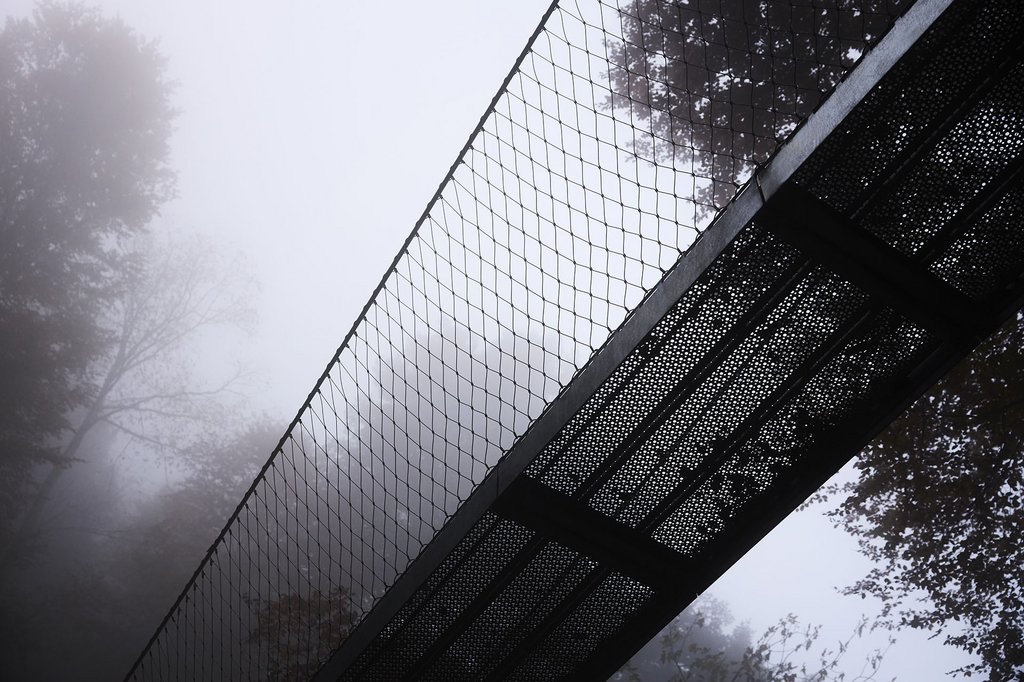
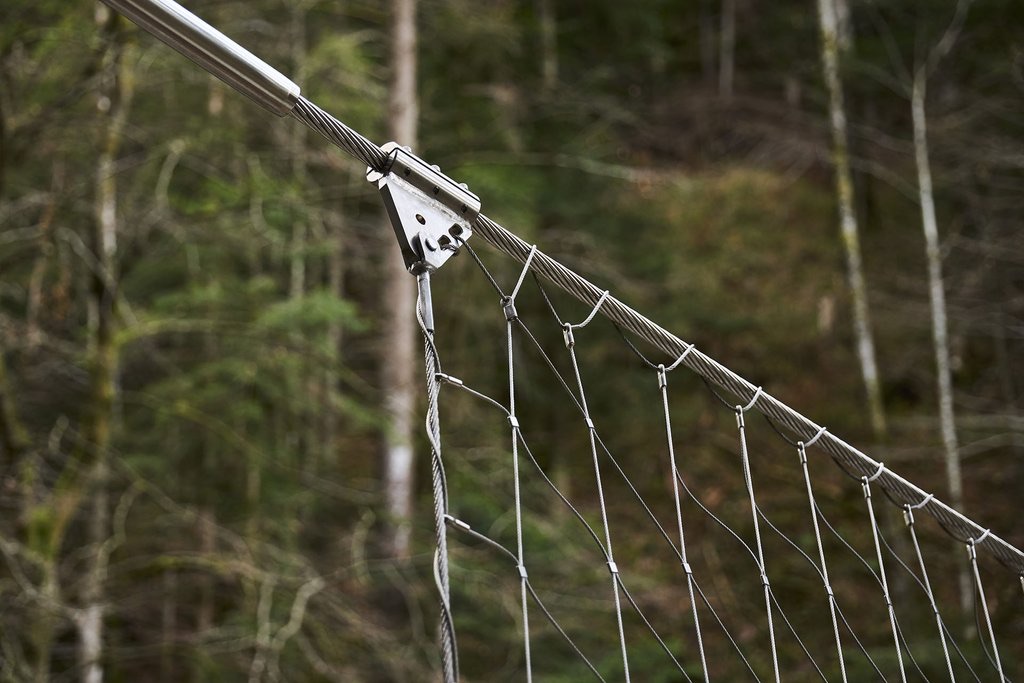
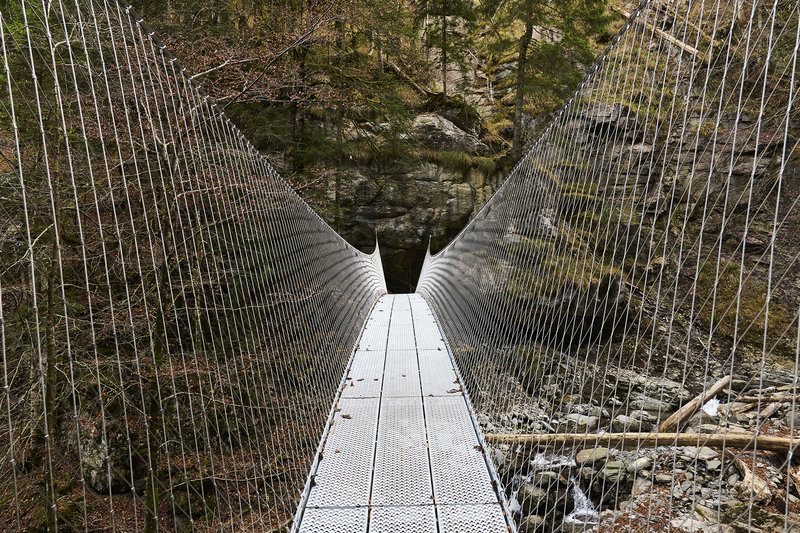
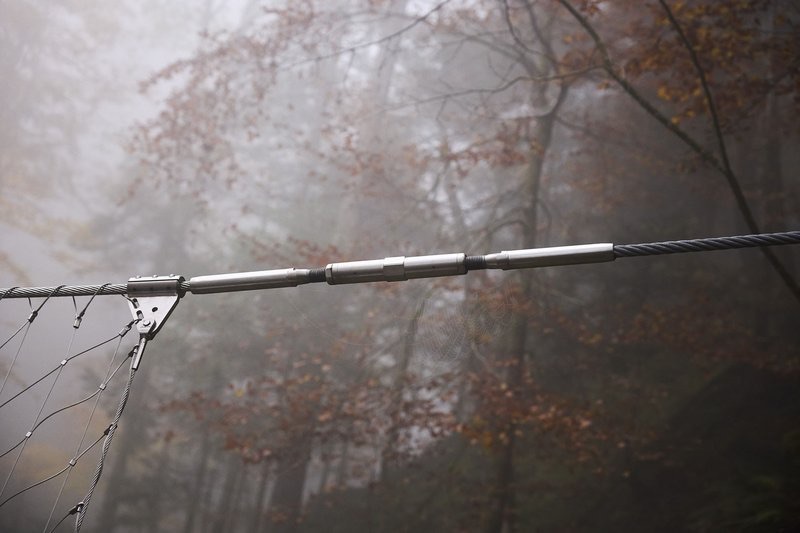
The bridge runs on two suspension ropes (22 mm, open spiral construction) and two bracing ropes below the walking level (16 mm, round-strand), fitted with Classic clevis terminations. Above deck, the Webnet mesh uses 3 mm wire in a variable standing mesh pattern, arranged radially rather than in a single fixed aperture — tuned to the specific geometry of the span instead of forced into a stock size.
That’s the difference between hardware and engineering: a system built to the site, not a site adapted to off-the-shelf parts.
What the Hiker Sees vs. What’s Holding Them
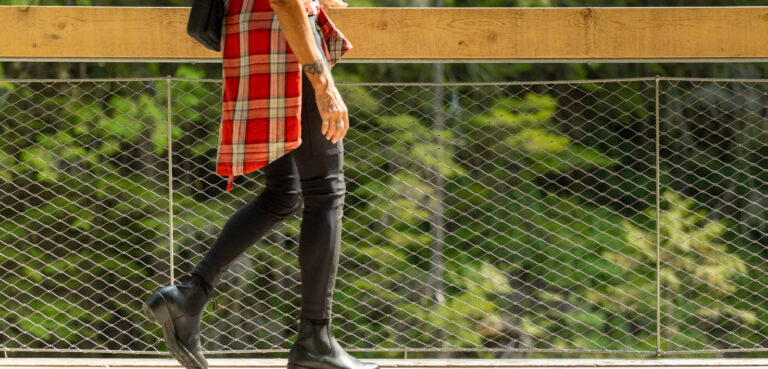
Stand on the walkway and what you notice is what you don’t notice — no heavy railing cage, no visual clutter competing with the gorge below. What you’re not seeing is a fully integrated structural system doing triple duty as load-bearing element, railing, and fall protection, built in marine-grade stainless steel to hold up in permanently damp, shaded alpine conditions for the long term. That’s the pattern behind every Jakob project, from footbridges like this one to urban pedestrian crossings where sightlines matter as much as code compliance.
Why This Approach Scales Beyond One Gorge
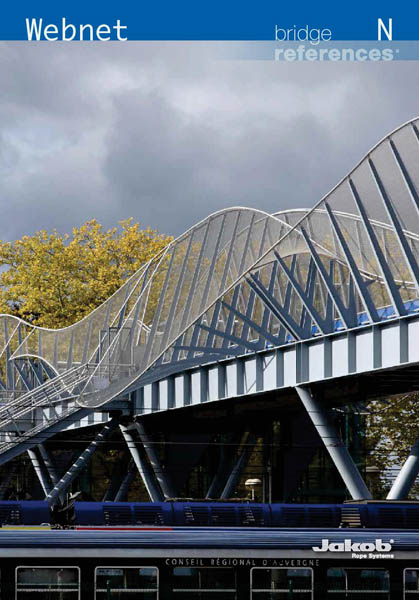
Giswil isn’t an isolated case. The same logic — mesh as active structure rather than passive infill — shows up across Jakob’s bridge references, and it’s exactly why architects and engineers keep turning to the same toolkit for very different constraints: narrow ravines, urban crossings, rockfall zones. If your project also needs to shed weight without shedding safety, the building blocks are the same ones used here, plus the broader Green Solutions line where mesh and cable systems support living facades instead of walkways.
A lightweight, code-appropriate system isn’t a compromise on a constrained site — it’s often the only design that actually fits. Whether the structure is a footbridge over a gorge or a mesh facade on a building envelope, or a trellis system from Green Solutions softening an urban wall, the same principle applies: let the material do more than one job, and the design gets lighter, not weaker.
Does Your Project Sit on a Site That Won’t Tolerate Bulk?
Steep terrain, tight clearances, or a design that can’t afford a heavy safety system bolted on top of it — these are exactly the constraints our engineering team works through every day. We’ll look at your site conditions and give you a straight answer on what’s structurally viable, including when a lighter system is genuinely the right call.