Sion Pedestrian Bridge
Sion, Switzerland
Sion, Switzerland
A 180-Meter Pedestrian Bridge Over a Swiss Highway Needed Safety That Wouldn’t Fight the Design
Here’s the challenge every engineer on a signature bridge eventually faces: the safety systems required by code can easily undermine the very design you’re trying to protect.
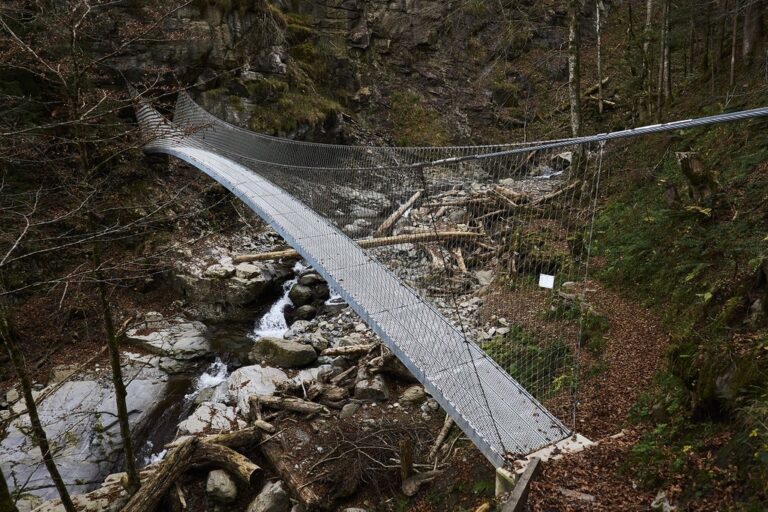
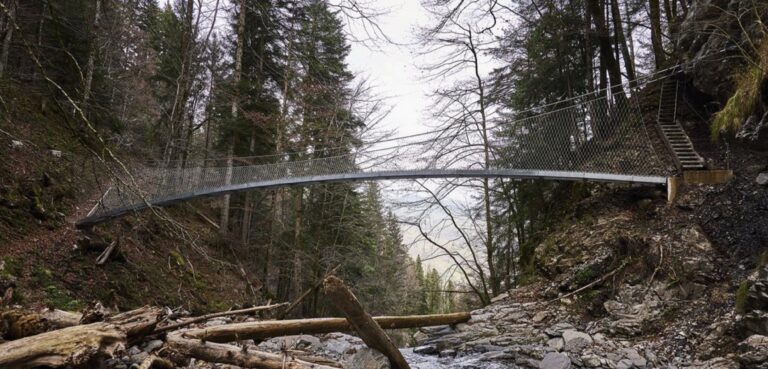
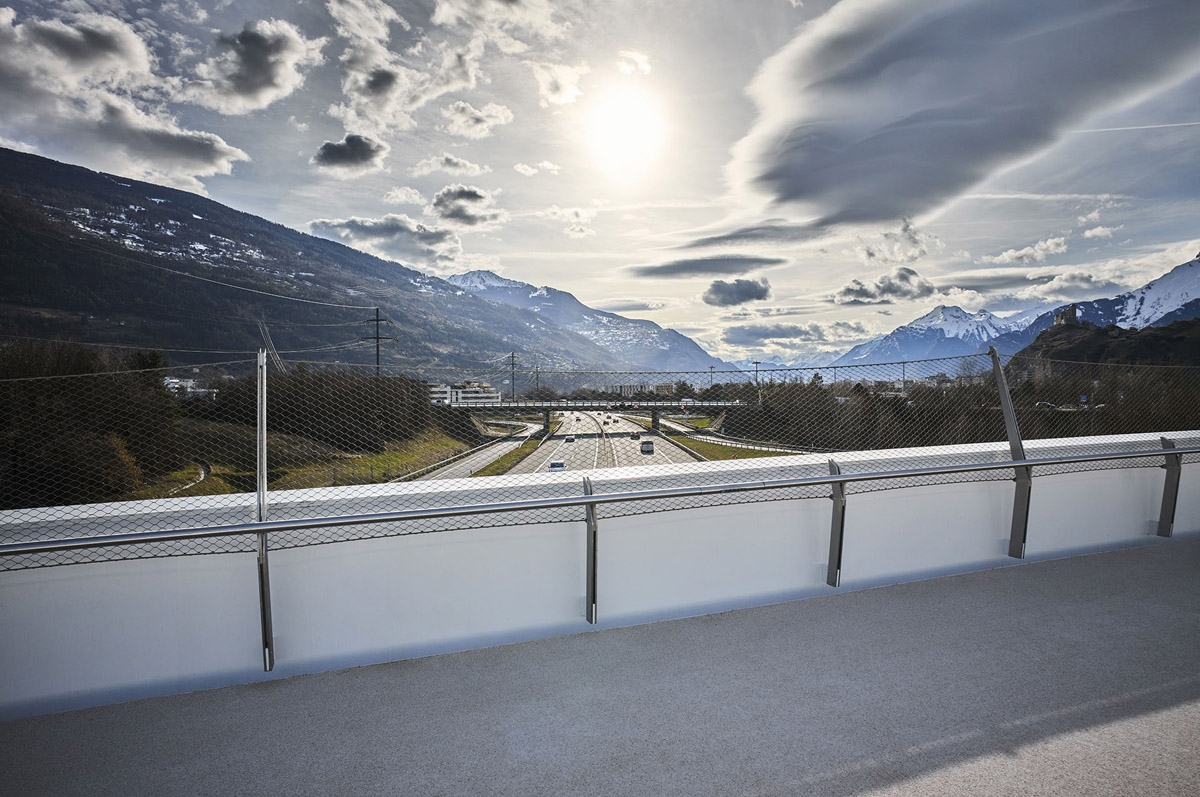
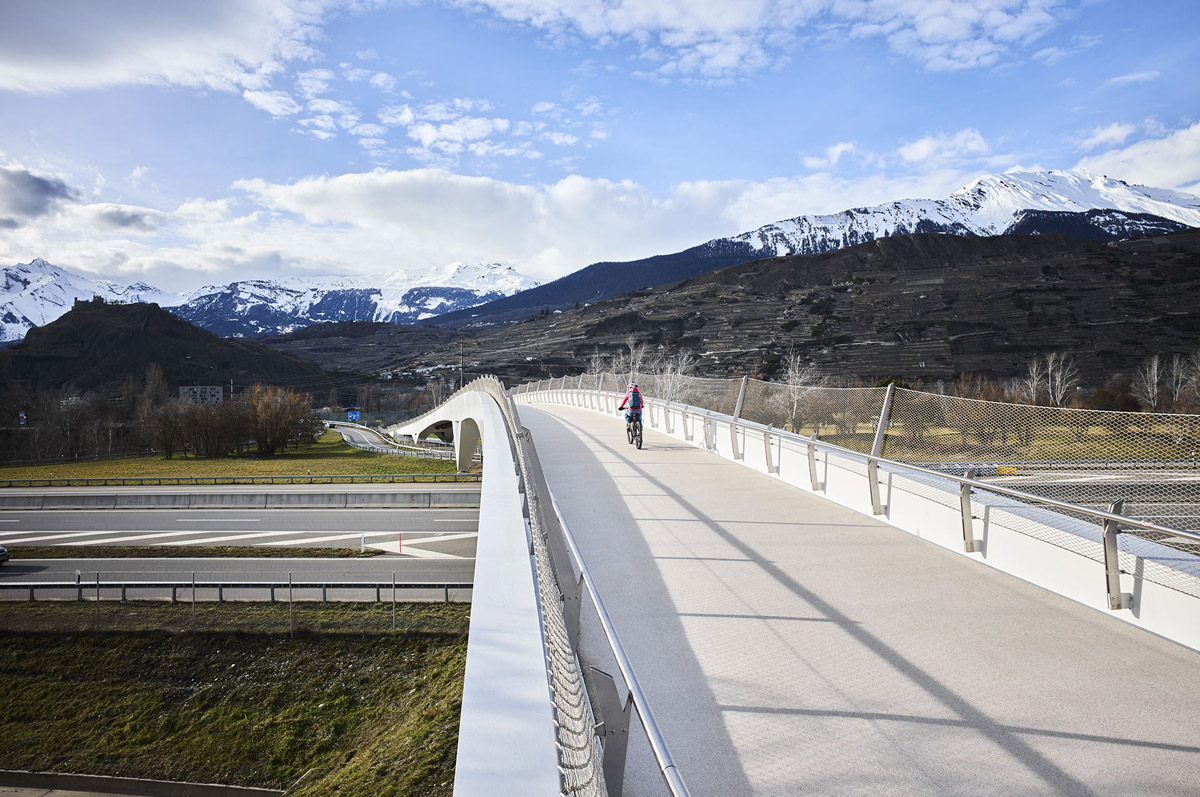
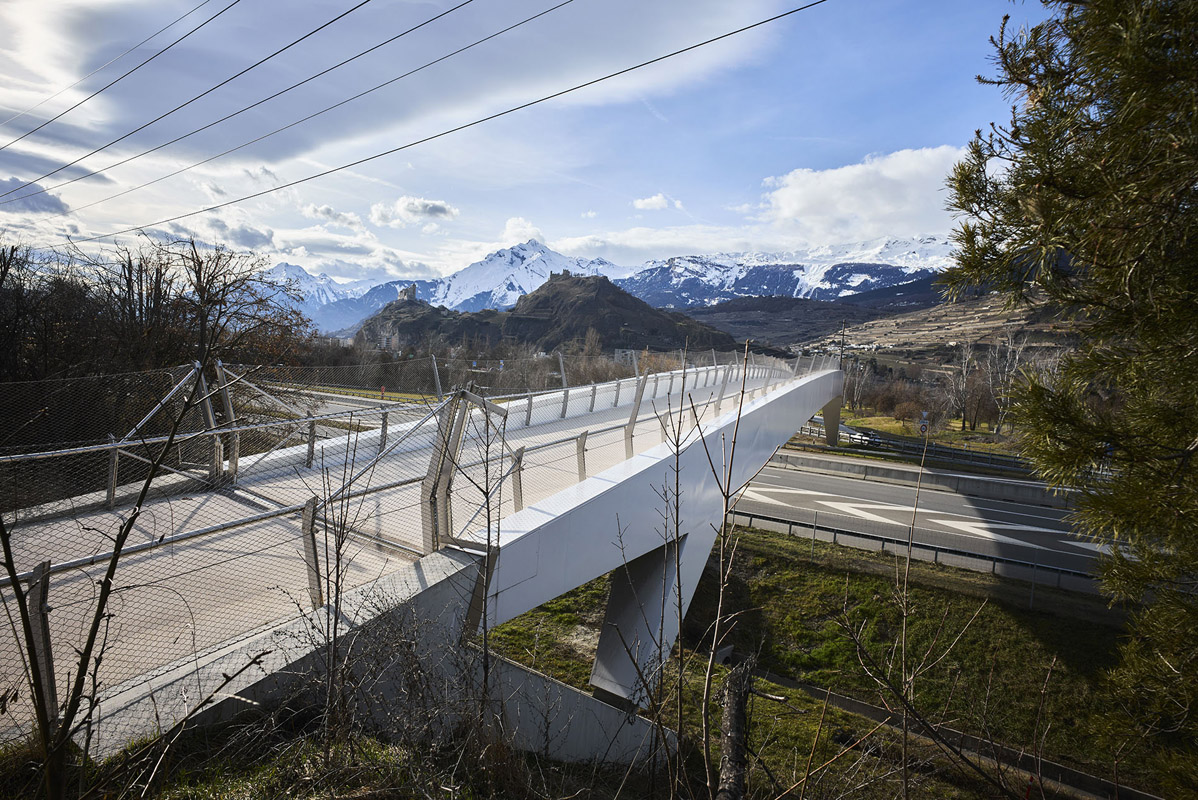
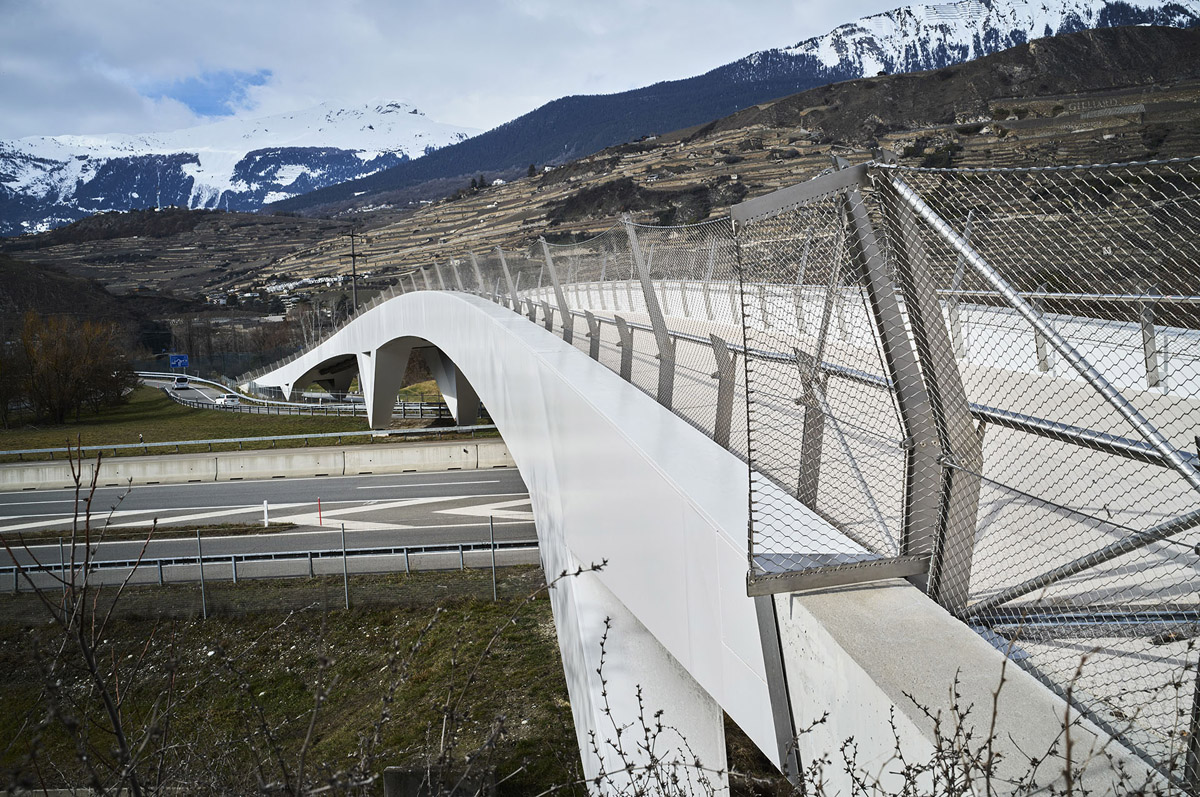
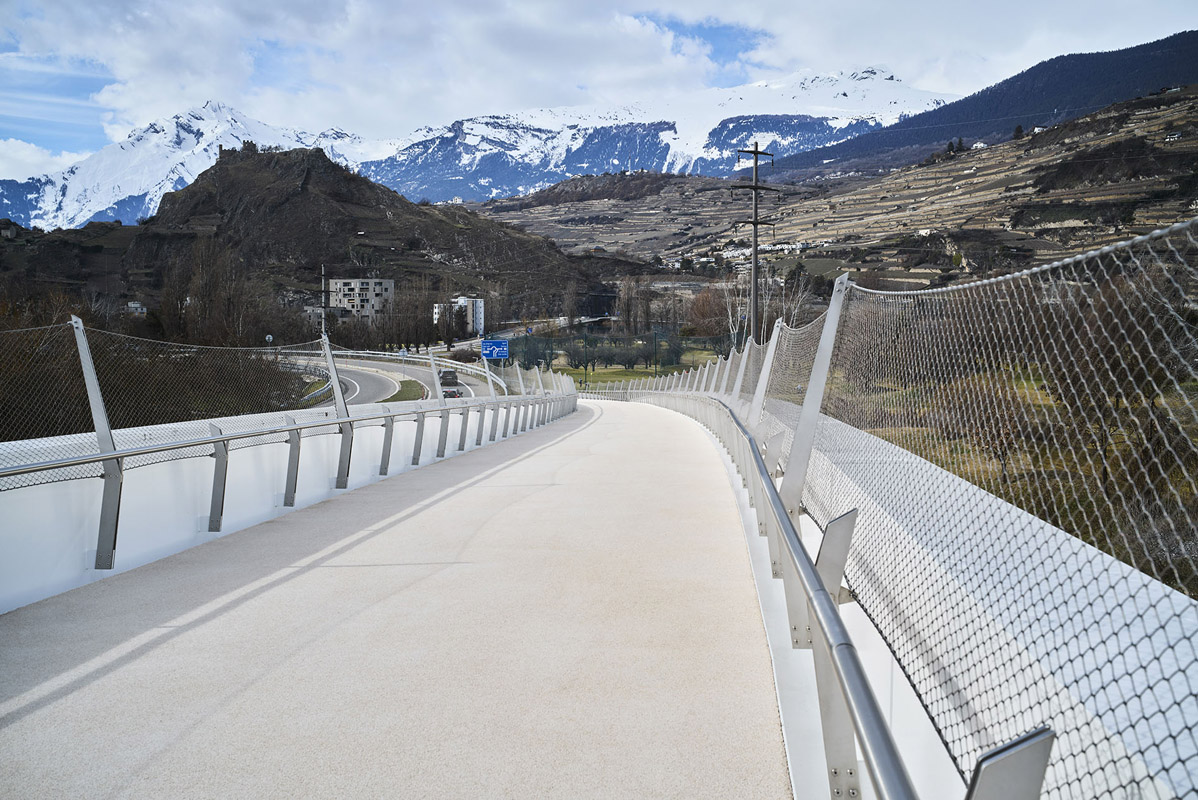
The pedestrian and bicycle bridge over the A9 freeway in Sion, Switzerland, is a study in restraint. The structure — clean white concrete, fluid geometry, alpine backdrop — was designed to feel open. The last thing the project needed was a heavy mesh cage sitting on top of the parapet, blocking sightlines and competing with the architecture.
So when the project team needed a compliant fall protection system above the bridge’s perapet, they turned to Jakob Rope Systems.
The Project: Connecting a City Without Interrupting It
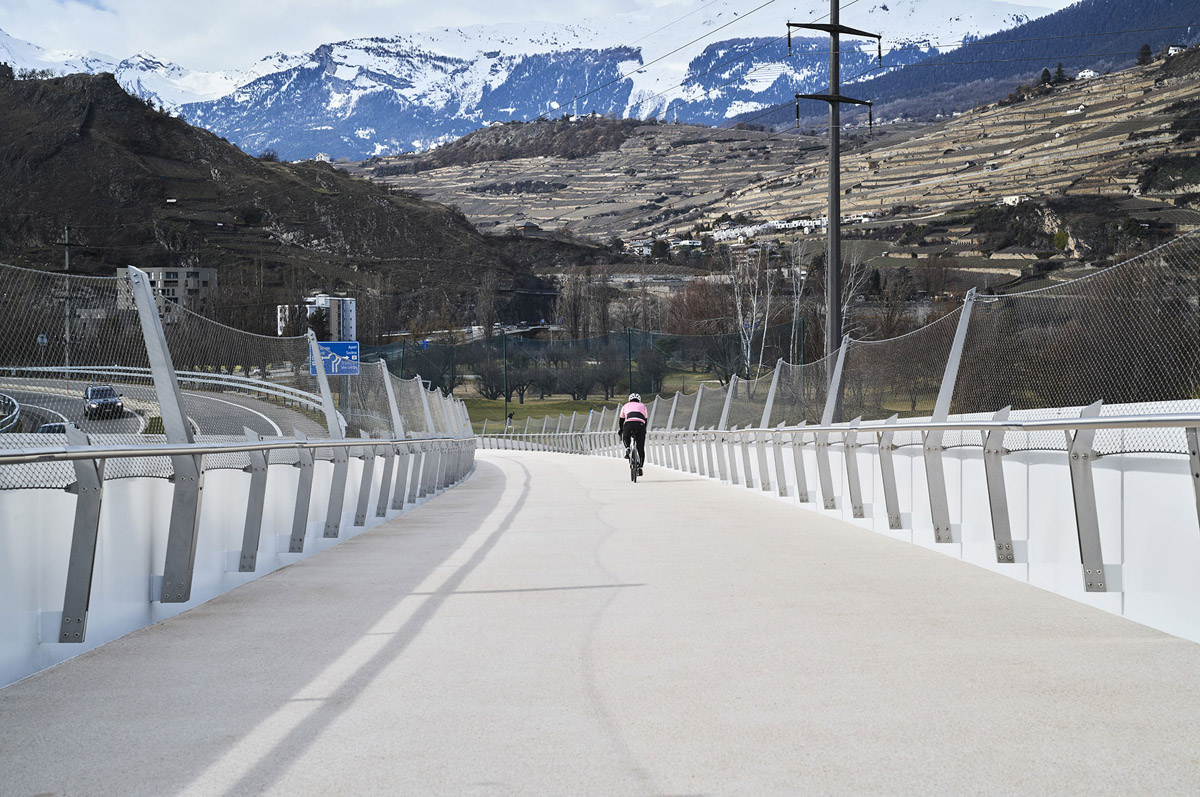
The Passerelle A9 serves a practical purpose: it links the Sion hospital center, the Echutes parking area, and the Tourbillon district without forcing pedestrians and cyclists into highway-adjacent traffic. At roughly 180 meters long and 4.5 meters wide, the bridge was designed to handle up to 5,000 pedestrians per day — a real working piece of urban infrastructure, not a one-off landmark.
The planning and project management team — dvarchitectes & associés, based in Sion — needed a safety solution above the parapet that met Swiss normative requirements for fall protection over a freeway. The constraint wasn’t just structural. It was visual. Any solution had to feel like it belonged.
Client: Ville de Sion, Canton du Valais. Metal construction: Margelisch Chabbey & Cie, Urvier.
The Solution: Vertically Tensioned Webnet
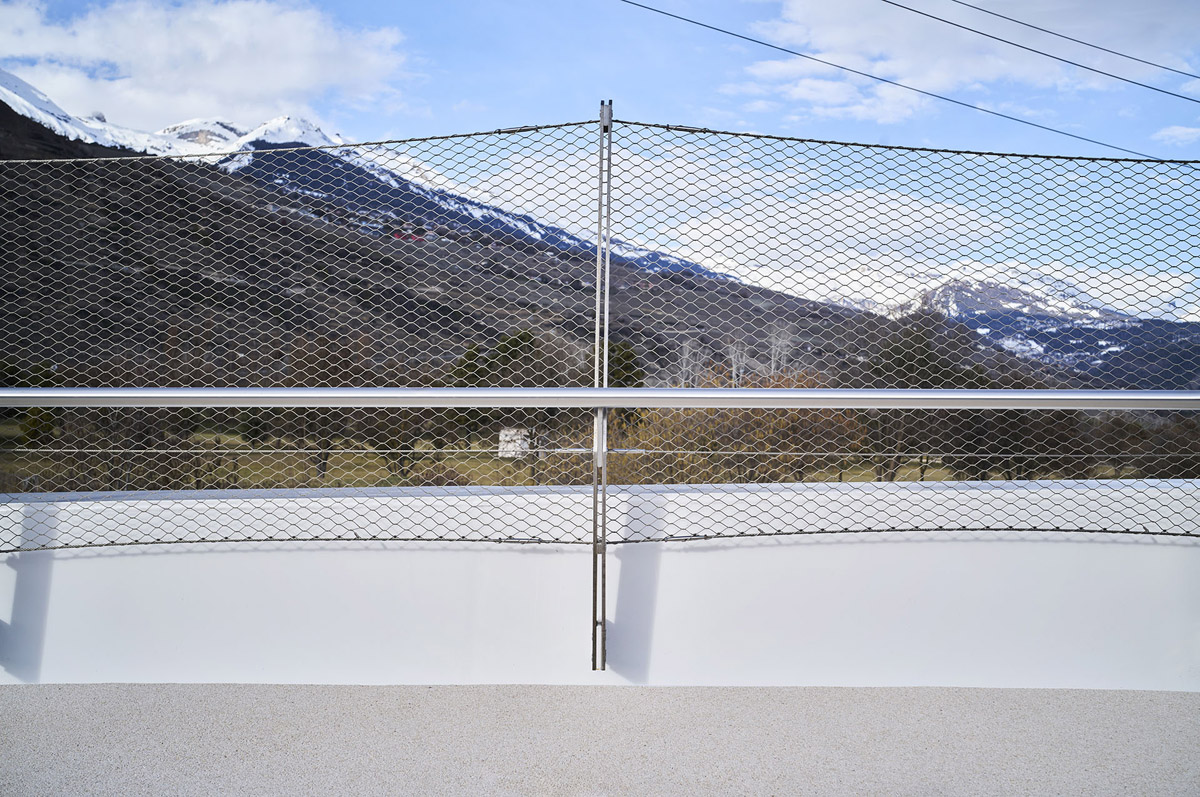
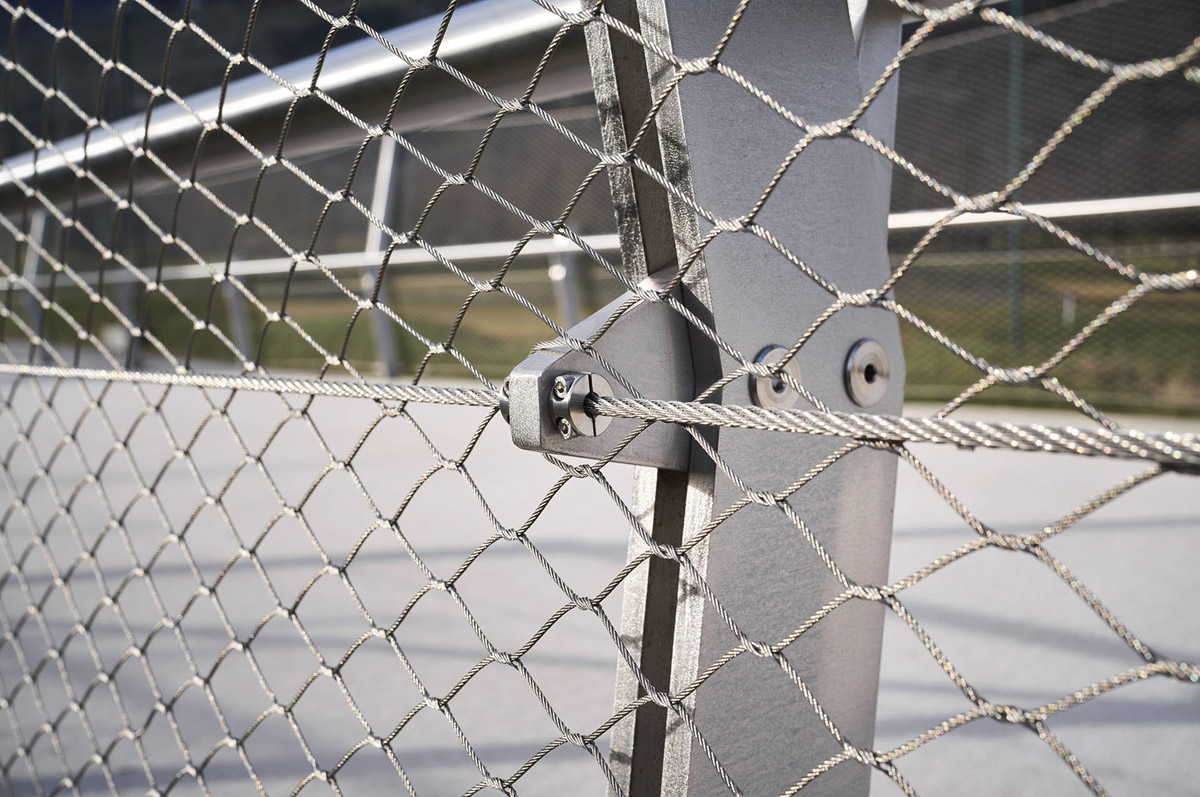
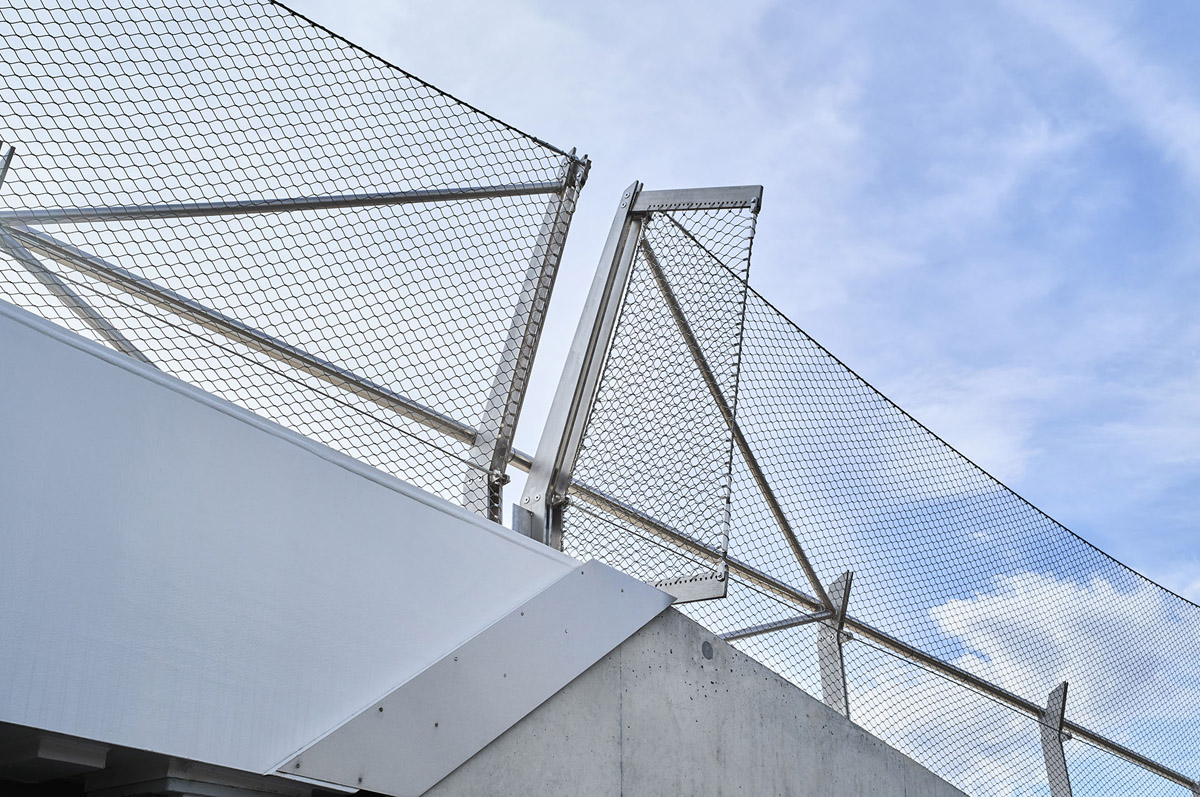
Jakob Rope Systems developed an integrated mesh solution using vertically tensioned Webnet — the same stainless steel rope mesh system used in zoo enclosures, green facades, and architectural railings worldwide, now applied to bridge fall protection.
The specifications:
- Webnet without sleeves — rope diameter 2 mm, mesh size 40 mm, horizontal orientation
- Total mesh surface: 697 m², divided into elements with a maximum mesh length of 50 m per segment
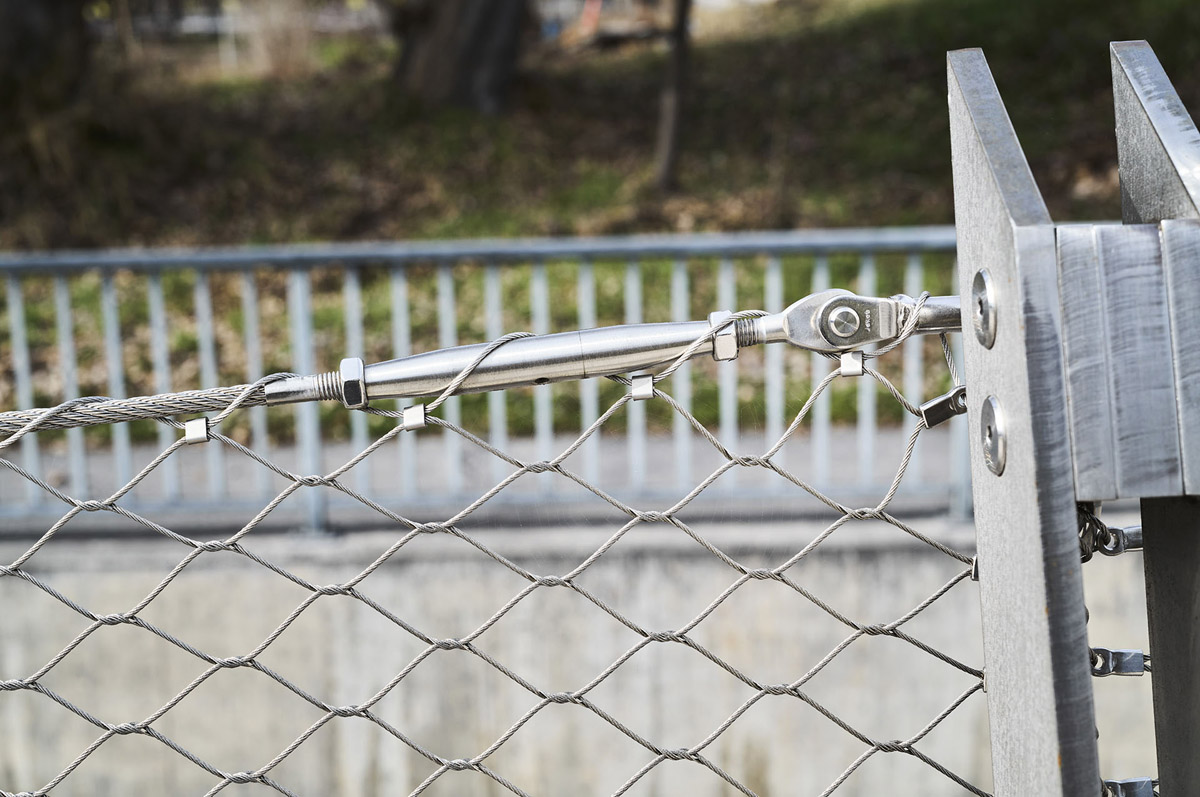
- Surround ropes: 6×7 + WC construction, rope diameter 8 mm
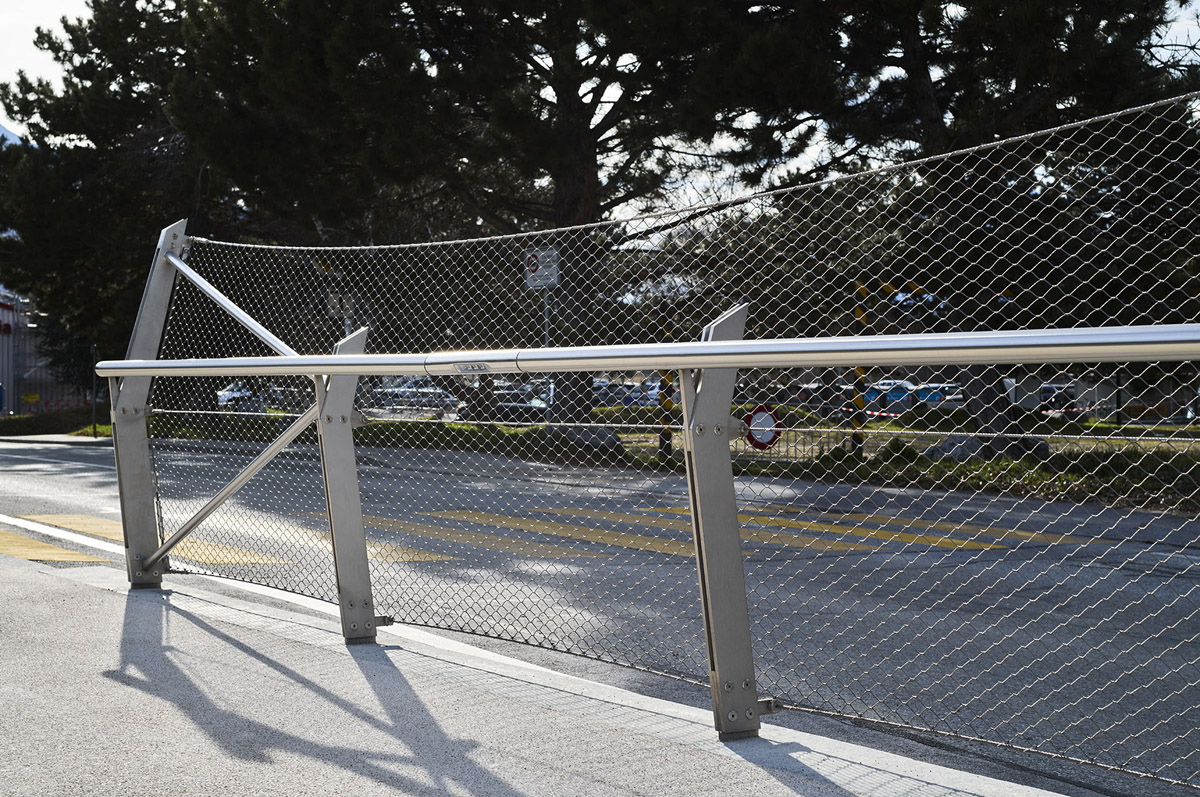
The mesh was factory-prefabricated for a precise fit, then installed on-site in coordination with the metal construction team. Jakob handled planning, dimensioning, production, delivery, and installation — a single-source solution that simplified coordination for the project team.
Construction period: 2021–2023.
Why This Approach Works for Bridge Applications
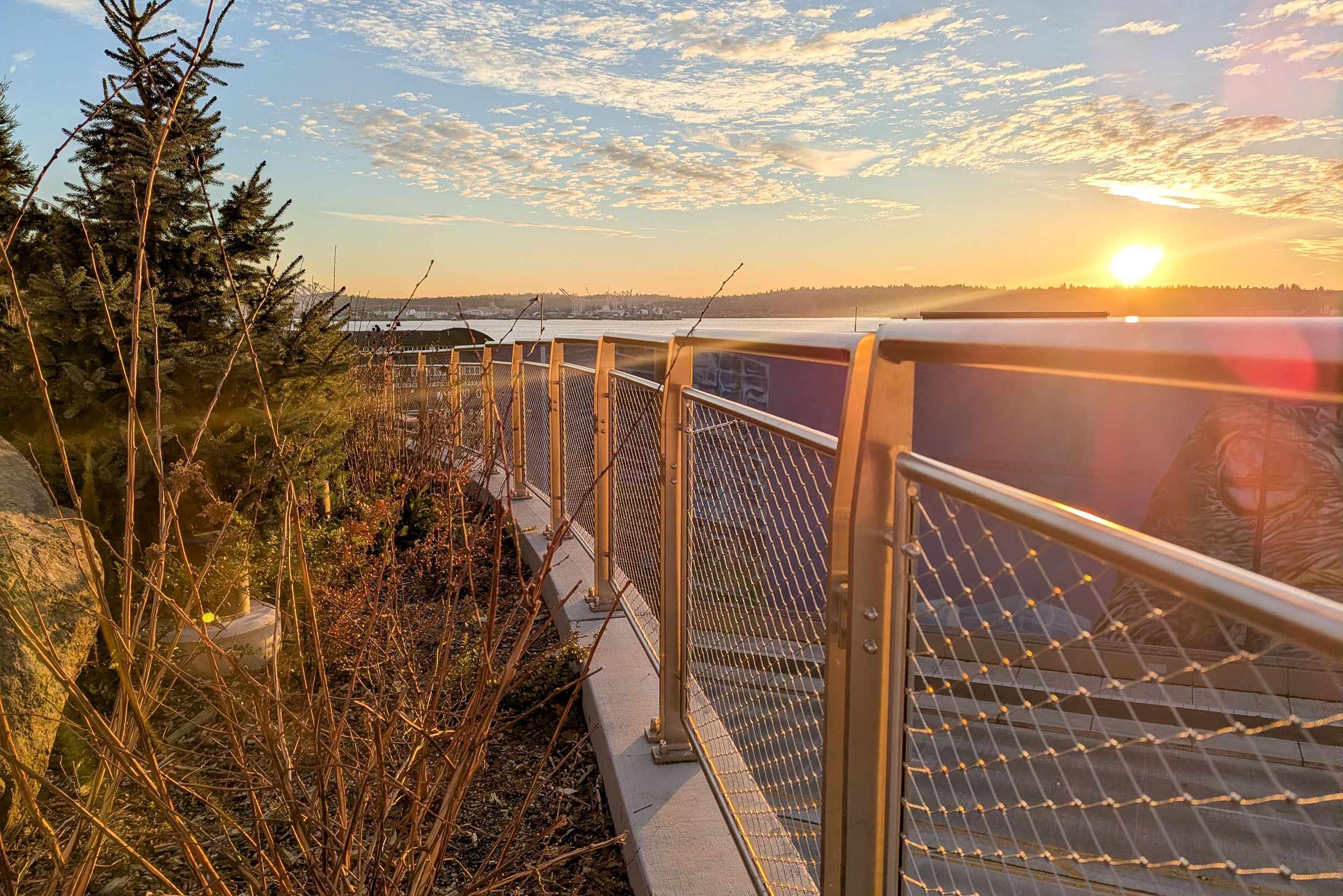
The filigree nature of Webnet is its primary advantage in a context like this. A 2 mm rope diameter and 40 mm mesh size creates a barrier that reads visually as near-transparent at distance. The structure registers as a safety layer rather than an enclosure — an important distinction when the architecture is designed to feel open.
From an engineering standpoint, the system had to account for wind loads and live loads at height, above an active freeway. Jakob’s dimensioning process addressed those requirements while keeping the mesh geometry consistent throughout the 697 m² installation.
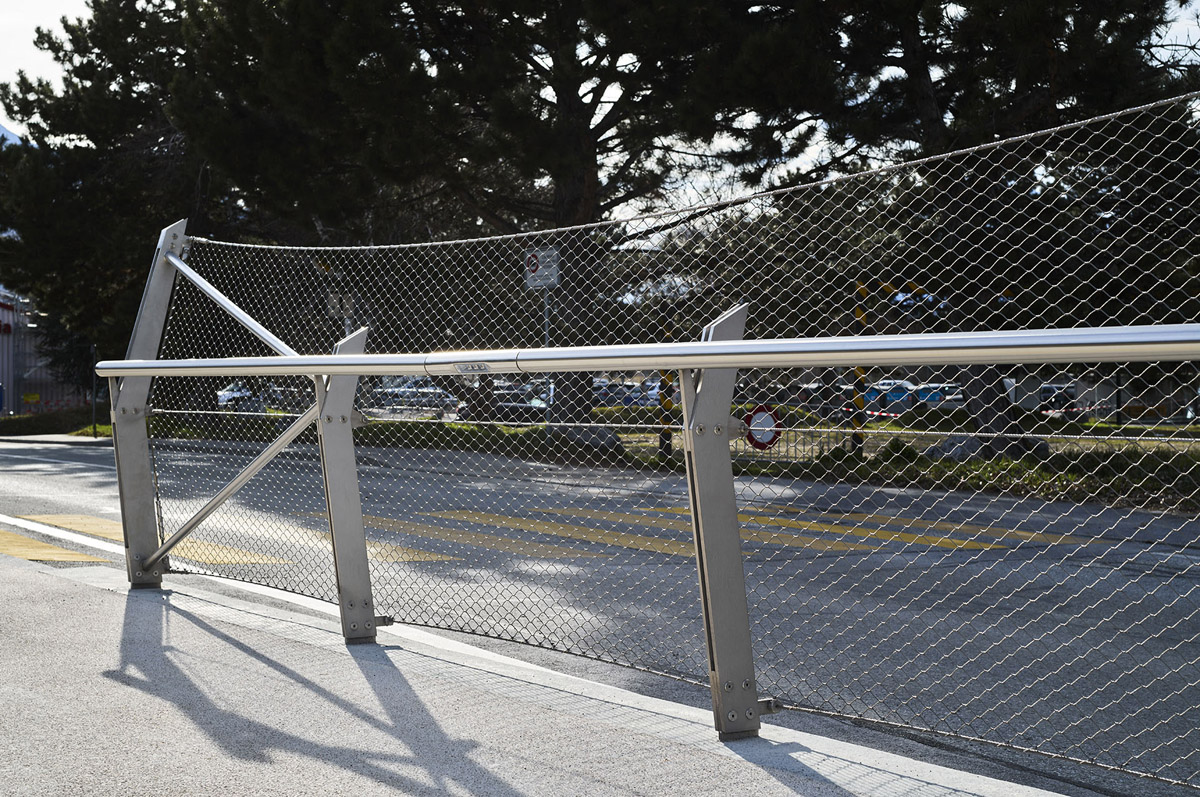
The vertical tensioning approach also minimizes post spacing, reducing the visual rhythm of the safety system and preserving the bridge’s clean sightlines.
What Architects and Engineers Should Know
This project is a useful reference point for a few common bridge safety scenarios:
When code requires protection above an existing parapet. Webnet can be integrated with existing metal structures without requiring a full parapet redesign. The system attaches to surround ropes anchored to the structural frame — a relatively low-impact retrofit path.
When visual transparency is a design requirement. The combination of thin rope diameter and fine mesh size makes Webnet one of the few compliant fall protection options that doesn’t compromise an open feel.
When the installation environment is constrained. Factory prefabrication of mesh elements means less on-site complexity. For a bridge over an active highway, that matters.
Project Specifications
- Project Pedestrian bridge to the Sion Hospital
- Location Sion, Canton du Valais, Switzerland
- Client Ville de Sion, Canton du Valais
- Architect / Planning dvarchitectes & associés, Sion
- Metal Construction Margelisch Chabbey & Cie, Urvier
- Application Vertical bridge fall protection above parapet
- Jakob Product Webnet (no sleeves), Ø 2 mm rope, 40 mm mesh
- Total Mesh Area 697 m²
- Surround Rope 6×7 + WC, Ø 8 mm
- Construction Period 2021–2023
- Photography Severin Jakob

Safety That Earns Its Place
The best safety systems on high-design projects share a common trait: they solve the engineering problem without creating a visual one. At the Passerelle A9, Webnet does exactly that — a compliant, load-rated fall protection system that integrates into the bridge’s architecture rather than sitting on top of it.
If you’re working on a bridge, overpass, or elevated structure where standard guardrail systems feel too heavy, Jakob’s team can work through the options with you.
Working on a parking structure, bridge, stadium, or façade project that requires mesh enclosure?