Sion Pedestrian Bridge
Sion, Switzerland
Sion, Switzerland
A 180-Meter Pedestrian Bridge Over a Swiss Highway Needed Safety That Wouldn’t Fight the Design
Here’s the challenge every engineer on a signature bridge eventually faces: the safety systems required by code can easily undermine the very design you’re trying to protect.
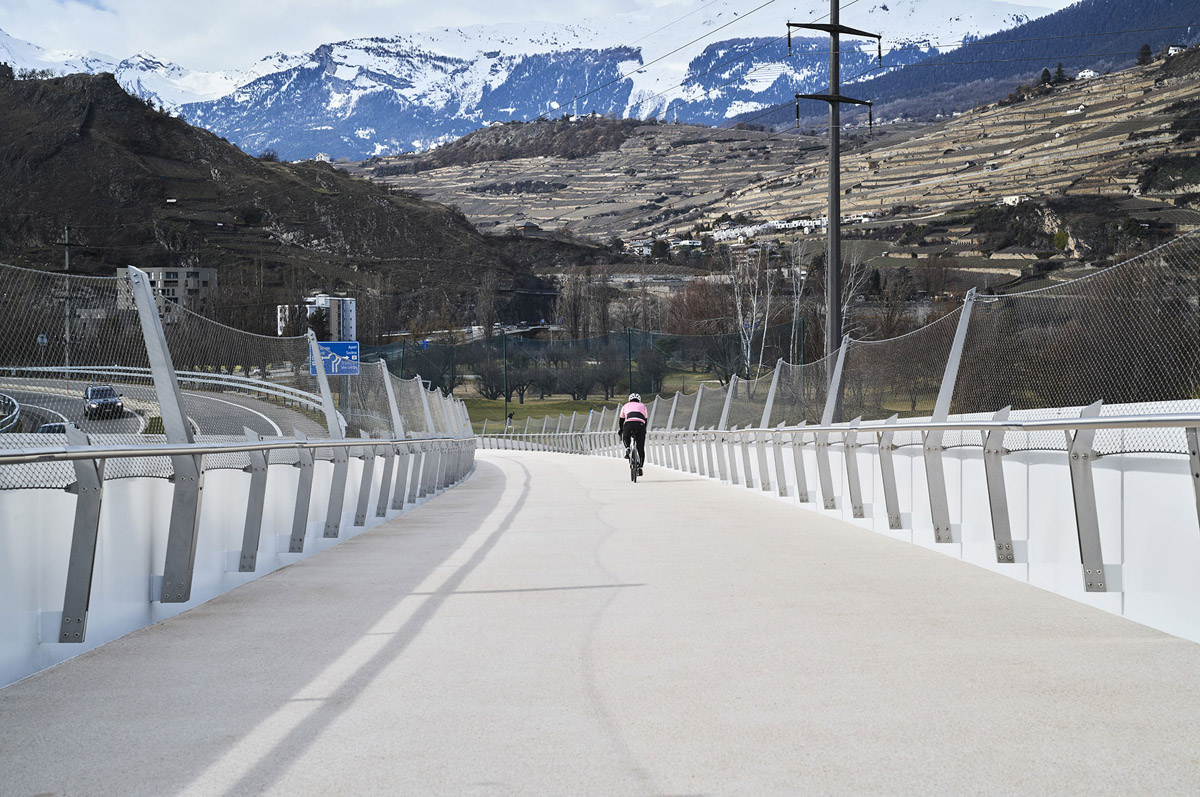
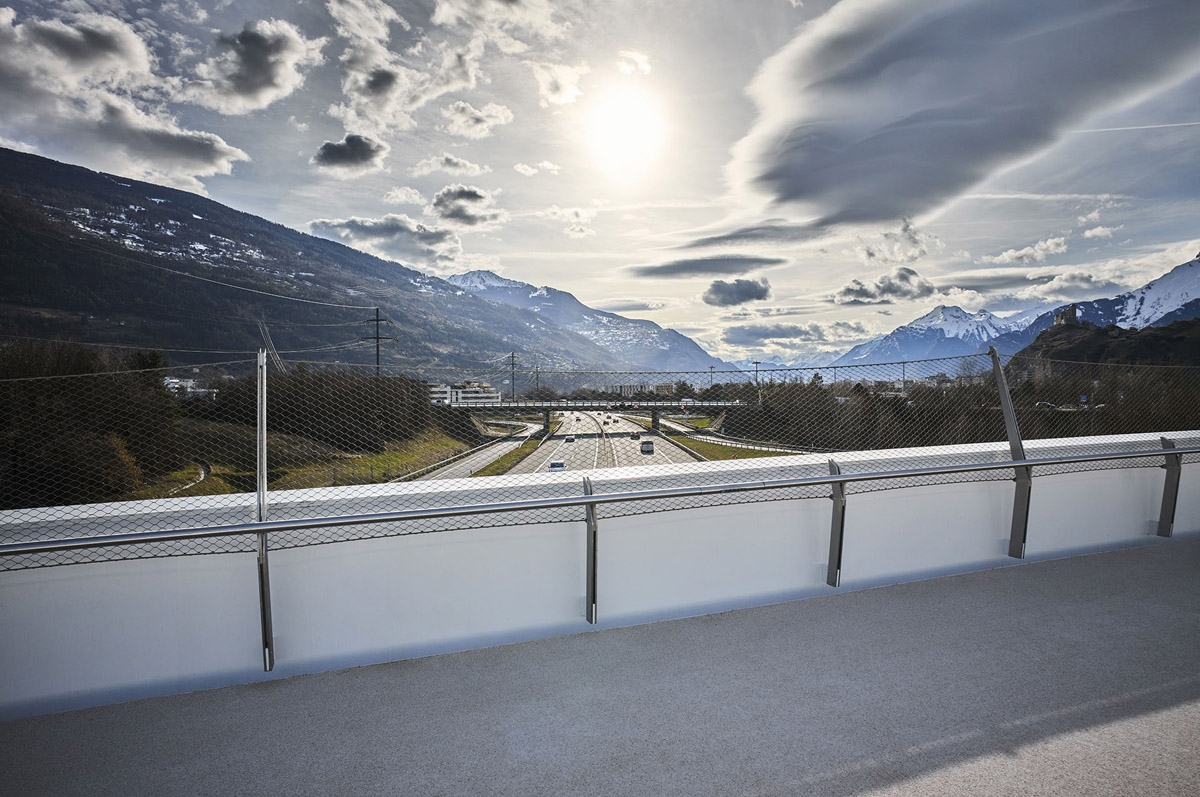
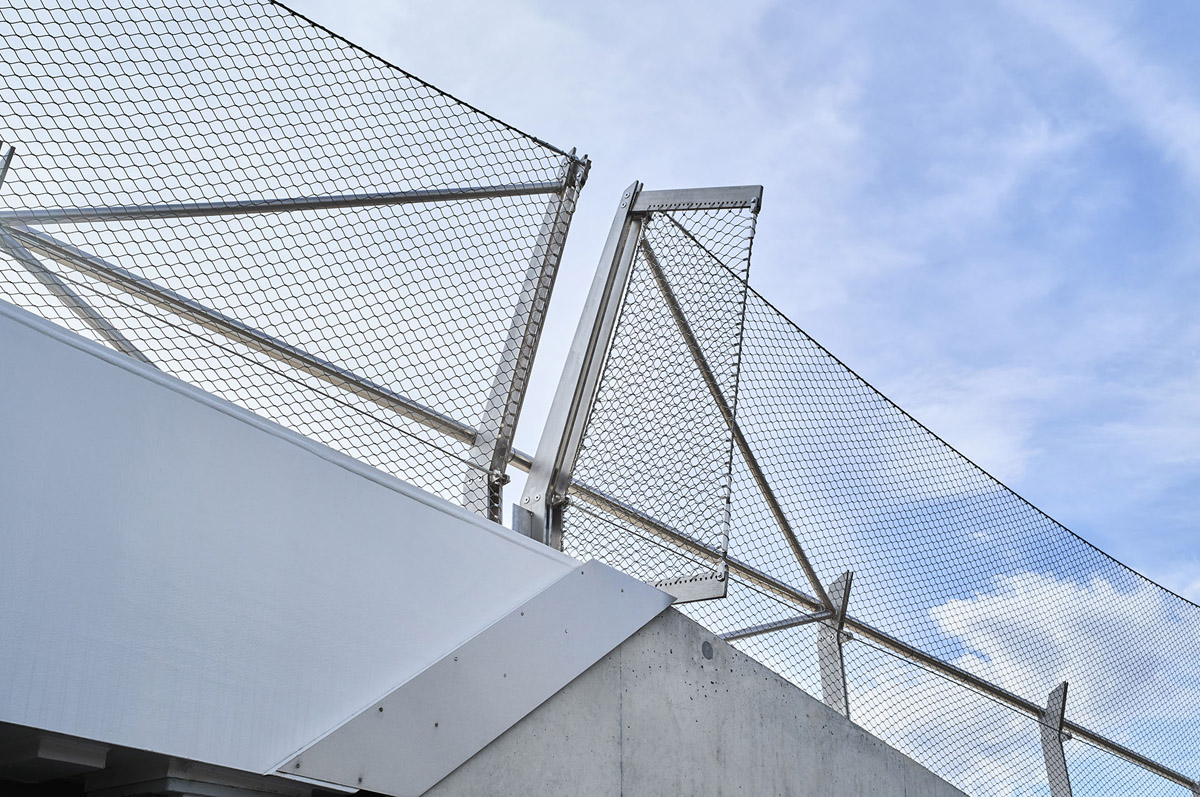
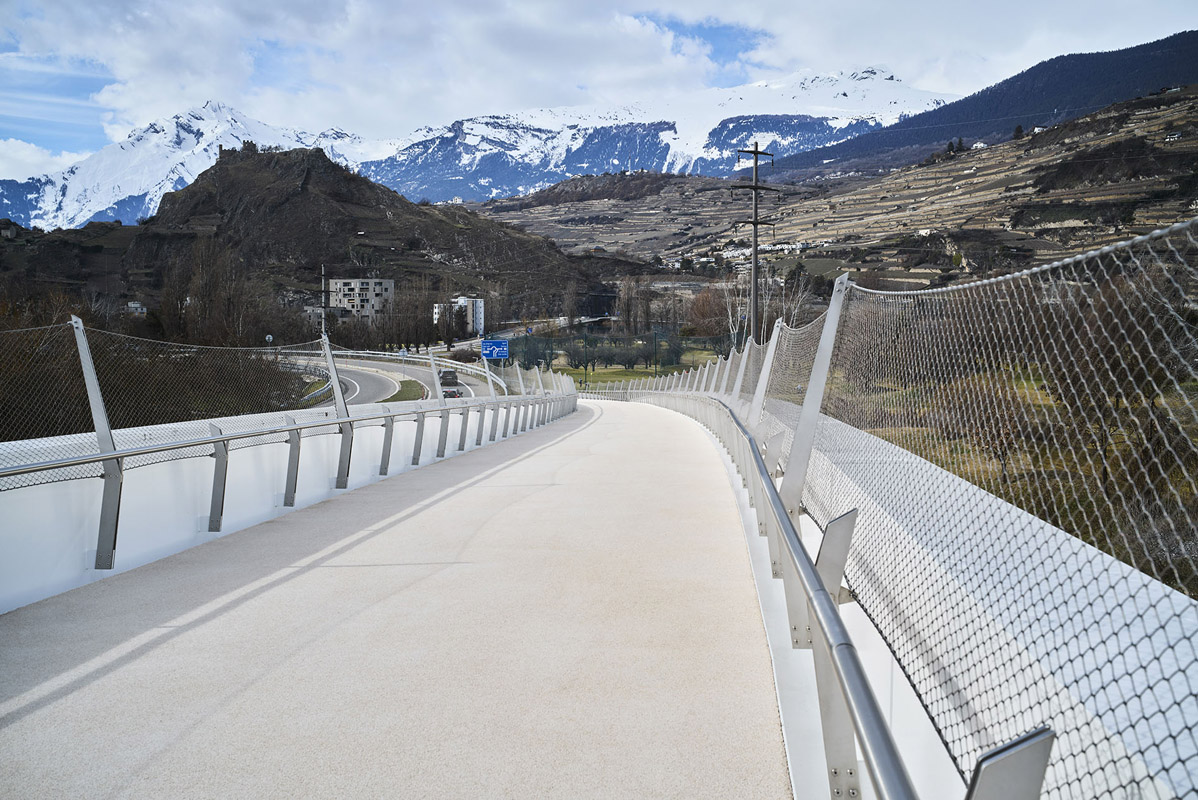
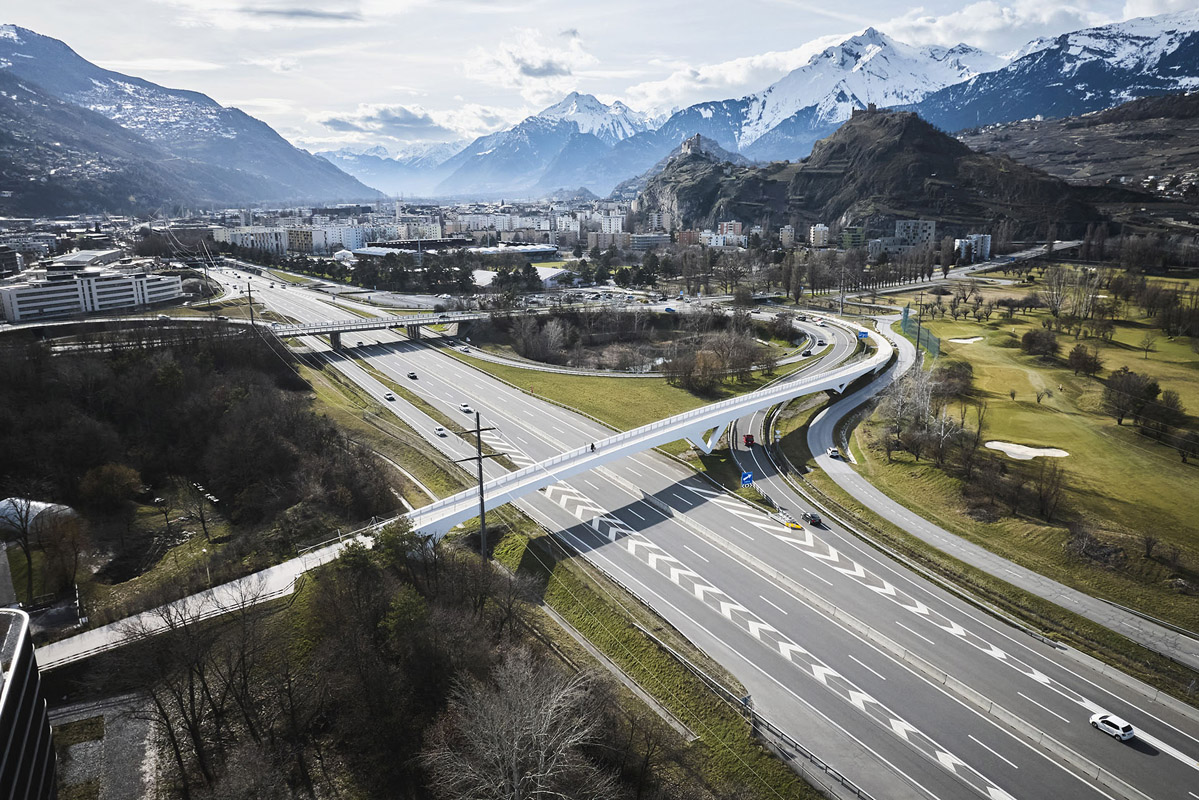
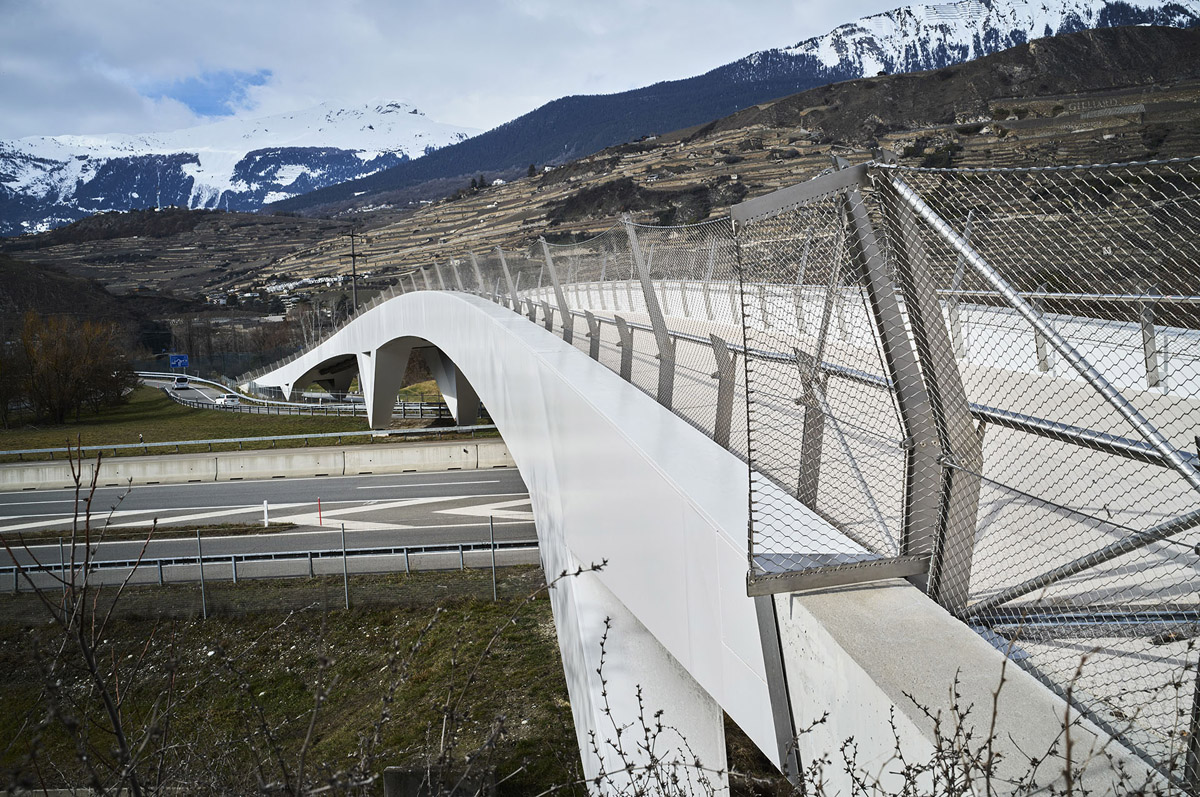
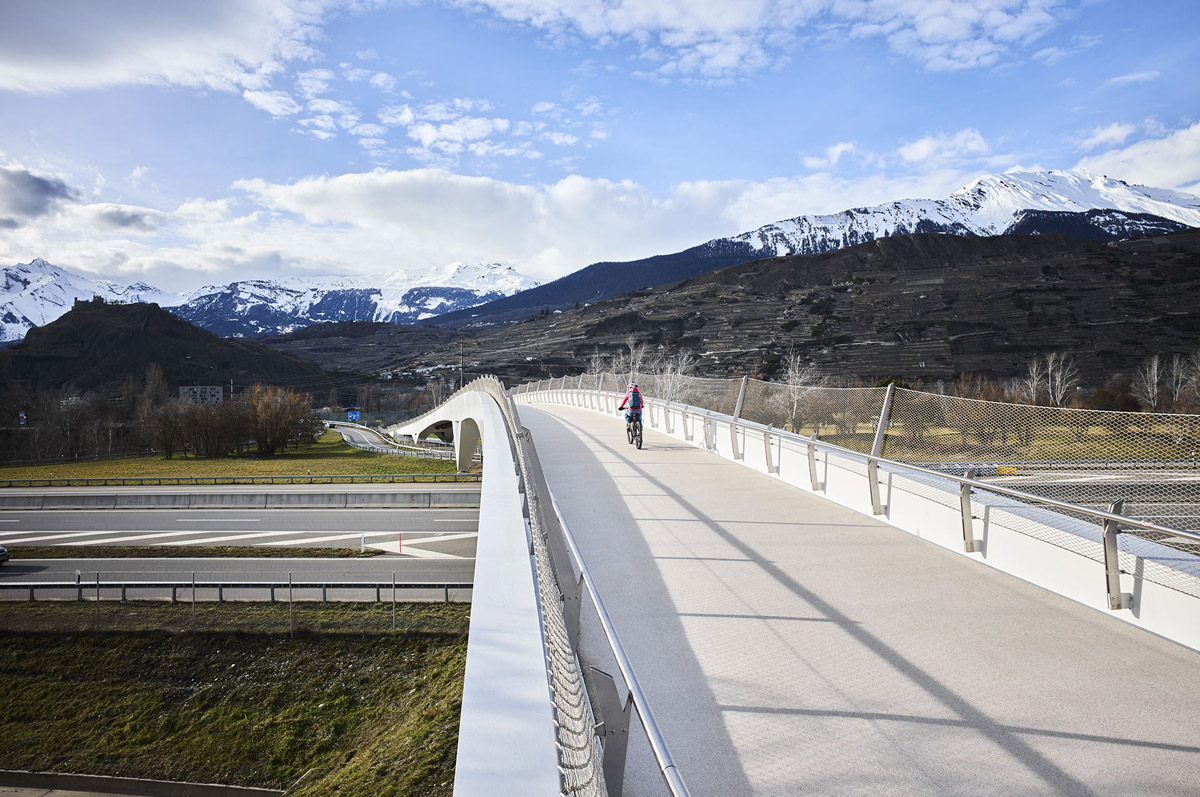
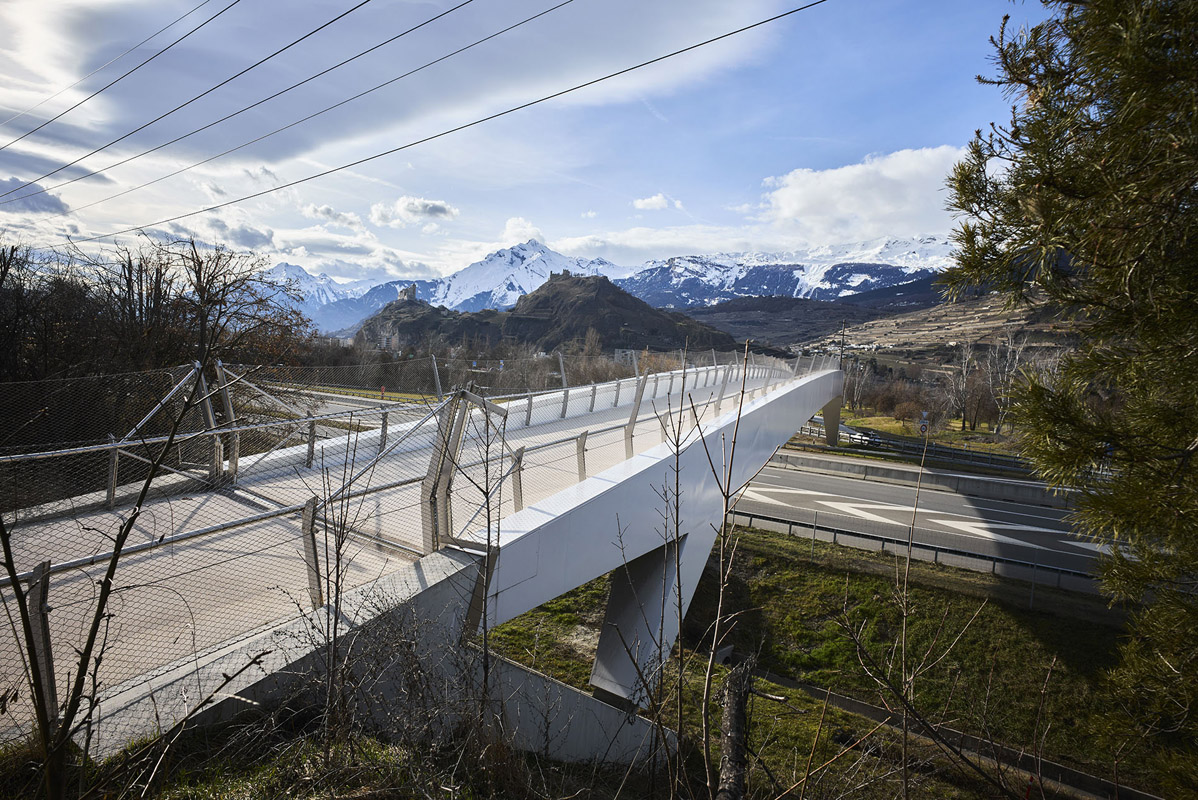
The pedestrian and bicycle bridge over the A9 freeway in Sion, Switzerland, is a study in restraint. The structure — clean white concrete, fluid geometry, alpine backdrop — was designed to feel open. The last thing the project needed was a heavy mesh cage sitting on top of the parapet, blocking sightlines and competing with the architecture.
So when the project team needed a compliant fall protection system above the bridge’s perapet, they turned to Jakob Rope Systems.
The Project: Connecting a City Without Interrupting It
The Passerelle A9 serves a practical purpose: it links the Sion hospital center, the Echutes parking area, and the Tourbillon district without forcing pedestrians and cyclists into highway-adjacent traffic. At roughly 180 meters long and 4.5 meters wide, the bridge was designed to handle up to 5,000 pedestrians per day — a real working piece of urban infrastructure, not a one-off landmark.
The planning and project management team — dvarchitectes & associés, based in Sion — needed a safety solution above the parapet that met Swiss normative requirements for fall protection over a freeway. The constraint wasn’t just structural. It was visual. Any solution had to feel like it belonged.
Client: Ville de Sion, Canton du Valais. Metal construction: Margelisch Chabbey & Cie, Urvier.
Swiss Engineering Meets Pacific Northwest Waterfront
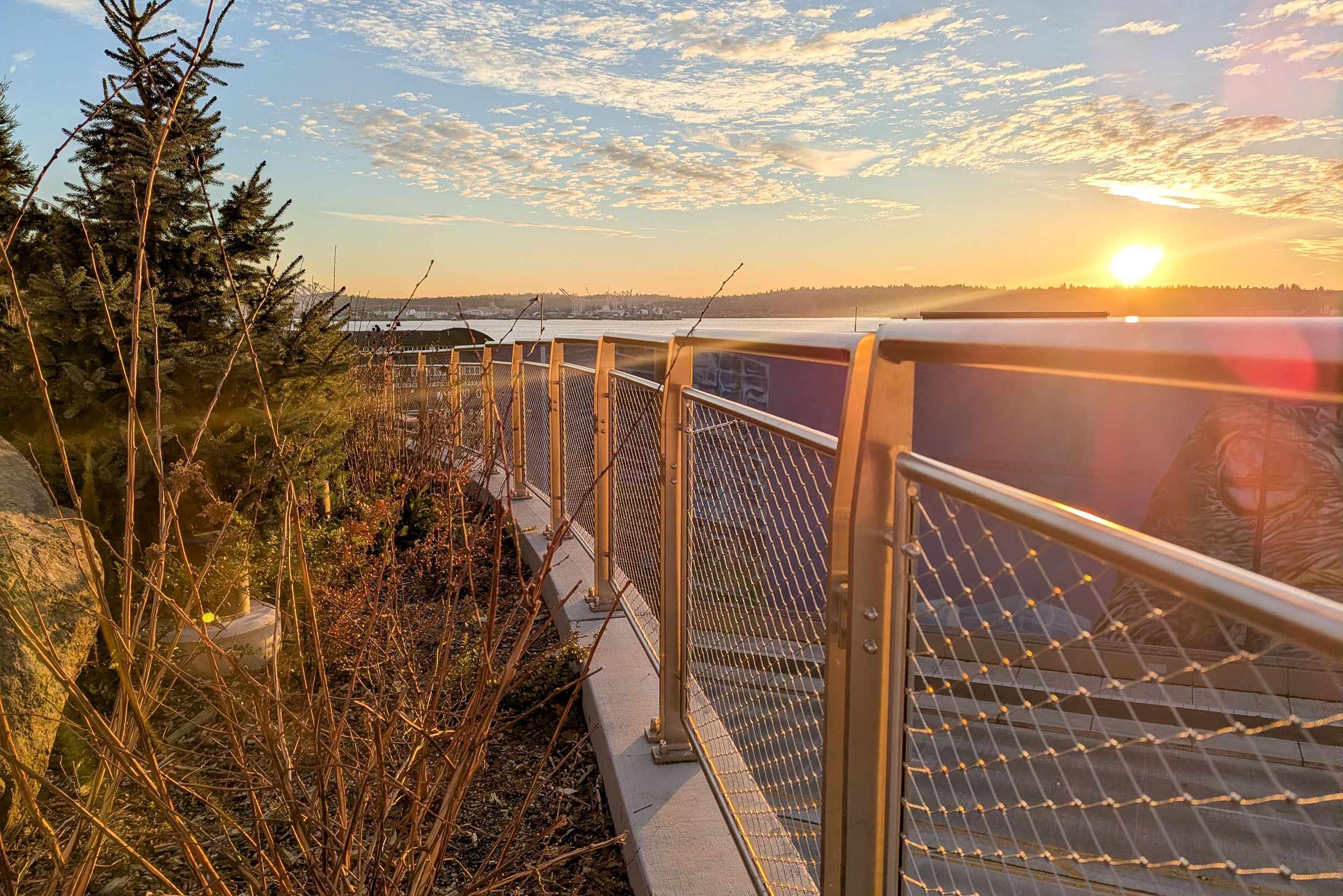
When Seattle’s Pier 58 collapsed in September 2020, the city lost more than infrastructure—it lost a beloved waterfront gathering space. Rebuilding required 600 linear feet of coastal protection that could withstand Pacific Northwest conditions while preserving the unobstructed Elliott Bay views that define this location.
Jakob’s Inviss-C frames with Webnet mesh now protect the entire coastal perimeter, delivering transparent safety barriers that visitors barely notice—while performing flawlessly in one of North America’s most demanding marine environments.
The Challenge: Protection in a Harsh Marine Environment
Seattle Parks and Recreation faced specific technical requirements:
- 600 linear feet of coastal protection along Elliott Bay
- Transparent barriers preserving panoramic water views
- Marine-grade durability for constant salt spray exposure
- Seismic-rated systems for earthquake-prone region
- Zero maintenance requirements for public infrastructure
- Seattle Building Code compliance
Traditional railing systems struggle in these conditions. Glass requires constant cleaning in salt-spray environments and blocks natural ventilation. Powder-coated aluminum corrodes in marine exposure. Rigid systems perform poorly during seismic events.
The project demanded engineered solutions specifically designed for coastal conditions.
Jakob’s Solution: Inviss-C Frames with Webnet
Jakob supplied 600 linear feet of Inviss-C frames with Webnet mesh infill for Pier 58’s coastal-facing barriers.
Marine-Grade Material Specification
Every component is fabricated from AISI 316 stainless steel—marine-grade material used in ship construction. This specification matters in coastal environments where material choice determines long-term performance.
AISI 316 contains molybdenum, providing superior corrosion resistance compared to standard architectural stainless steel (AISI 304). In salt-spray environments, this difference determines whether a system performs for decades or requires replacement within years.
Transparent Protection
Webnet mesh provides code-compliant fall protection while maintaining visual transparency. From even a short distance, visitors see Elliott Bay—not the barrier system. The open mesh design allows natural airflow, reducing wind loads across the 600-foot installation.
Seismic Engineering
In earthquake-prone Seattle, flexibility provides structural advantage. Webnet’s flexible mesh construction absorbs seismic movement without failing. The Inviss-C frame system meets Pacific Northwest seismic codes, with each section designed to move independently during seismic events.
Installation Efficiency
Pre-engineered Inviss-C frames simplified installation and code approval processes. The modular system adapted to Pier 58’s geometry without requiring custom fabrication, supporting the project timeline.
Performance in Pacific Northwest Conditions
Since opening, the installation has demonstrated its design intent:
Safety Performance
- Zero fall incidents across 600 linear feet of coastal perimeter
- 100% Seattle Building Code compliance achieved on first inspection
- Full ADA accessibility maintained throughout
Visual Experience
- Panoramic Elliott Bay views preserved across entire installation
- Transparent barriers maintain sightlines from all angles
- Natural ventilation through mesh reduces wind turbulence
Material Performance
- Zero maintenance interventions required since installation
- No corrosion treatment, painting, or structural repairs
- System has withstood Pacific Northwest winter storms and seismic activity
Material Specification for Coastal Projects
For waterfront and coastal installations, material specification drives long-term performance.
Understanding AISI 316 Stainless Steel
AISI 316 stainless steel contains:
- 16-18% chromium (corrosion resistance)
- 10-14% nickel (structural stability)
- 2-3% molybdenum (marine environment protection)
This composition provides resistance to chloride corrosion—critical for salt-spray environments. Alternative materials without molybdenum content deteriorate in marine conditions.
The Scale Factor
At 600 linear feet, material specification becomes increasingly important. Systems requiring periodic maintenance create ongoing operational obligations. Marine-grade materials eliminate these requirements entirely.
For public infrastructure, this distinction affects budgeting, staffing, and long-term facility management.
Why Architects Specify Jakob for Marine Environments
Pier 58 demonstrates principles that apply to coastal projects of any scale:
True Marine-Grade Materials
We specify AISI 316 stainless steel—not “marine-rated” coatings applied over inferior base materials. The material composition itself provides corrosion resistance, not surface treatments that degrade over time.
Engineering for Transparency
Safety barriers shouldn’t dominate the visual experience. Webnet systems provide code-compliant protection while preserving view corridors—essential for projects where waterfront views create value.
Seismic Performance
Flexible mesh construction performs better than rigid systems during seismic events. For Pacific Northwest projects, this characteristic provides both structural and life-safety advantages.
Operational Simplicity
Public infrastructure managers value systems that don’t require ongoing maintenance programs. Marine-grade materials eliminate the need for inspection schedules, treatment programs, and replacement planning.
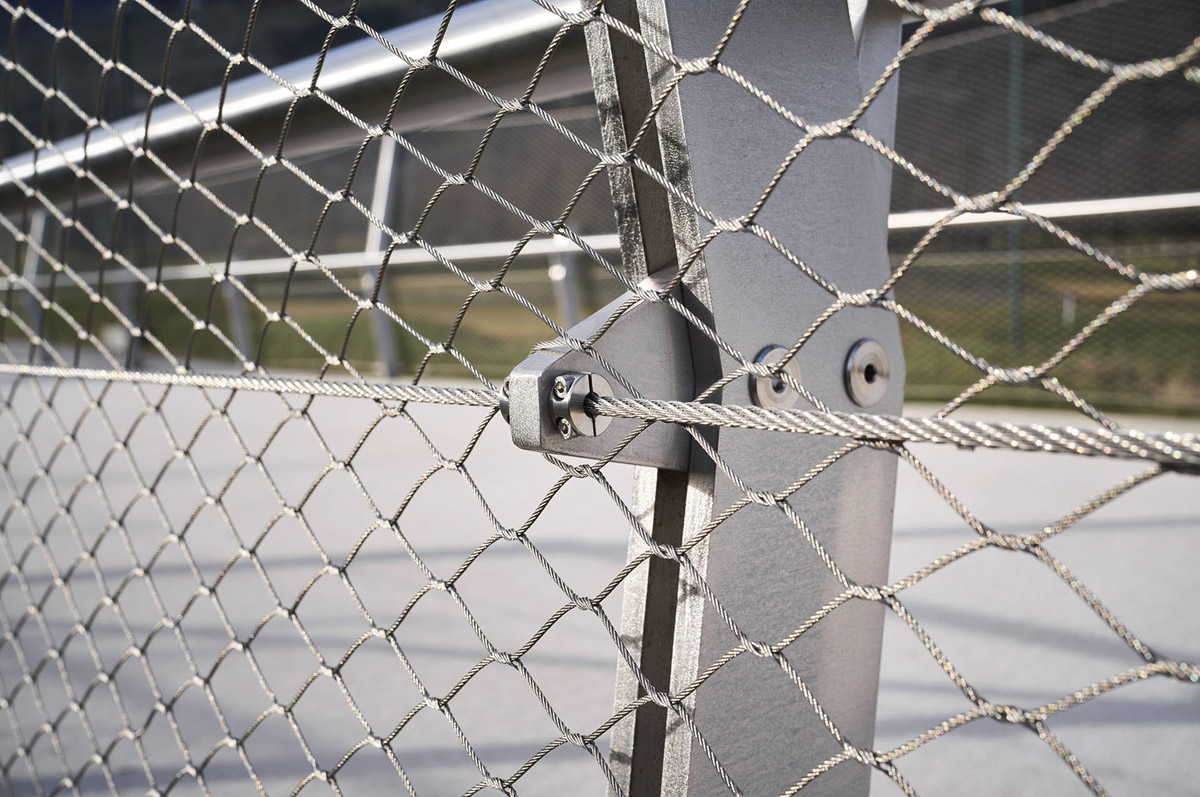
The Solution: Vertically Tensioned Webnet
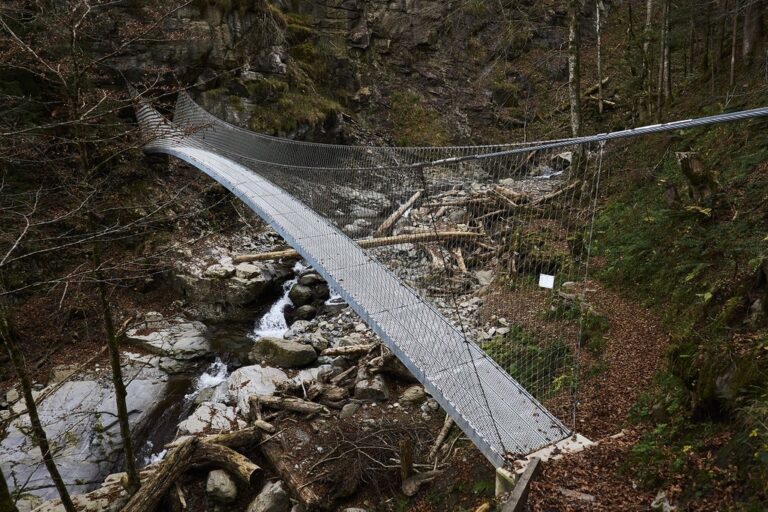
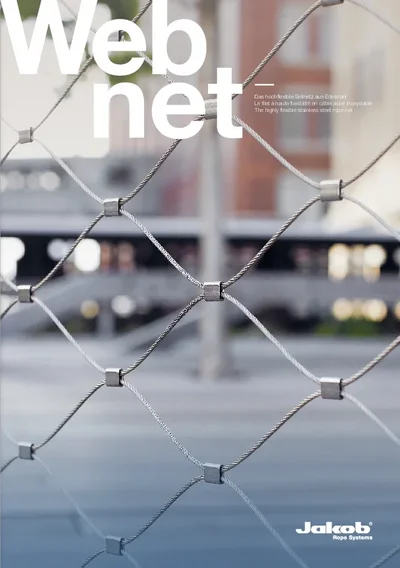
Jakob Rope Systems developed an integrated mesh solution using vertically tensioned Webnet — the same stainless steel rope mesh system used in zoo enclosures, green facades, and architectural railings worldwide, now applied to bridge fall protection.
The specifications:
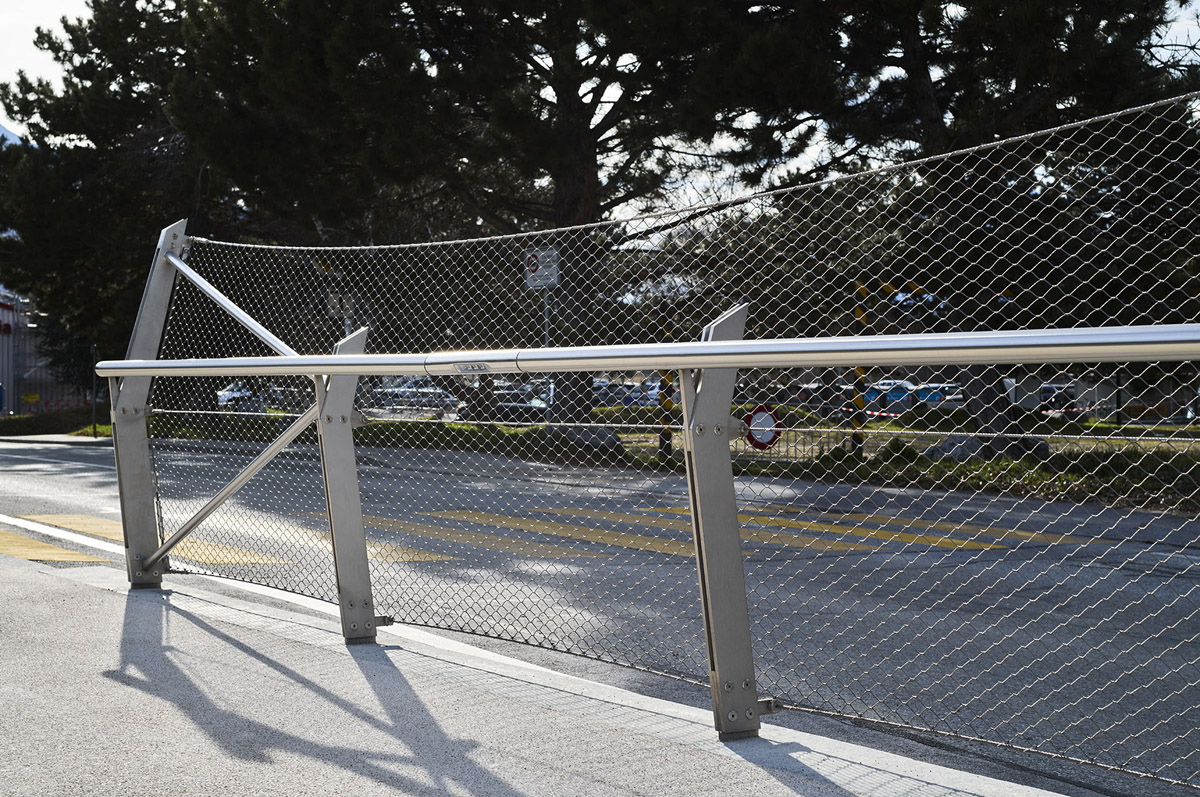
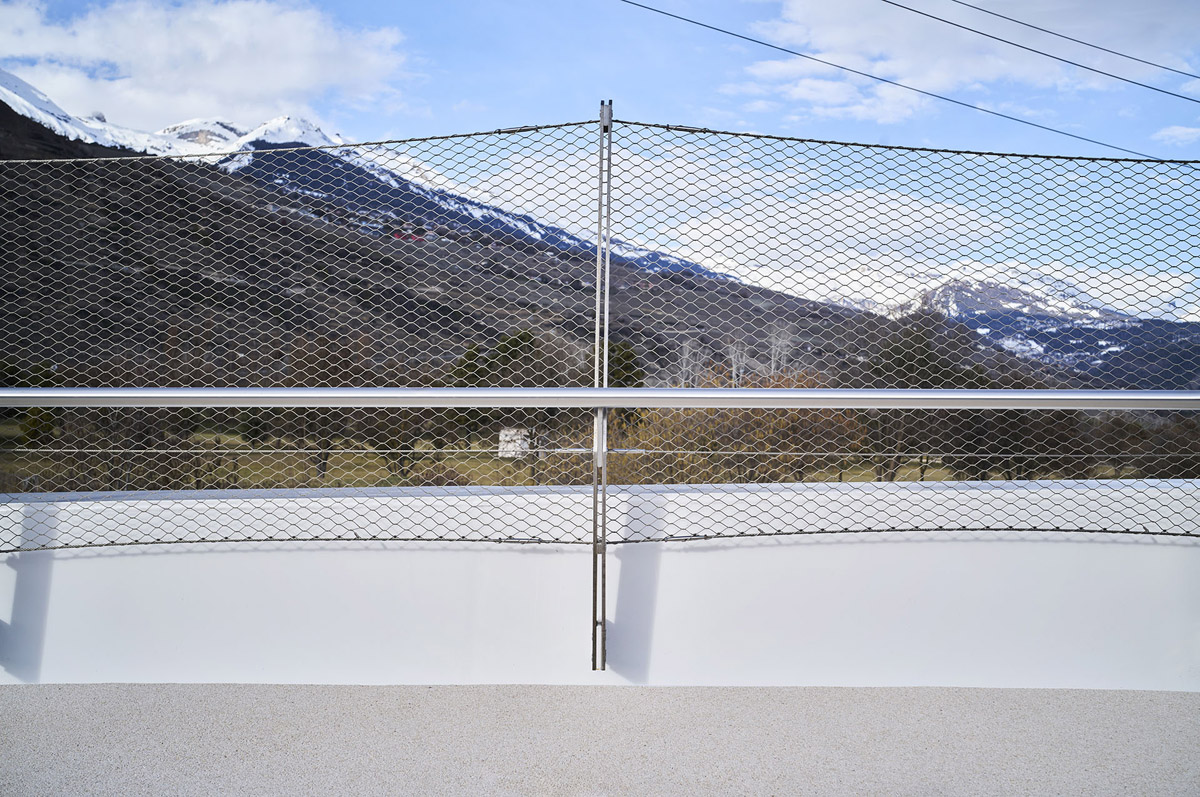
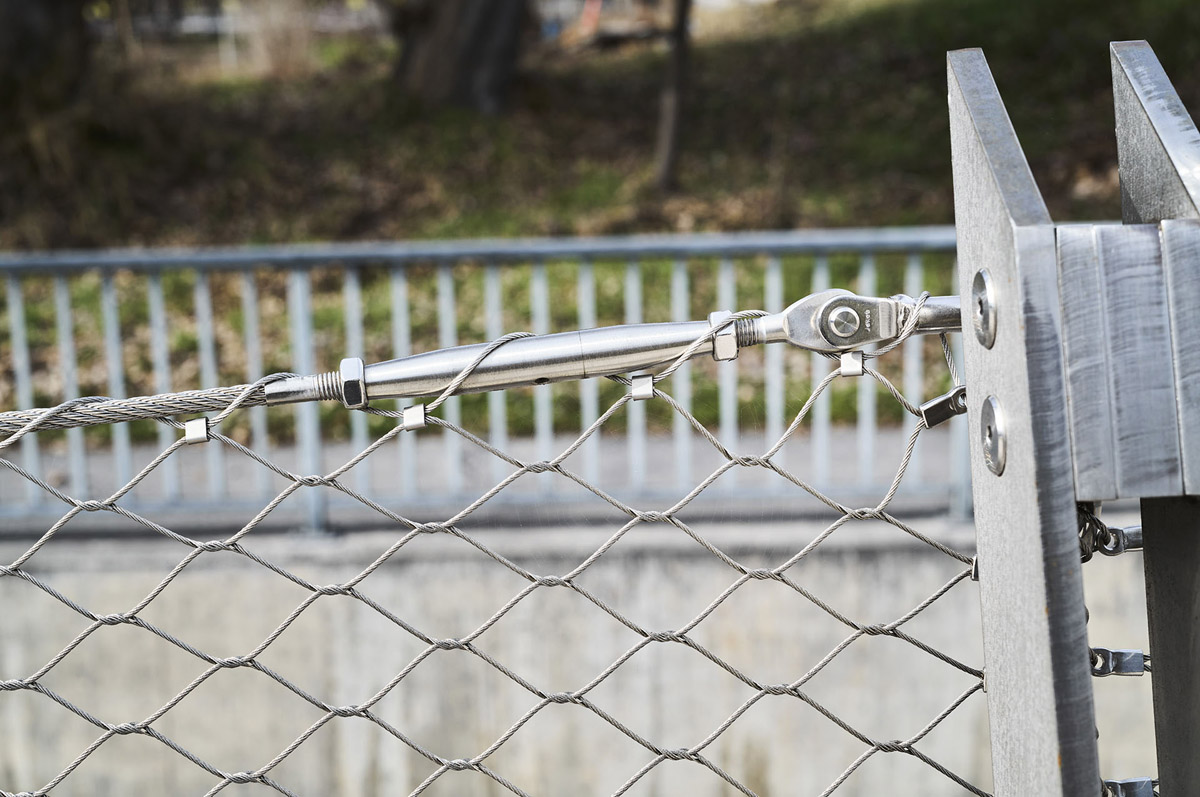
- Webnet without sleeves — rope diameter 2 mm, mesh size 40 mm, horizontal orientation
- Total mesh surface: 697 m², divided into elements with a maximum mesh length of 50 m per segment
- Surround ropes: 6×7 + WC construction, rope diameter 8 mm
The mesh was factory-prefabricated for a precise fit, then installed on-site in coordination with the metal construction team. Jakob handled planning, dimensioning, production, delivery, and installation — a single-source solution that simplified coordination for the project team.
Construction period: 2021–2023.
Why This Approach Works for Bridge Applications
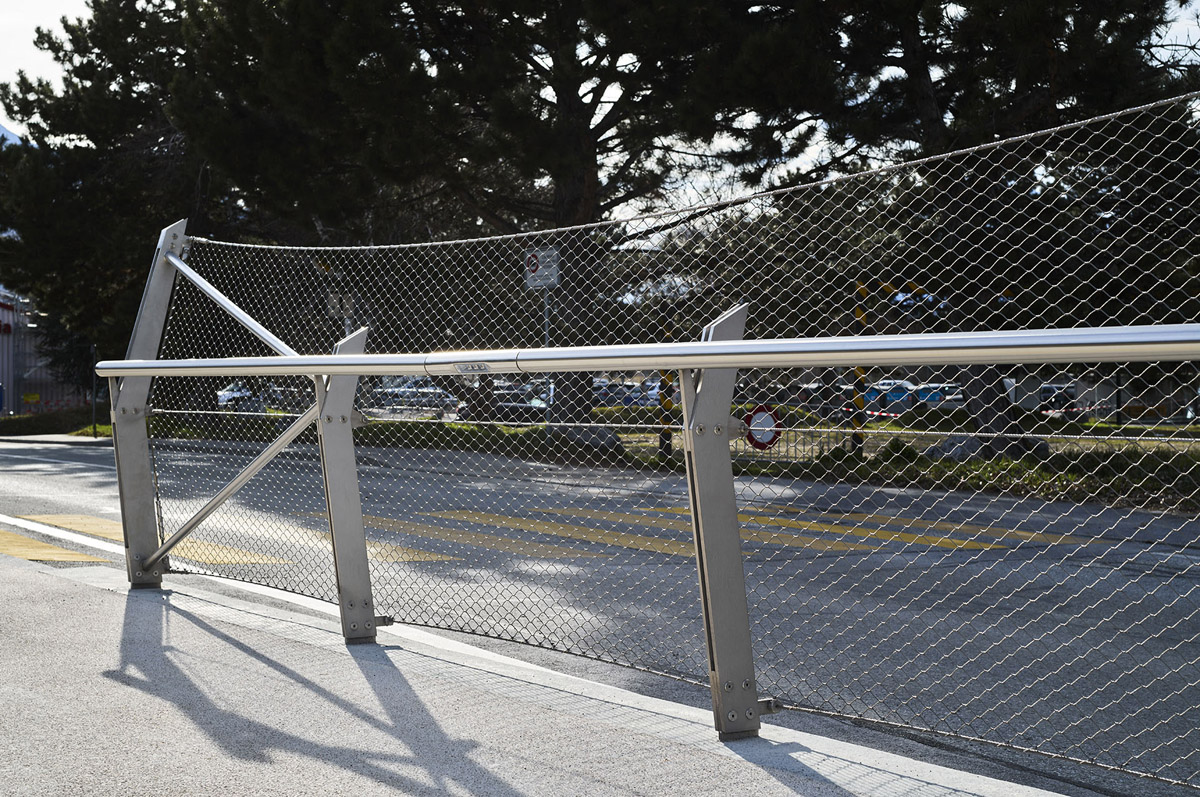
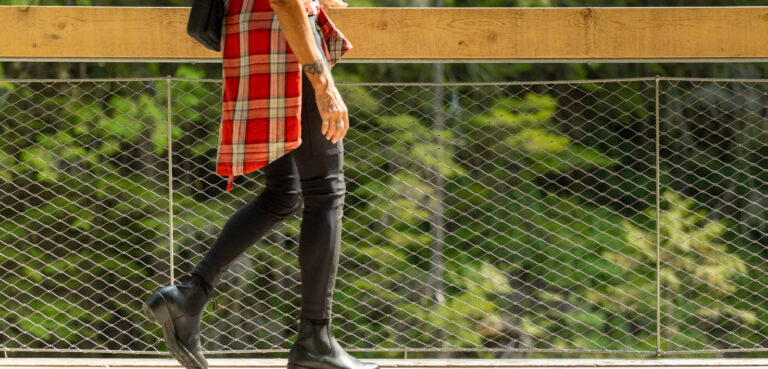
The filigree nature of Webnet is its primary advantage in a context like this. A 2 mm rope diameter and 40 mm mesh size creates a barrier that reads visually as near-transparent at distance. The structure registers as a safety layer rather than an enclosure — an important distinction when the architecture is designed to feel open.
From an engineering standpoint, the system had to account for wind loads and live loads at height, above an active freeway. Jakob’s dimensioning process addressed those requirements while keeping the mesh geometry consistent throughout the 697 m² installation.
The vertical tensioning approach also minimizes post spacing, reducing the visual rhythm of the safety system and preserving the bridge’s clean sightlines.
Performance in Pacific Northwest Conditions
Since opening, the installation has demonstrated its design intent:
Safety Performance
- Zero fall incidents across 600 linear feet of coastal perimeter
- 100% Seattle Building Code compliance achieved on first inspection
- Full ADA accessibility maintained throughout
Visual Experience
- Panoramic Elliott Bay views preserved across entire installation
- Transparent barriers maintain sightlines from all angles
- Natural ventilation through mesh reduces wind turbulence
Material Performance
- Zero maintenance interventions required since installation
- No corrosion treatment, painting, or structural repairs
- System has withstood Pacific Northwest winter storms and seismic activity
Material Specification for Coastal Projects
For waterfront and coastal installations, material specification drives long-term performance.
Understanding AISI 316 Stainless Steel
AISI 316 stainless steel contains:
- 16-18% chromium (corrosion resistance)
- 10-14% nickel (structural stability)
- 2-3% molybdenum (marine environment protection)
This composition provides resistance to chloride corrosion—critical for salt-spray environments. Alternative materials without molybdenum content deteriorate in marine conditions.
The Scale Factor
At 600 linear feet, material specification becomes increasingly important. Systems requiring periodic maintenance create ongoing operational obligations. Marine-grade materials eliminate these requirements entirely.
For public infrastructure, this distinction affects budgeting, staffing, and long-term facility management.
Why Architects Specify Jakob for Marine Environments
Pier 58 demonstrates principles that apply to coastal projects of any scale:
True Marine-Grade Materials
We specify AISI 316 stainless steel—not “marine-rated” coatings applied over inferior base materials. The material composition itself provides corrosion resistance, not surface treatments that degrade over time.
Engineering for Transparency
Safety barriers shouldn’t dominate the visual experience. Webnet systems provide code-compliant protection while preserving view corridors—essential for projects where waterfront views create value.
Seismic Performance
Flexible mesh construction performs better than rigid systems during seismic events. For Pacific Northwest projects, this characteristic provides both structural and life-safety advantages.
Operational Simplicity
Public infrastructure managers value systems that don’t require ongoing maintenance programs. Marine-grade materials eliminate the need for inspection schedules, treatment programs, and replacement planning.
What Architects and Engineers Should Know
This project is a useful reference point for a few common bridge safety scenarios:
When code requires protection above an existing parapet. Webnet can be integrated with existing metal structures without requiring a full parapet redesign. The system attaches to surround ropes anchored to the structural frame — a relatively low-impact retrofit path.
When visual transparency is a design requirement. The combination of thin rope diameter and fine mesh size makes Webnet one of the few compliant fall protection options that doesn’t compromise an open feel.
When the installation environment is constrained. Factory prefabrication of mesh elements means less on-site complexity. For a bridge over an active highway, that matters.
Project Specifications
- Project Pedestrian bridge to the Sion Hospital
- Location Sion, Canton du Valais, Switzerland
- Client Ville de Sion, Canton du Valais
- Architect / Planning dvarchitectes & associés, Sion
- Metal Construction Margelisch Chabbey & Cie, Urvier
- Application Vertical bridge fall protection above parapet
- Jakob Product Webnet (no sleeves), Ø 2 mm rope, 40 mm mesh
- Total Mesh Area 697 m²
- Surround Rope 6×7 + WC, Ø 8 mm
- Construction Period 2021–2023
- Photography Severin Jakob
Planning a Waterfront or Coastal Project?
Whether designing piers, boardwalks, observation decks, or waterfront developments, Jakob’s Inviss-C frames with Webnet deliver what coastal environments demand: transparency, durability, and operational simplicity.
Our engineering team has specified marine-grade protection systems for projects across North America’s coastlines. We understand building codes, seismic requirements, and coastal engineering demands.
Schedule Free Engineering Consultation →
What you’ll get:
- 30-minute call with our technical team
- Custom solution design for your project requirements
- Material specifications and lifecycle cost analysis
- Code compliance guidance for your jurisdiction
Project Information
Pier 58 Waterfront Park
Seattle, Washington
- Jakob Products: Inviss-C frames with Webnet mesh
- Installation: 600 linear feet of coastal-facing barriers
- Environment: High-exposure marine with salt spray and seismic loads
- Material: AISI 316 marine-grade stainless steel throughout
For technical information about this installation, contact our engineering team.
Safety That Earns Its Place
The best safety systems on high-design projects share a common trait: they solve the engineering problem without creating a visual one. At the Passerelle A9, Webnet does exactly that — a compliant, load-rated fall protection system that integrates into the bridge’s architecture rather than sitting on top of it.
If you’re working on a bridge, overpass, or elevated structure where standard guardrail systems feel too heavy, Jakob’s team can work through the options with you.