Squamish Canyon Boardwalk
Squamish, British Columbia, Canada
Squamish, British Columbia, Canada
Swiss Engineering Brings Invisible Safety to BC’s Newest Eco-Tourism Destination
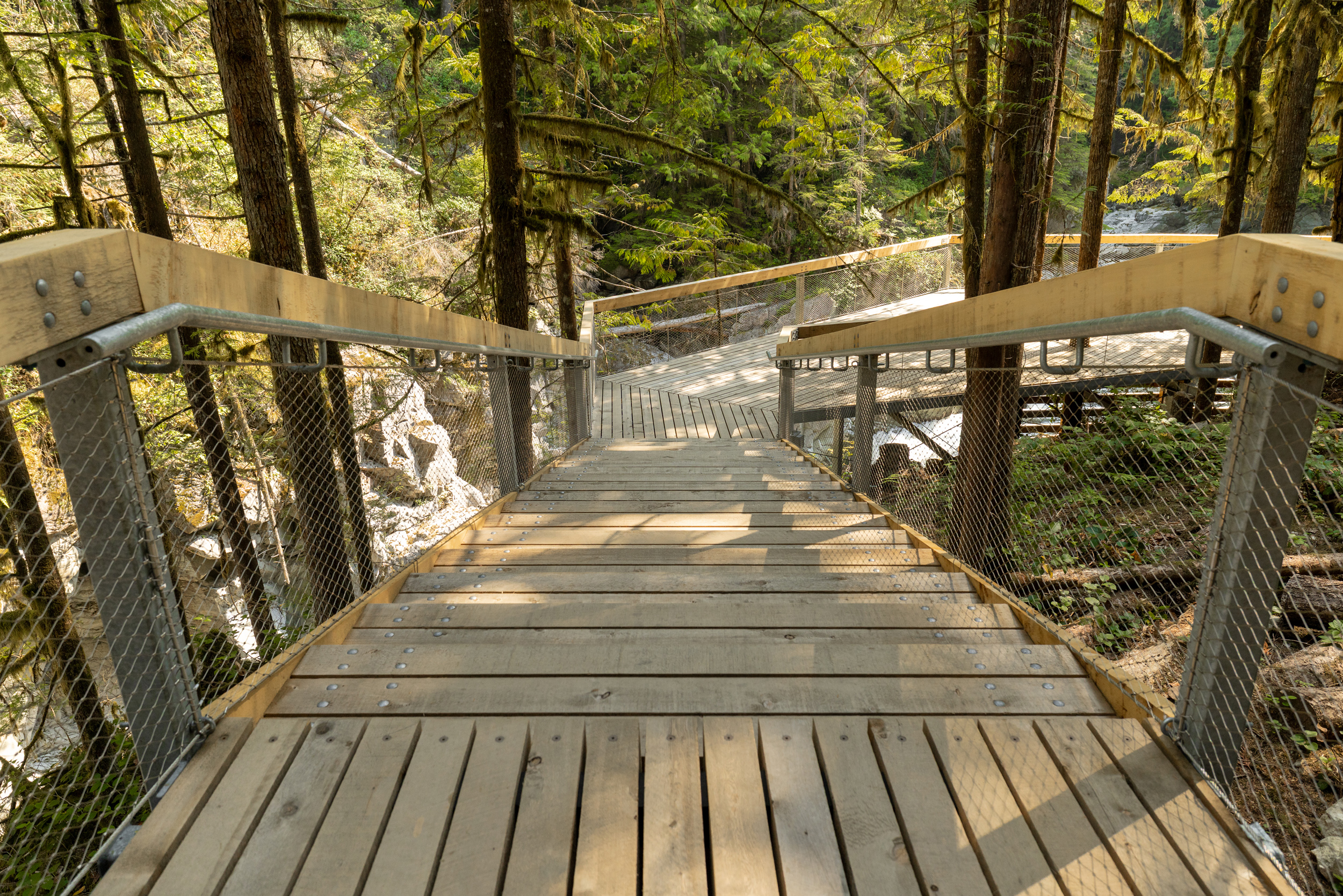
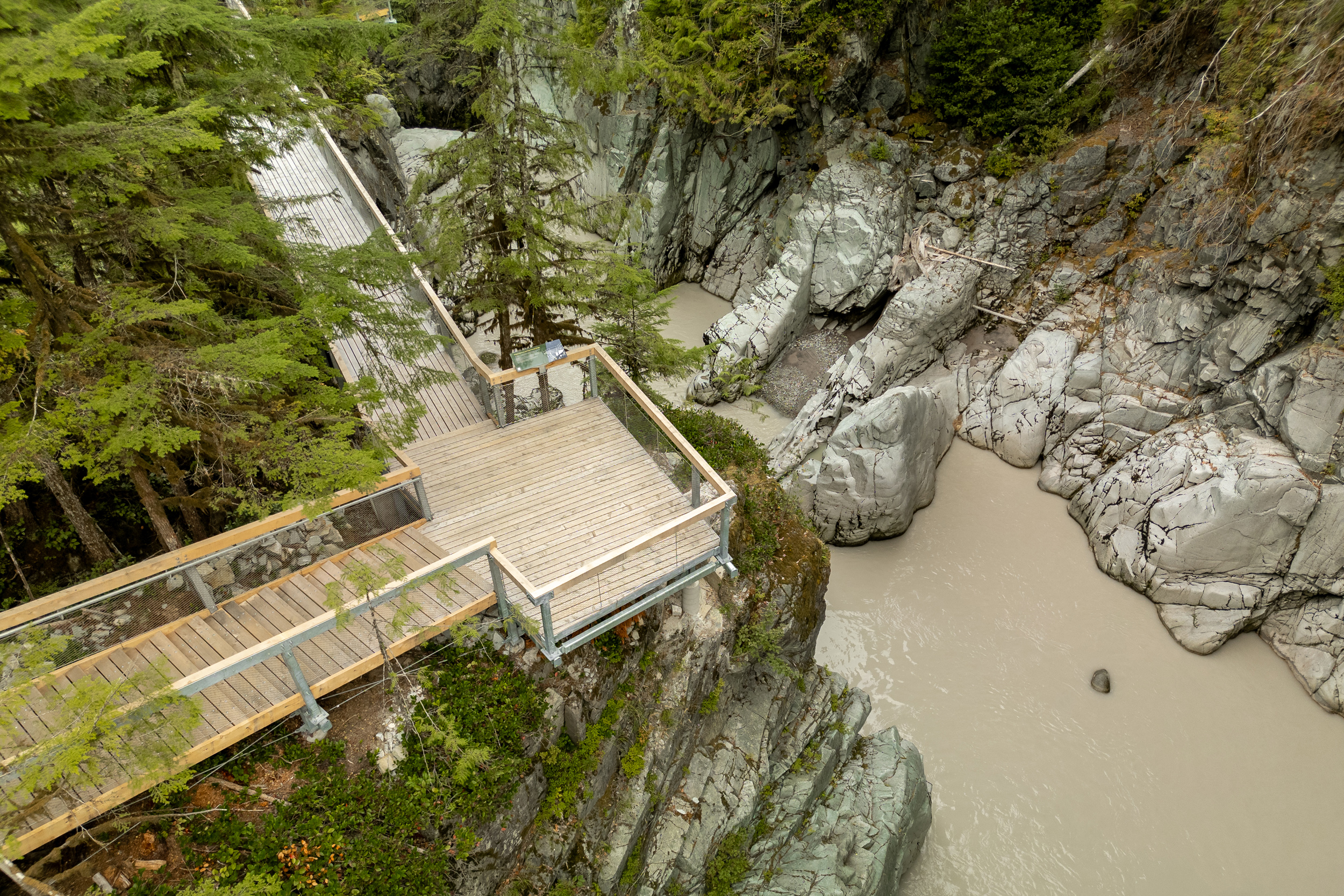
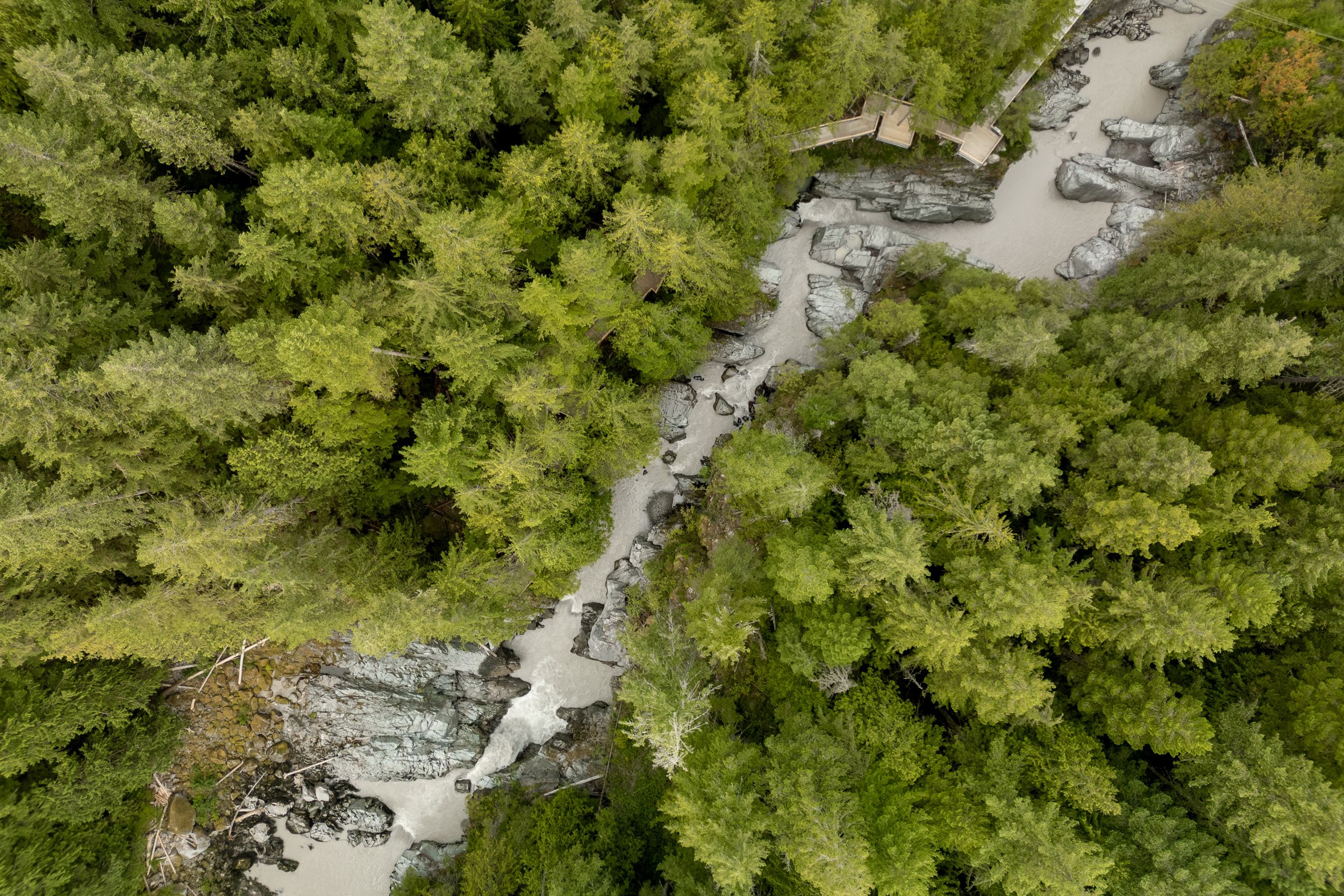
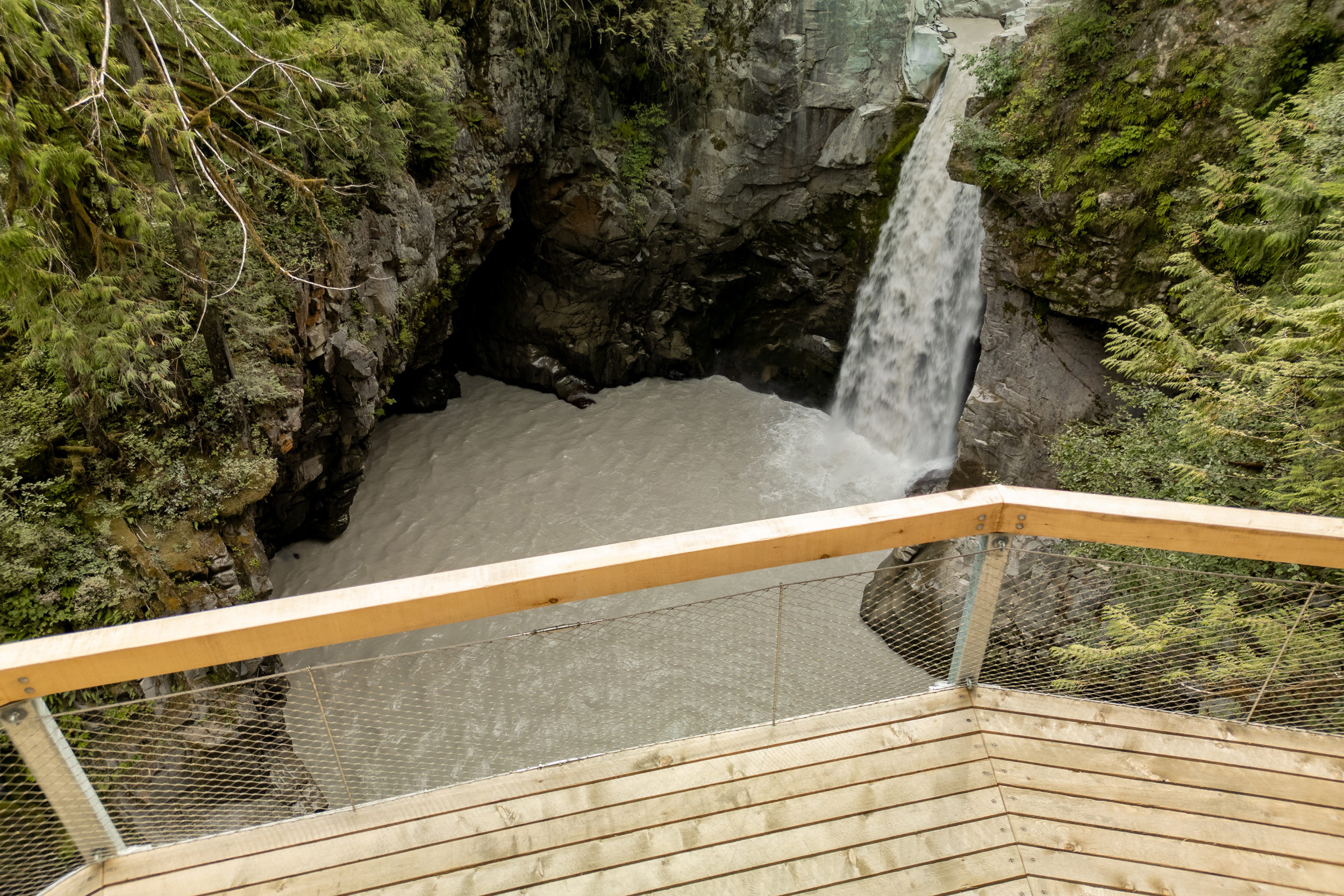
You’re standing on an elevated boardwalk, surrounded by towering West Coast cedars. The Mamquam River thunders through the canyon below. Ahead, a 62-foot waterfall crashes down granite walls in a spectacle that’s been hidden from most visitors—until now.
Between you and that dramatic drop? A safety barrier engineered to protect thousands of daily visitors. But you’ll barely notice it’s there.
Welcome to Squamish Canyon, British Columbia’s newest eco-tourism attraction, where Swiss engineering and Canadian expertise came together to solve a problem every architect working in sensitive natural spaces knows intimately: How do you protect people without destroying the views they traveled to see?
The Vision: A Decade in the Making
Twelve years ago, Robin Sherry—then a ski guide and Squamish Search & Rescue team member—sat on the Squamish Spit watching the Sea to Sky Gondola being built. An idea formed: What if there was a way to make Squamish’s dramatic river canyons and waterfalls safely accessible to everyone—not just experienced climbers and kayakers?
“During an 18-month period when I was on the water and fire department team with SAR, we had six or seven deaths in swift water,” Sherry recalls, standing at the edge of Mamquam Falls. “It was one of those nails in the coffin to be like, we need a place that can educate people and have presence.”
But Sherry wanted more than just safety. He envisioned an experience that would:
- Support the rapidly growing Squamish community (39% population increase between 2011-2021)
- Preserve the natural beauty that makes the area special
- Create year-round accessibility for all ages and abilities
- Educate visitors about sustainability and environmental stewardship
After years of business research, navigating permits, design planning, and assembling a dedicated local team, construction finally began in October 2023. The $4-5 million project would test the limits of what’s possible when you refuse to compromise on either safety or aesthetics.
The Challenge: Aggressive Topography, Zero Tolerance for Error
The numbers tell part of the story:
- 1.5 kilometers of elevated boardwalk
- Elevation changes from forest floor to canyon rim
- Remote access requiring helicopter material drops
- No mature trees removed (except where fire code mandated access roads)
- Year-round exposure to rain, snow, ice, and intense UV
“The entire area is topographically aggressive,” Sherry admits. “But the first big challenge was creating foundations for a 1.4-km boardwalk.”
The solution? Specialized spider excavators—all-terrain machines designed for impossible access—and custom engineering across virtually every discipline.
But the real challenge wasn’t just engineering the boardwalk. It was finding a safety barrier system that could:
Meet Code Without Blocking Views
Provincial safety regulations for public attractions are non-negotiable. The barrier had to exceed BC Building Code requirements for fall protection on elevated structures with high daily traffic.
Handle Extreme Environmental Exposure
Pacific storms bring heavy rainfall. Winters mean snow accumulation and temperatures down to -10°C. Summers deliver intense UV and temperature swings up to 30°C. The barrier system would need to perform flawlessly across all conditions—with zero maintenance access for much of the year.
Disappear Into the Landscape
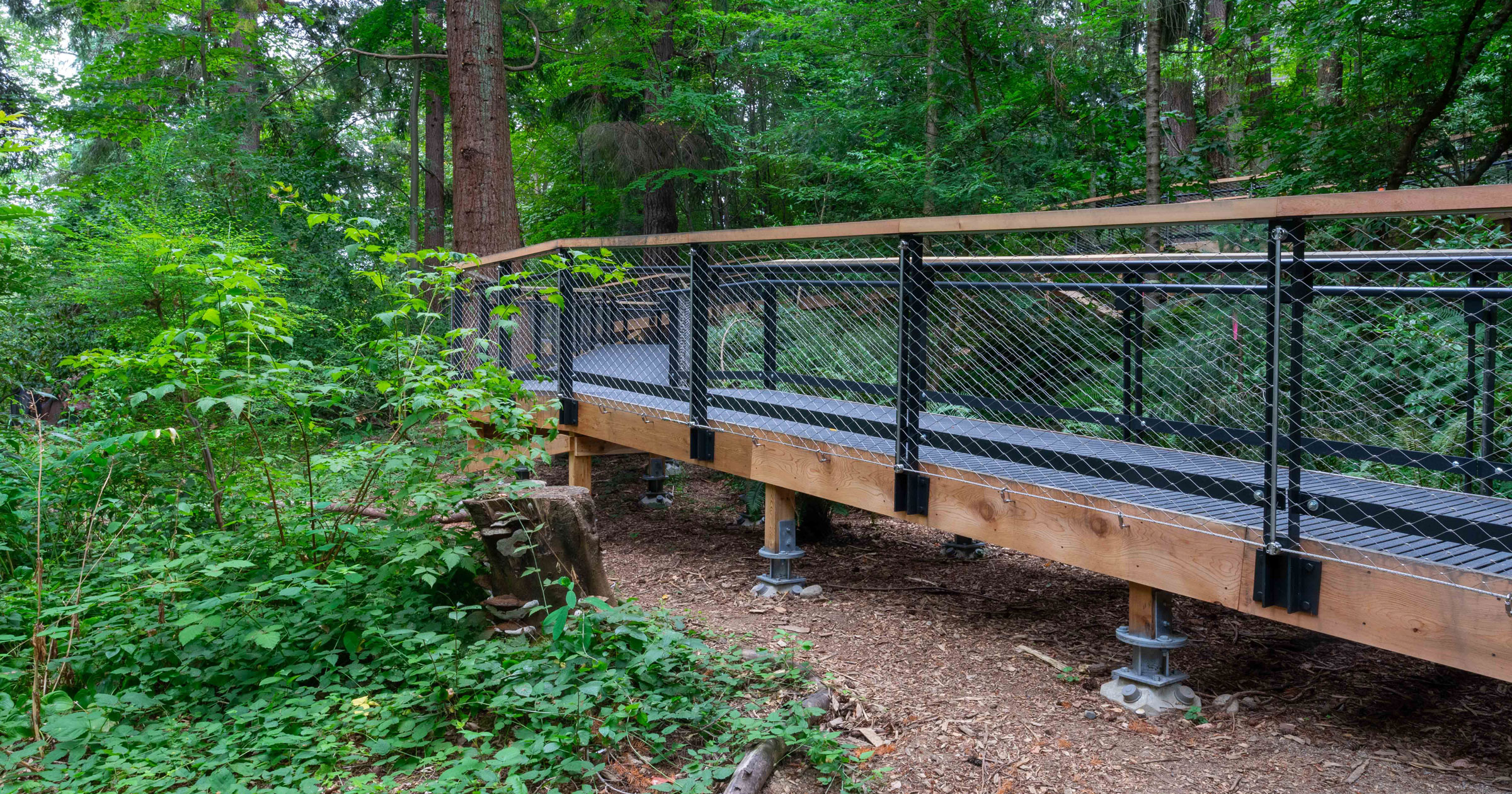
Traditional metal railings or solid panels would have blocked sightlines to the waterfalls and canyon—defeating the entire purpose of the attraction. Visitors come to experience nature, not infrastructure.
Last Decades, Not Years
With difficult access and a business model dependent on operational uptime, the barrier system couldn’t require regular maintenance, painting, or replacement.
Any one of these requirements would be challenging. All four together? That’s where most conventional systems fail.
Where Safety Meets Iconic Design
A pedestrian bridge connecting Brooklyn Heights to one of New York’s most beloved waterfront destinations needed to serve thousands of visitors daily while maintaining breathtaking views of the Manhattan skyline. This was the vision brought to life at the Squibb Park Bridge renovation project.
Where Controversy Meets Innovation
The original Squibb Park Bridge faced unique challenges that tested both public patience and engineering solutions. Known for its distinctive “bounce,” the wooden walkway became a source of heated debate among New Yorkers. While some appreciated its unique character, structural concerns and safety requirements ultimately demanded a complete reconstruction.
The Brooklyn Bridge Park Corporation needed a solution that would maintain the bridge’s role as a vital 450-foot connection between Brooklyn Heights and Pier 1, while ensuring decades of reliable performance in New York’s demanding coastal environment. Working with renowned engineering firm Arup and construction leader Turner Construction, the project required materials that could deliver uncompromising safety without sacrificing the spectacular harbor views that make this crossing special.
How Jakob Delivered the Perfect Solution
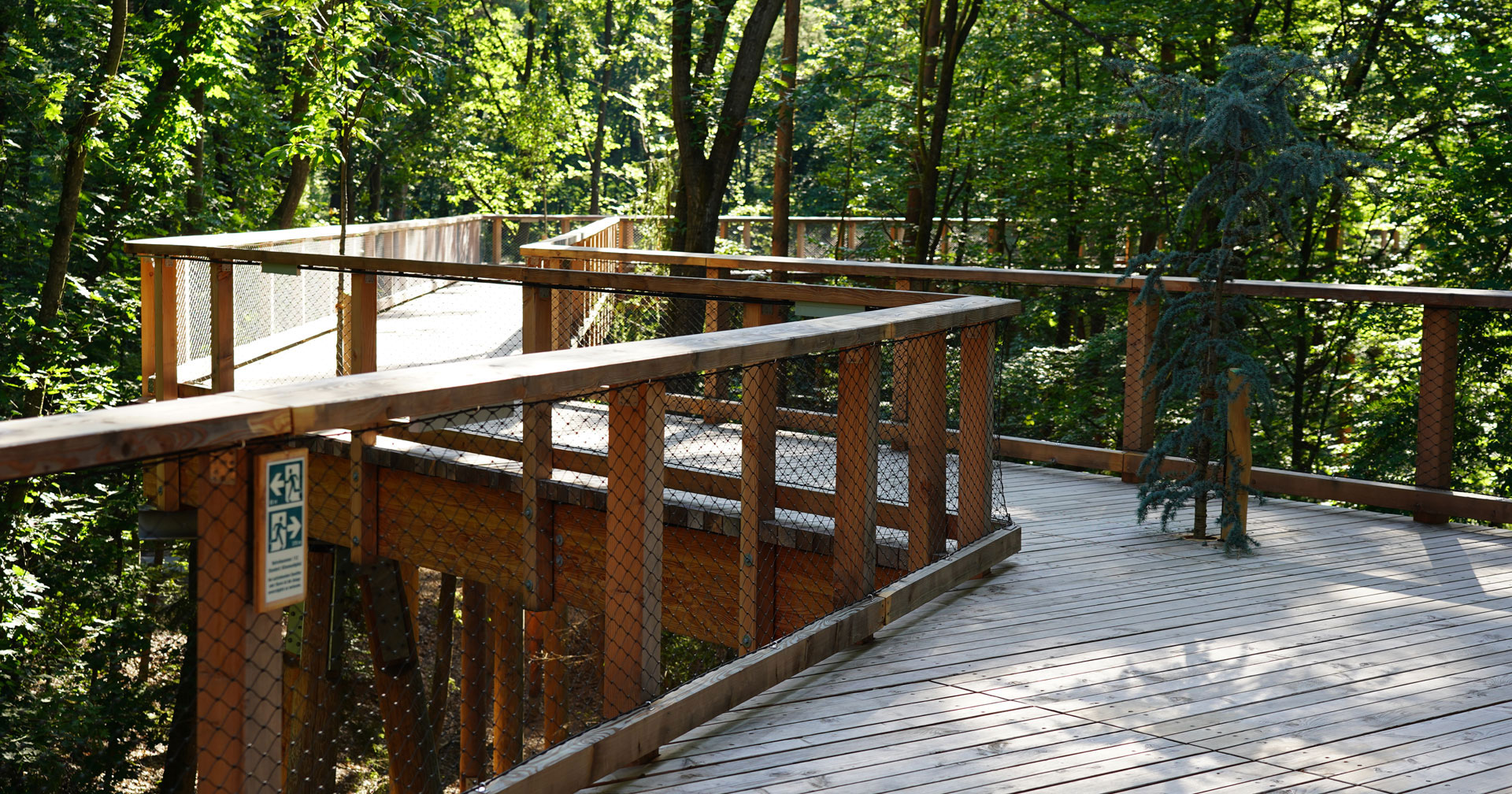
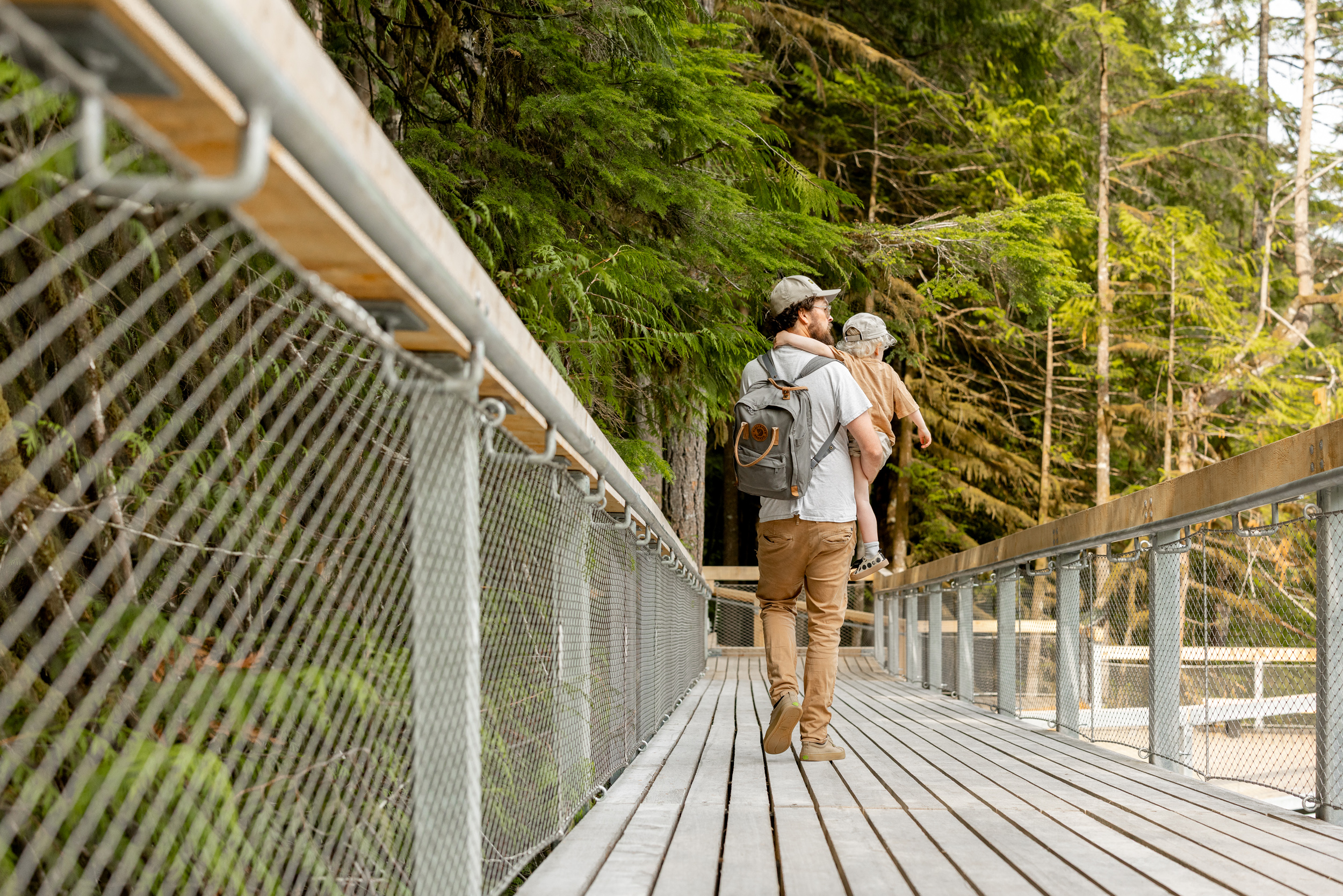
Jakob supplied our signature 2mm Webnet with custom stainless steel frames for the complete railing system of the reconstructed bridge. Manufactured from marine-grade AISI 316 stainless steel, our Webnet provides the ideal combination of transparency, strength, and corrosion resistance essential for New York’s challenging coastal conditions.
The installation covers the entire 450-foot zig-zagging walkway, providing comprehensive fall protection while preserving unobstructed views of Brooklyn Bridge Park and the Manhattan skyline. Our engineering team collaborated closely with Arup to ensure seamless integration with the new steel and aluminum structure, utilizing the existing support pillars for both economic efficiency and environmental responsibility.

Key Benefits That Define Excellence
Uncompromising Safety: Marine-grade stainless steel construction exceeds all NYC building codes for pedestrian infrastructure, providing reliable fall protection for heavy daily traffic while maintaining architectural transparency.
- Weather Resilience: AISI 316 stainless steel withstands salt air exposure, temperature extremes, and constant moisture without deterioration, ensuring decades of maintenance-free performance.
- Aesthetic Integration: Webnet’s nearly invisible appearance preserves the bridge’s architectural vision, allowing visitors to enjoy uninterrupted harbor views while ensuring complete safety compliance.
- Long-Term Value: Unlike alternatives requiring frequent replacement or ongoing maintenance, Jakob systems deliver reliable performance with minimal lifecycle costs.
Project Specifications
- Location: Squibb Park Bridge, Brooklyn Heights, NY
- Architect/Engineer: Arup
- Contractor: Turner Construction
- Completion: Spring 2020
- Jakob Products: 2mm Webnet with custom stainless steel frames
- Coverage: Complete railing system for 450-foot pedestrian walkway
Why Infrastructure Professionals Choose Jakob
When your project demands both uncompromising safety and visual excellence, Jakob Rope Systems delivers proven solutions backed by Swiss engineering heritage. Our deep understanding of American infrastructure requirements, combined with marine-grade AISI 316 stainless steel construction, makes us the preferred partner for architects and engineers tackling complex urban challenges.
From major metropolitan bridges to public transit facilities and waterfront installations, Jakob systems provide the durability, safety, and aesthetic flexibility that modern cities require. Our custom engineering capabilities ensure every solution integrates seamlessly with your architectural vision while delivering decades of reliable performance.
Partner With Us For Your Next Infrastructure Project
Ready to solve your pedestrian safety challenges without compromising design vision? Our engineering specialists are standing by to discuss how Jakob Webnet can enhance your bridge, walkway, or public space application.
Contact our team today to discover why leading architects and engineers trust Jakob for their most demanding projects.
The Solution: Jakob Webnet Through Architek’s Rope + Cable Network
When evaluating barrier systems, Sherry’s engineering team and construction partner Ridge North America had a clear requirement: The safety system needed to be invisible by design, not as an afterthought.
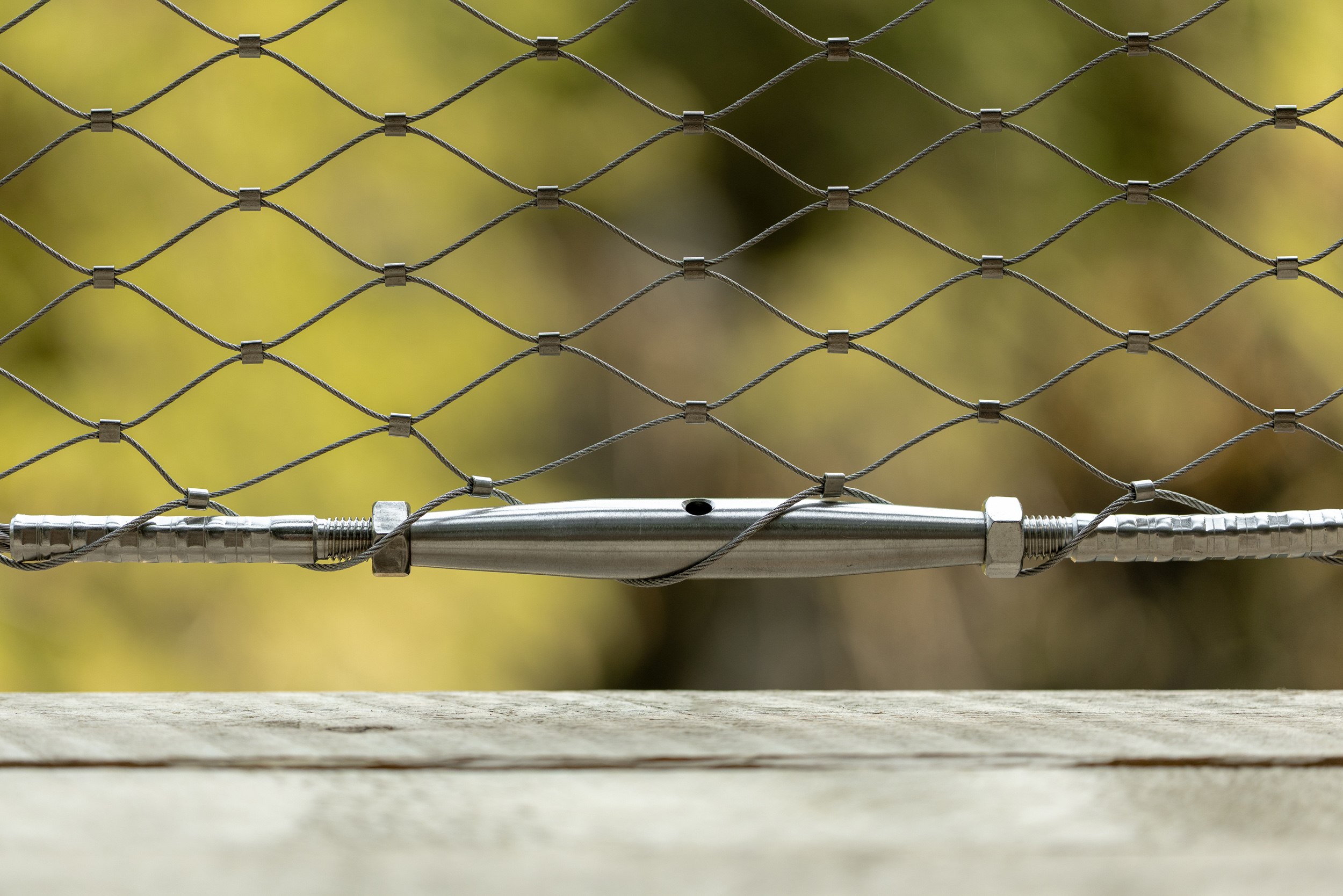
They selected Jakob Webnet—a stainless steel mesh system that’s been protecting visitors in environmentally sensitive locations worldwide for over 50 years—installed through Architek’s Rope + Cable division, Jakob’s exclusive Canadian partner.
The scope: Over 1,600 linear feet of Webnet infill safety railing across multiple boardwalk sections, viewing platforms, and transition points.
Why Webnet Was the Only Choice
1. Transparency That Actually Works
Jakob Webnet uses 40mm diameter cables woven from 1.5mm marine-grade stainless steel strands. The result is a mesh that’s simultaneously:
- Strong enough to exceed structural requirements (supporting loads that would bend conventional railings)
- Transparent enough to preserve unobstructed views (approximately 85% open area)
- Aesthetically neutral enough to disappear against natural backgrounds
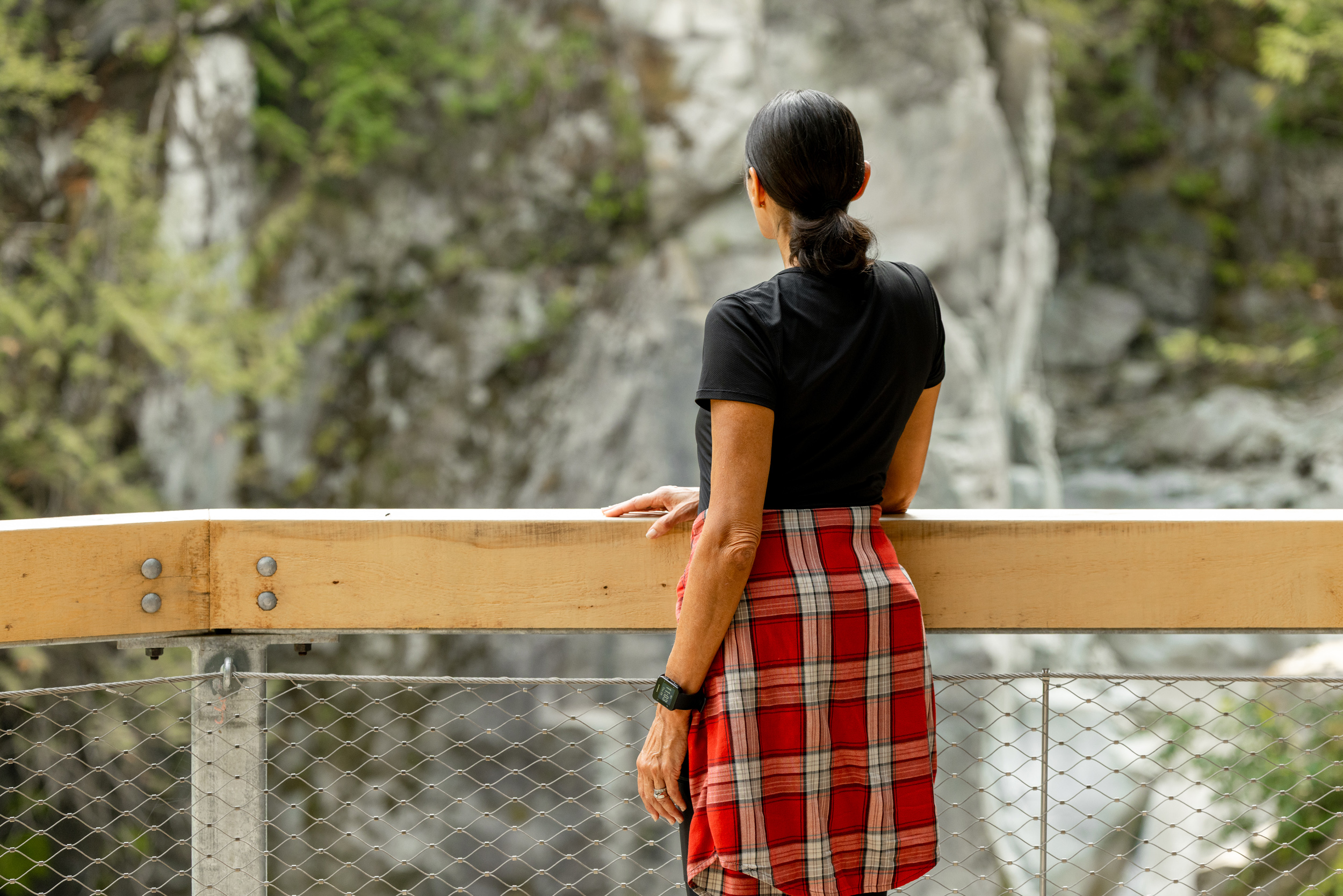
Stand ten feet away from Webnet, and your eye focuses on the waterfall behind it—not the barrier itself. That’s not accident; it’s Swiss engineering precision applied to architectural transparency.
2. Custom Engineering for Impossible Terrain
Architek’s team didn’t just install a standard product. They engineered site-specific solutions for Squamish Canyon’s unique challenges:
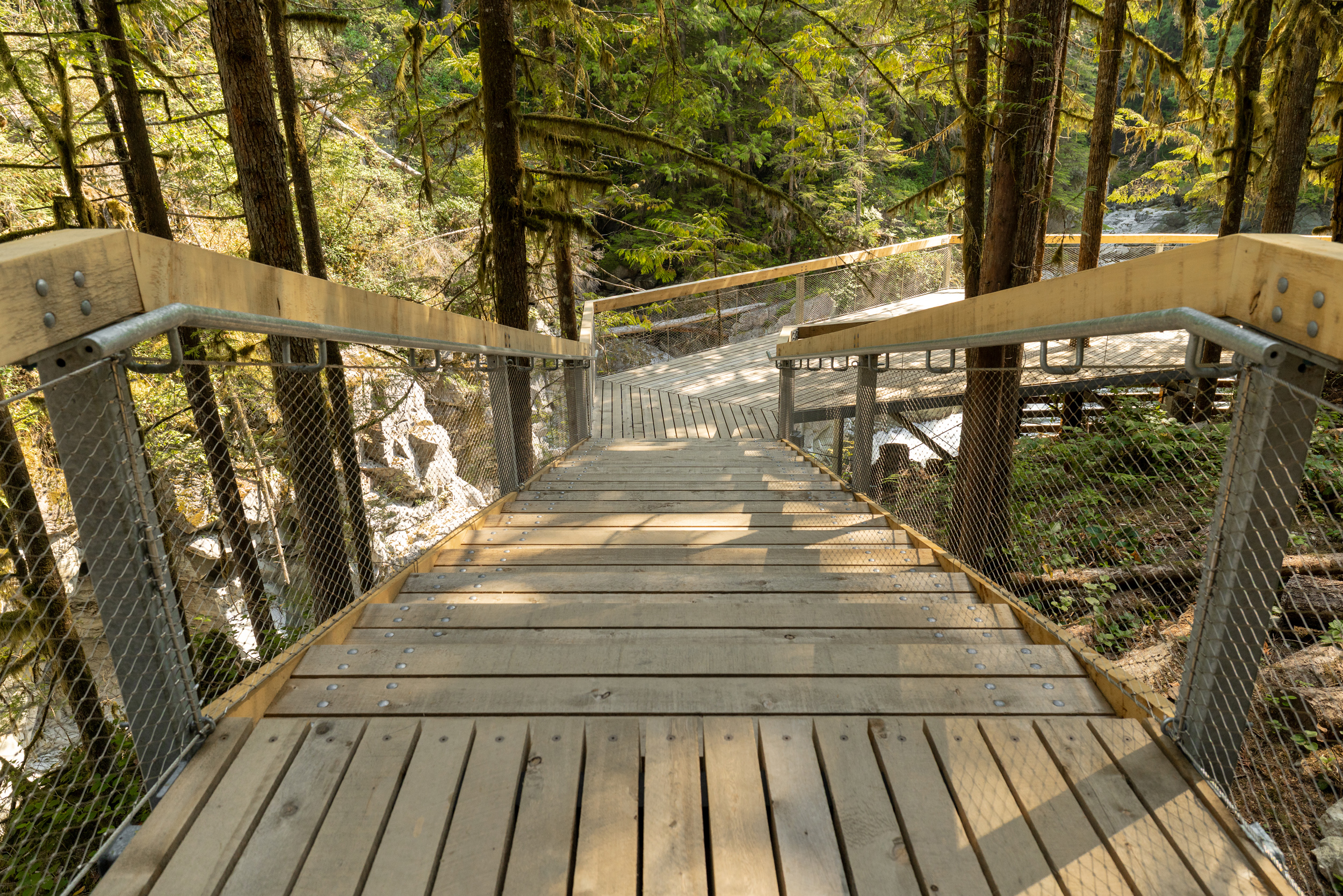
Fixed and Adjustable Spreader Bars These custom components manage tension across the cable perimeter system, maintaining proper guardrail height even as the boardwalk curves, rises, and transitions across dramatic elevation changes. Without these spreaders, the Webnet would deflect under load—violating code and creating safety risks.
Strategic Cable Tie-Down Loops On longer spans (some sections stretch over 100 feet between support points), tie-down loops minimize netting deflection. This ensures code compliance while preserving the clean, uninterrupted appearance visitors expect.
Transition Point Support Systems Where boardwalk sections meet viewing platforms or change direction, the Webnet system required specialized mounting details. Architek’s engineers designed custom connections that handle structural loads while remaining virtually invisible.
3. Engineered for Canadian Weather Extremes
Marine-grade polyvalent wire construction means:
- Zero rust even in constant moisture from waterfall spray
- Zero maintenance across temperature swings from -10°C to +30°C
- Zero painting required over the system’s 50+ year lifespan
- Proven durability in similarly harsh coastal environments from Peggy’s Cove to Tofino
Compare this to conventional metal railings (which rust and require regular painting), glass panels (which crack and need replacement), or cable systems with inferior materials (which corrode and lose tension). Webnet’s material science delivers what others promise but can’t deliver: truly maintenance-free performance.
The Build: Helicopter Drops and Spider Excavators
Construction of Squamish Canyon tested every member of the team. Filmmaker Matt Maddaloni, who documented the entire build over 10+ months, captured time-lapse footage that reveals the complexity:
“This was not the cheap way to go,” Sherry acknowledges. Materials had to be helicoptered into remote sections. Spider excavators drilled foundations in terrain where conventional equipment couldn’t operate. And every installation decision was made with one non-negotiable requirement: preserve every mature tree possible.
The primary bridge span alone—130 feet long and engineered to support over 104,000 pounds—required months of planning and precision installation.
For the Webnet installation, Architek’s team faced additional challenges:
- Limited staging areas in dense forest
- Precise tensioning required across irregular spans
- Weather windows for installation (you can’t tension cable systems in high winds or heavy rain)
- Coordination with other trades on an active construction site
Yet the installation proceeded without delays, meeting Ridge North America’s aggressive timeline and opening the attraction on schedule in August 2025.
The Result: Safety That Visitors Forget
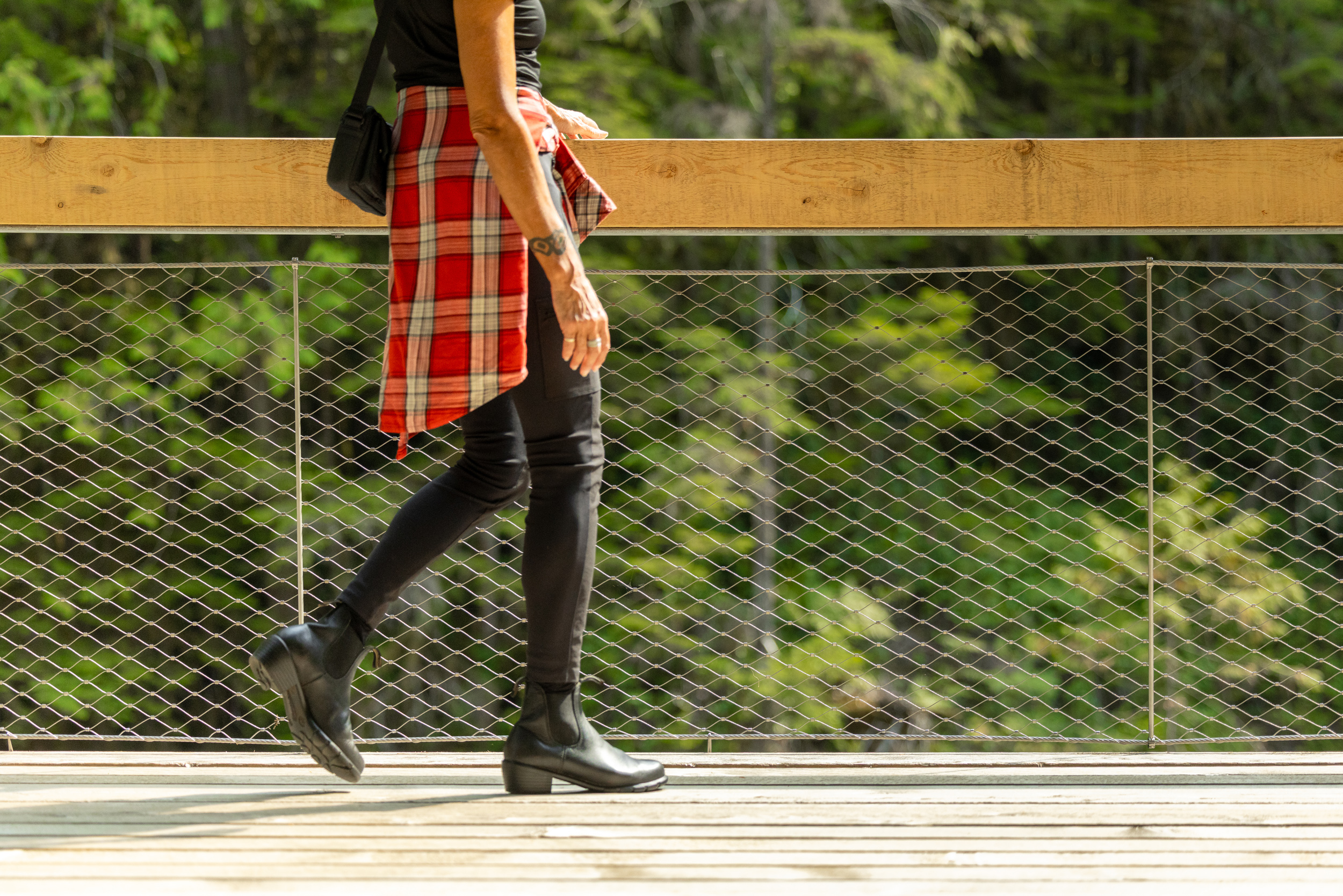
Walk the Squamish Canyon boardwalks today, and the first thing you notice is the forest. The way light filters through ancient cedars. The sound of rushing water building as you approach Mamquam Falls. The adrenaline rush as the boardwalk extends over the canyon rim, putting you 60 feet above churning whitewater.
The Webnet safety barrier? Most visitors don’t consciously register it’s there—until you point it out.
That’s the definition of successful infrastructure design.
From a Business Operations Perspective
The Webnet installation delivers measurable value beyond aesthetics:
Zero Maintenance Costs No painting. No rust treatment. No cable replacement. No seasonal inspections beyond standard visual checks. Over a 50-year lifespan, this represents hundreds of thousands in avoided costs compared to conventional systems.
100% Code Compliance Provincial safety inspectors signed off without modifications. The Webnet system exceeds structural requirements while meeting transparency standards that would disqualify most alternatives.
Enhanced Visitor Satisfaction Early reviews consistently praise the “unobstructed views” and “feeling of being in nature, not on manufactured infrastructure.” In the experience economy, that perception drives repeat visits and positive word-of-mouth.
Instagram-Friendly Design When visitors photograph Mamquam Falls from the viewing platforms, their images show waterfalls and forest—not safety barriers. In an age where social media drives tourism, this matters.
Four Years and Counting
Since opening in August 2025, Squamish Canyon has welcomed tens of thousands of visitors. The Webnet system performs exactly as engineered:
- Zero maintenance incidents
- Zero structural issues
- Zero visitor complaints about obstructed views
- Zero weather-related failures
It’s early in the installation’s 50+ year expected lifespan, but the performance validates what Jakob has proven in over 200 similar installations across North America: Webnet delivers what architects specify and owners need.
The Bigger Picture: A North American Trend
Squamish Canyon isn’t an isolated success story. It’s part of a continental shift in how we approach safety infrastructure in environmentally sensitive spaces.
From Coast to Coast
Jakob Webnet installations now protect visitors at:
Atlantic Coast
- Peggy’s Cove, Nova Scotia – Coastal boardwalks exposed to hurricane-force winds and salt spray
- National historic sites across Maritime provinces
Pacific Coast
- Tofino boardwalks, British Columbia – Rainforest environments with year-round moisture
- Urban green spaces in Vancouver, Seattle, Portland
National Parks and Protected Areas
- Parks Canada installations where environmental impact must be minimized
- US National Park Service projects requiring minimal visual intrusion
Urban Infrastructure
- Pedestrian bridges in major cities (New York, Toronto, Chicago)
- Transit facilities requiring transparent barriers for security and aesthetics
- Commercial developments seeking LEED certification
Why This Trend Is Accelerating
Three forces are driving adoption of transparent safety systems:
1. Visitor Expectations Have Changed
Modern tourists—especially millennials and Gen Z—expect “authentic” experiences. They want to feel immersed in nature, not reminded they’re in a managed attraction. Opaque barriers break that illusion. Transparent systems preserve it.
2. Social Media Amplifies Design Decisions
Every visitor is a photographer. Every photo is potential marketing. Barriers that photobomb Instagram shots become barriers to word-of-mouth marketing. Transparent systems let the destination shine—literally.
3. Sustainability Requirements Are Tightening
LEED certification, green building standards, and environmental impact assessments increasingly scrutinize infrastructure decisions. Systems requiring regular painting (VOC emissions), frequent replacement (material waste), or extensive maintenance access (ecosystem disruption) face growing regulatory challenges.
Webnet’s 50+ year lifespan, zero maintenance requirement, and minimal visual impact align with sustainability goals in ways conventional systems can’t match.
What This Means for Your Next Project
If you’re an architect, engineer, or developer planning infrastructure in environmentally sensitive areas, Squamish Canyon demonstrates what’s possible when you refuse to compromise.
Your Visitors Expect:
- Unobstructed sightlines to natural features
- “Discovery” experiences that feel organic, not manufactured
- Photo opportunities without barriers dominating the frame
- Accessibility for all ages and abilities
Your Project Requires:
- Full code compliance across jurisdictions
- Long-term durability in harsh environments
- Minimal environmental impact during and after installation
- Defensible cost projections that account for lifecycle expenses
Jakob Webnet Delivers Both
Whether your project is in the United States or Canada, the Jakob network provides:
Swiss Engineering Standards Over 115 years of materials science and structural engineering, applied to architectural transparency.
North American Expertise Local partners (Jakob USA and Architek in Canada) who understand regional codes, climate challenges, and installation logistics.
Proven Performance Over 200 installations across the continent, from sea-level coastal exposure to alpine environments, from urban heat islands to Arctic conditions.
Complete Support From initial concept through final installation—design assistance, engineering specifications, code compliance documentation, and installation oversight.
The Projects That Set New Standards
Every few years, a project comes along that redefines what’s possible. The High Line in New York City proved abandoned infrastructure could become world-class public space. The Squibb Park Bridge demonstrated transparent barriers work in harsh urban environments.
Squamish Canyon joins that list.
Not because it’s the biggest installation (it’s not). Not because it solved unprecedented engineering challenges (though it solved plenty). But because it refused to accept the false choice between safety and aesthetics—and proved there’s a better way.
- Robin Sherry’s vision was to create a place where people could safely experience nature’s power without barriers—literal or psychological—between them and the landscape.
- Ridge North America’s construction expertise brought that vision to life across impossible terrain.
- Architek’s engineering delivered safety systems that disappear, letting the canyon itself be the star.
- Jakob’s materials science made it possible to specify transparency without compromising on durability, code compliance, or long-term performance.
Together, they created something remarkable: Infrastructure that fulfills its purpose so well, visitors forget it exists.
Ready to Make Safety Invisible on Your Next Project?
Whether you’re designing a visitor center in a national park, planning boardwalks through wetlands, renovating a historic overlook, or creating new attractions in environmentally sensitive areas, Jakob Webnet offers a proven solution.
Our network provides:
- Custom engineering for site-specific challenges
- Complete code compliance documentation
- Technical support from concept through installation
- Proven performance in North America’s harshest environments
- Materials with 50+ year proven lifespan
Project Specifications
- Location: Squamish, British Columbia, Canada
- Owner/Developer: Mamquam Adventures Inc.
- Project Visionary: Robin Sherry
- Construction Partner: Ridge North America
- Jakob Installation: Architek Rope + Cable (Jakob’s exclusive Canadian distributor)
- Completion: August 2025
- Project Cost: $4-5 million
Jakob Products:
- 1,600+ linear feet of Webnet infill safety railing
- 40mm diameter cable Webnet (1.5mm strand diameter)
- 8mm tension cable perimeter system
- Custom fixed and adjustable spreader bars
- Strategic cable tie-down loops
- Custom transition point supports
Specifications:
- Material: AISI 316 marine-grade stainless steel
- Code Compliance: BC Building Code for public attractions
- Design Lifespan: 50+ years
- Maintenance Requirement: Zero (visual inspection only)
- Environmental Conditions: -10°C to +30°C, high moisture, UV exposure, snow/ice loading
Photo Credits: