Swiss-Engineered Railings
Safety Without Visual Compromise
Safety Without Visual Compromise
Swiss-Engineered Deck & Balcony Railings
Modern architecture demands transparency. Building codes demand safety. Jakob Rope Systems delivers both—without the usual trade-offs that compromise either your design vision or project timeline.
Two Stainless Steel Railing Systems, One Standard of Excellence
Picture this: You’re designing a coastal residence where unobstructed ocean views are non-negotiable, or a corporate headquarters where glass and steel define the brand. Traditional deck railings intrude. Heavy posts block sightlines. But code compliance isn’t optional.
Jakob’s modular cable railing systems solve this tension with Swiss engineering precision and factory pre-assembly that eliminates the usual installation headaches. Whether you need contemporary vertical cable railing or flexible mesh railing for complex architectures, both systems deliver code-compliant fall protection while maintaining the visual transparency modern projects demand.
Vertical Cable Railing: Contemporary Linear Design for Modern Decks
Pre-tensioned 3mm stainless steel cables create clean vertical lines that disappear into the architecture. Factory-installed and adjusted at our facility—not on your project site—these vertical cable railings deliver consistent tension and visual alignment every time.
Perfect for residential decks, commercial balconies, and any application where clean sightlines matter, this system proves that wire railing can be both minimalist and structurally robust.
Key Features:
- Pre-tensioned 3mm vertical cables (code-compliant spacing)
- Ultra-lightweight visual impact
- Zero on-site cable adjustment required
- Available in natural stainless or black powder coat finish
- IBC and IRC compliant for commercial and residential applications
Webnet Mesh Railing: Flexible Stainless Steel for Architectural Versatility
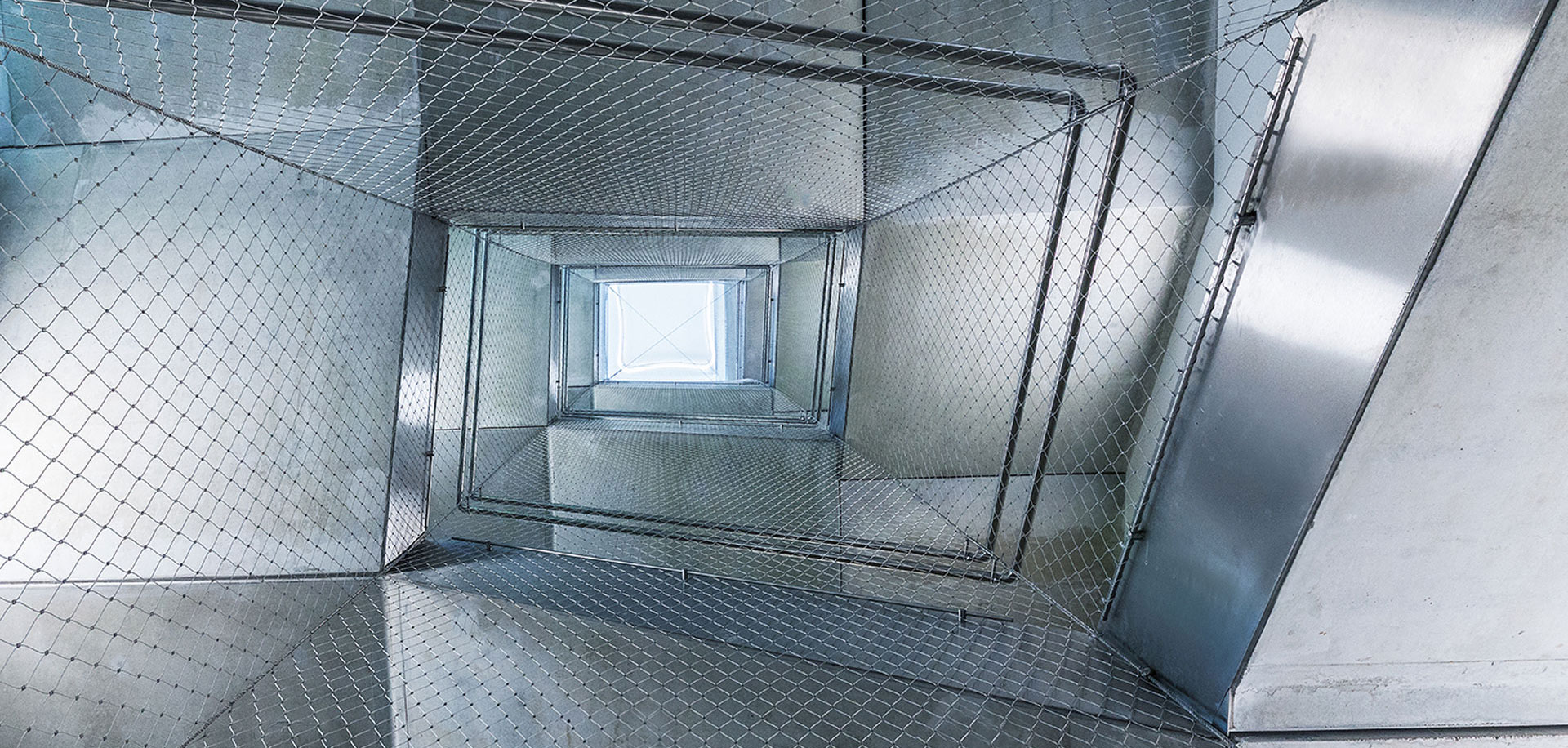
The diamond mesh pattern offers traditional versatility with modern engineering. This flexible 1.5mm rope construction conforms to curved architectural shapes while maintaining structural integrity—perfect for staircases, curved balconies, and anywhere design complexity meets safety requirements.
Webnet provides an alternative to traditional wire railing with superior adaptability. The mesh construction handles architectural curves that would challenge rigid cable systems, making it ideal for commercial railing applications with complex geometries.
Key Features:
- Diamond mesh pattern (60mm openings) for visual flow
- Adapts to architectural curves without custom fabrication
- Minimal visual interruption
- Flexible design integration
- Code-compliant in commercial and residential applications
Why Architects Specify Jakob Modular Cable Railing Systems
Swiss Quality Standards: Marine-Grade Stainless Steel Construction
Every component manufactured from AISI 316 marine-grade stainless steel—the same material trusted in coastal installations worldwide where corrosion resistance is critical. Factory pre-assembly and tensioning eliminate field variables that compromise lesser deck railing systems.
Whether you’re specifying for a beachfront residence or an inland commercial project, AISI 316 delivers the corrosion resistance and structural integrity your project demands over decades of service life.
Modern architecture demands transparency. Building codes demand safety. Jakob Rope Systems delivers both—without the usual trade-offs that compromise either your design vision or project timeline.
Two Stainless Steel Railing Systems, One Standard of Excellence
Picture this: You’re designing a coastal residence where unobstructed ocean views are non-negotiable, or a corporate headquarters where glass and steel define the brand. Traditional deck railings intrude. Heavy posts block sightlines. But code compliance isn’t optional.
Jakob’s modular cable railing systems solve this tension with Swiss engineering precision and factory pre-assembly that eliminates the usual installation headaches. Whether you need contemporary vertical cable railing or flexible mesh railing for complex architectures, both systems deliver code-compliant fall protection while maintaining the visual transparency modern projects demand.
Vertical Cable Railing: Contemporary Linear Design for Modern Decks
Pre-tensioned 3mm stainless steel cables create clean vertical lines that disappear into the architecture. Factory-installed and adjusted at our facility—not on your project site—these vertical cable railings deliver consistent tension and visual alignment every time.
Perfect for residential decks, commercial balconies, and any application where clean sightlines matter, this system proves that wire railing can be both minimalist and structurally robust.
Key Features:
- Pre-tensioned 3mm vertical cables (code-compliant spacing)
- Ultra-lightweight visual impact
- Zero on-site cable adjustment required
- Available in natural stainless or black powder coat finish
- IBC and IRC compliant for commercial and residential applications
Webnet Mesh Railing: Flexible Stainless Steel for Architectural Versatility
The diamond mesh pattern offers traditional versatility with modern engineering. This flexible 1.5mm rope construction conforms to curved architectural shapes while maintaining structural integrity—perfect for staircases, curved balconies, and anywhere design complexity meets safety requirements.
Webnet provides an alternative to traditional wire railing with superior adaptability. The mesh construction handles architectural curves that would challenge rigid cable systems, making it ideal for commercial railing applications with complex geometries.
Key Features:
- Diamond mesh pattern (60mm openings) for visual flow
- Adapts to architectural curves without custom fabrication
- Minimal visual interruption
- Flexible design integration
- Code-compliant in commercial and residential applications
Why Architects Specify Jakob Modular Cable Railing Systems
Swiss Quality Standards: Marine-Grade Stainless Steel Construction
Every component manufactured from AISI 316 marine-grade stainless steel—the same material trusted in coastal installations worldwide where corrosion resistance is critical. Factory pre-assembly and tensioning eliminate field variables that compromise lesser deck railing systems.
Whether you’re specifying for a beachfront residence or an inland commercial project, AISI 316 delivers the corrosion resistance and structural integrity your project demands over decades of service life.


Cable Railing Installation: Two Steps, Zero Welding
Here’s where Jakob separates from custom fabrication: our two-step railing installation process.
Step 1: Set your posts
- Fascia mount (direct to structural edges)
- Top mount (anchor to horizontal deck surfaces)
- Core drill (strongest connection for high-load applications)
Step 2: Insert the modular frames
- Precision-engineered connections
- Mechanical fasteners only
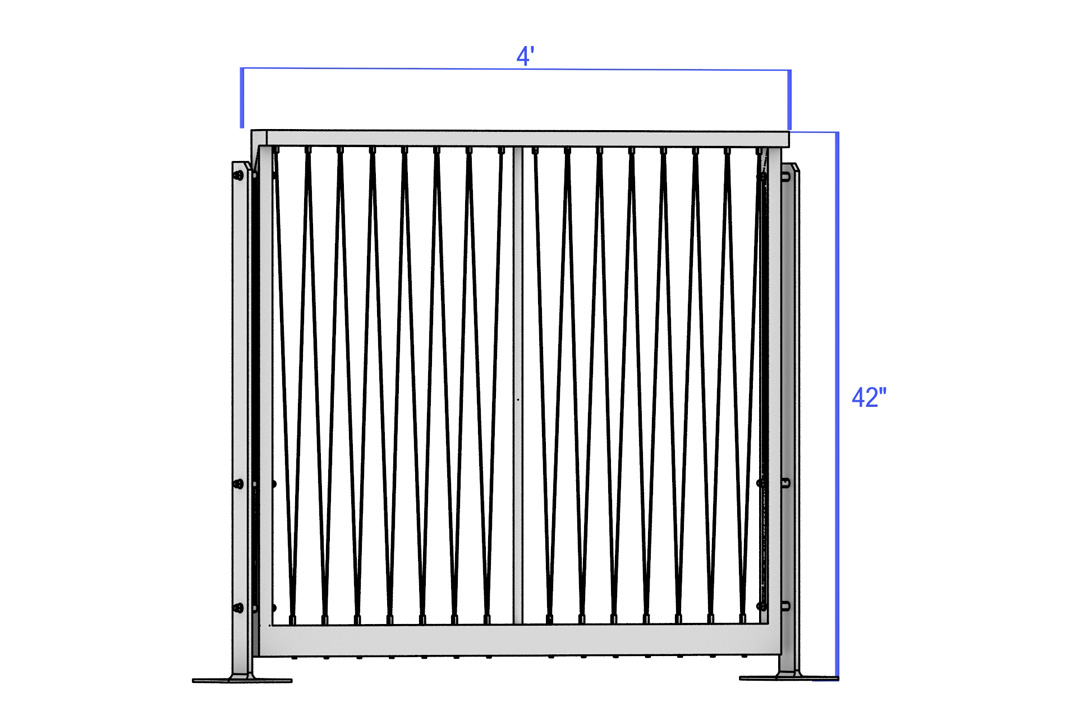
- Standard 4′ x 42″ spacing
No welding. No specialized tools. No complicated procedures. Just clean, mechanical assembly that your general contractor can handle. Standard modular frames mean predictable project timelines and no manufacturing delays waiting for custom fabrication.
This simplified installation approach works for both deck railing and balcony railing applications—from single-family residences to multi-story commercial buildings.
Design Flexibility Without Complexity
Choose vertical cables or diamond mesh based on your aesthetic vision—both systems use identical mounting hardware and installation procedures. Both deliver the same code compliance and structural performance. This modular approach to cable railing systems means you can specify different infill options across the same project while maintaining installation consistency.
Need curves? Precision-engineered connectors enable smooth curved transitions for balcony railing wrapping building corners.
Long runs? Continuous installation maintains visual flow across extended deck railing sections.
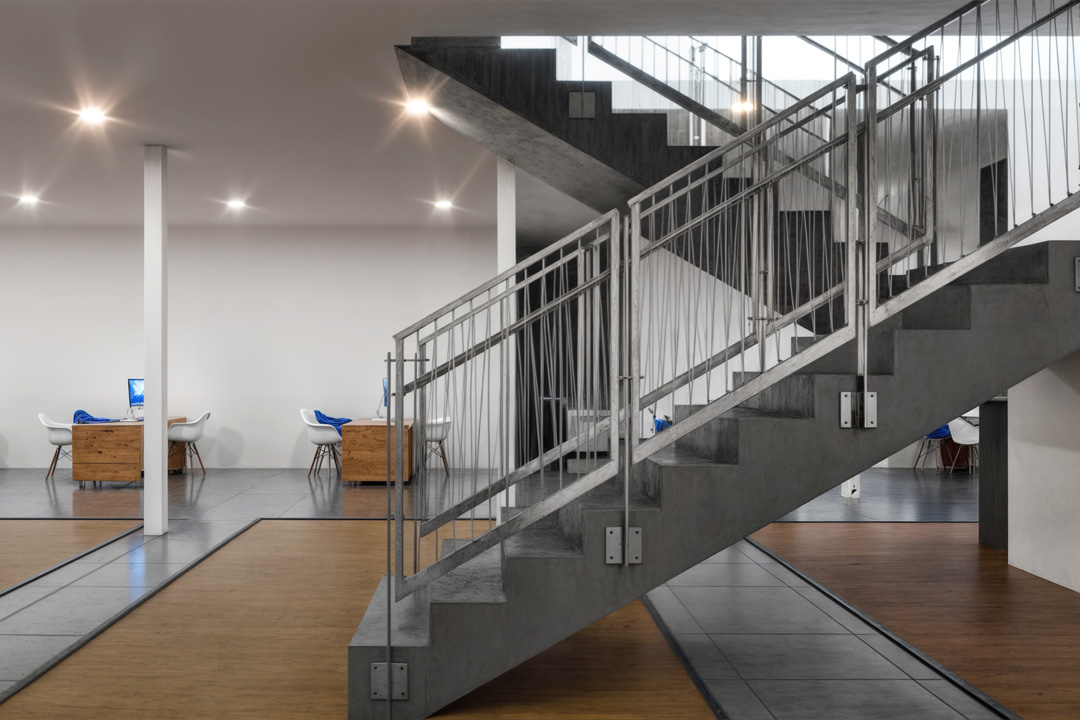
Stairs? The modular system adapts to stair angles while maintaining consistent appearance and meeting stair railing code requirements.
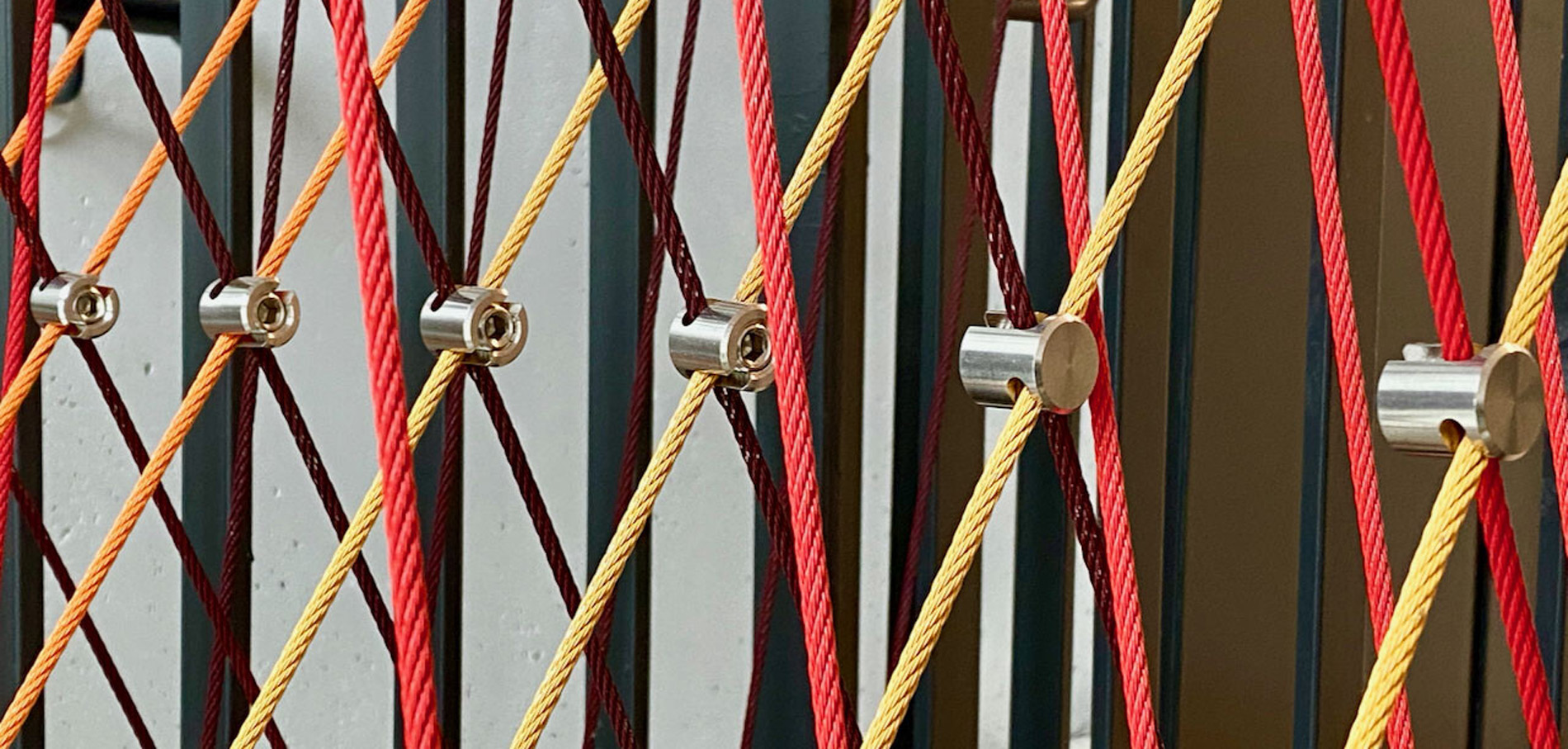
Optional RAL Classic color palette coating available for projects requiring specific color matching beyond standard stainless steel or black finishes.
Applications: From Residential Decks to Commercial Installations
Residential Deck Railing
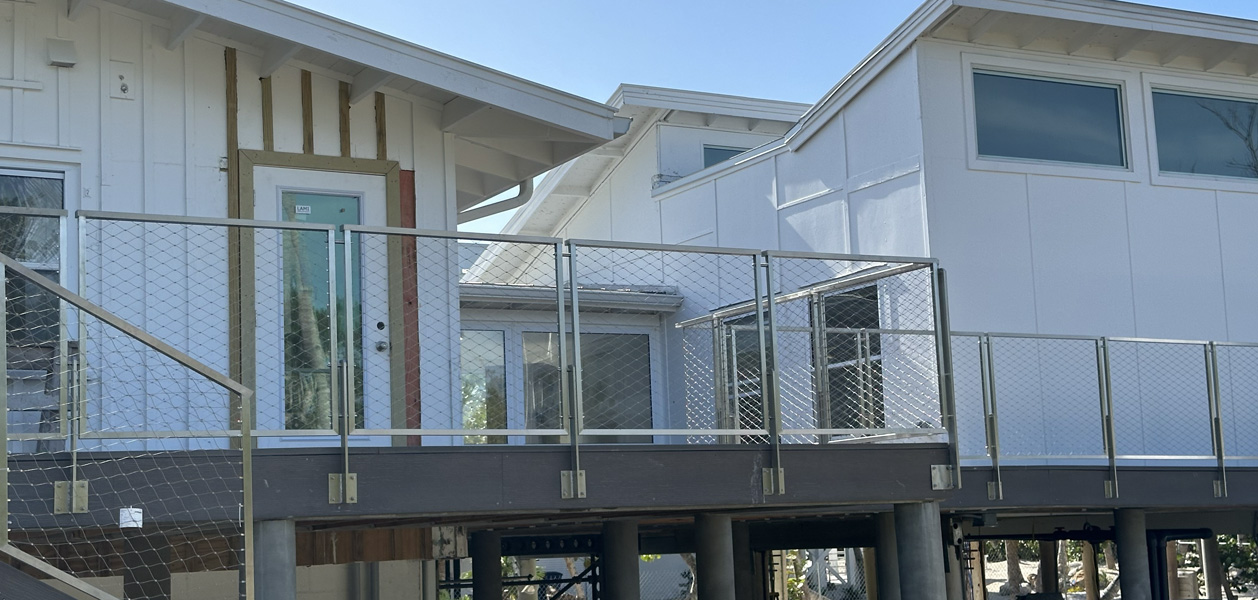
Modern homeowners demand deck railing that doesn’t obstruct views but still protects their families. Jakob’s cable railing systems deliver both, with factory-engineered solutions that homeowners and contractors can install with confidence.
Pre-tensioned vertical cables eliminate the tensioning headaches that plague field-assembled wire railing systems. Your deck contractor installs posts, inserts pre-engineered frames, and moves to the next project—no callbacks for sagging cables or failed tension.
Ideal for:
- Ocean-view properties where transparency is paramount
- Mountain homes where landscape views justify premium railing
- Modern suburban decks requiring contemporary aesthetics
- Pool deck perimeters combining safety with open sightlines
Balcony Railing Solutions
Multi-story residential and commercial buildings require balcony railing that meets stringent load requirements while maintaining the architectural aesthetic. Jakob’s modular systems scale from single balconies to entire building facades.
Ideal for:
- Multi-family residential buildings
- Condominiums requiring consistent railing aesthetics
- Mixed-use developments balancing commercial and residential needs
- Lakefront or waterfront properties where views are premium amenities
Commercial Railing & Architectural Projects
Commercial projects demand railing systems that perform under heavy use while meeting accessibility codes. Jakob’s AISI 316 stainless steel construction handles commercial traffic while maintaining appearance over decades.
Ideal for:
- Corporate headquarters with signature architectural elements
- Hotels requiring durable yet elegant staircase and balcony solutions
- Public buildings where accessibility and safety are critical
- Waterfront plazas and public spaces requiring marine-grade durability
Stair Railing Systems
Staircases present unique railing challenges—changing angles, height transitions, and high-traffic wear patterns. Jakob’s modular approach adapts to stair configurations while maintaining the visual consistency of your horizontal railing sections.
Both vertical cable and Webnet configurations work for stair railing applications, with the system’s flexibility allowing designers to maintain consistent aesthetics from deck to staircase to balcony.
Ideal for:
- Interior commercial staircases requiring transparent barriers
- Exterior residential stairs connecting multiple deck levels
- Public stairways in parks and institutional settings
- Industrial stairs requiring OSHA-compliant fall protection
Cable Railing Installation: Two Steps, Zero Welding
Here’s where Jakob separates from custom fabrication: our two-step railing installation process.
Step 1: Set your posts
- Fascia mount (direct to structural edges)
- Top mount (anchor to horizontal deck surfaces)
- Core drill (strongest connection for high-load applications)
Step 2: Insert the modular frames
- Precision-engineered connections
- Mechanical fasteners only
- Standard 4′ x 42″ spacing
No welding. No specialized tools. No complicated procedures. Just clean, mechanical assembly that your general contractor can handle. Standard modular frames mean predictable project timelines and no manufacturing delays waiting for custom fabrication.
This simplified installation approach works for both deck railing and balcony railing applications—from single-family residences to multi-story commercial buildings.
Design Flexibility Without Complexity
Choose vertical cables or diamond mesh based on your aesthetic vision—both systems use identical mounting hardware and installation procedures. Both deliver the same code compliance and structural performance. This modular approach to cable railing systems means you can specify different infill options across the same project while maintaining installation consistency.
Need curves? Precision-engineered connectors enable smooth curved transitions for balcony railing wrapping building corners.
Long runs? Continuous installation maintains visual flow across extended deck railing sections.
Stairs? The modular system adapts to stair angles while maintaining consistent appearance and meeting stair railing code requirements.
Optional RAL Classic color palette coating available for projects requiring specific color matching beyond standard stainless steel or black finishes.
Applications: From Residential Decks to Commercial Installations
Residential Deck Railing
Modern homeowners demand deck railing that doesn’t obstruct views but still protects their families. Jakob’s cable railing systems deliver both, with factory-engineered solutions that homeowners and contractors can install with confidence.
Pre-tensioned vertical cables eliminate the tensioning headaches that plague field-assembled wire railing systems. Your deck contractor installs posts, inserts pre-engineered frames, and moves to the next project—no callbacks for sagging cables or failed tension.
Ideal for:
- Ocean-view properties where transparency is paramount
- Mountain homes where landscape views justify premium railing
- Modern suburban decks requiring contemporary aesthetics
- Pool deck perimeters combining safety with open sightlines
Balcony Railing Solutions
Multi-story residential and commercial buildings require balcony railing that meets stringent load requirements while maintaining the architectural aesthetic. Jakob’s modular systems scale from single balconies to entire building facades.
Ideal for:
- Multi-family residential buildings
- Condominiums requiring consistent railing aesthetics
- Mixed-use developments balancing commercial and residential needs
- Lakefront or waterfront properties where views are premium amenities
Commercial Railing & Architectural Projects
Commercial projects demand railing systems that perform under heavy use while meeting accessibility codes. Jakob’s AISI 316 stainless steel construction handles commercial traffic while maintaining appearance over decades.
Ideal for:
- Corporate headquarters with signature architectural elements
- Hotels requiring durable yet elegant staircase and balcony solutions
- Public buildings where accessibility and safety are critical
- Waterfront plazas and public spaces requiring marine-grade durability
Stair Railing Systems
Staircases present unique railing challenges—changing angles, height transitions, and high-traffic wear patterns. Jakob’s modular approach adapts to stair configurations while maintaining the visual consistency of your horizontal railing sections.
Both vertical cable and Webnet configurations work for stair railing applications, with the system’s flexibility allowing designers to maintain consistent aesthetics from deck to staircase to balcony.
Ideal for:
- Interior commercial staircases requiring transparent barriers
- Exterior residential stairs connecting multiple deck levels
- Public stairways in parks and institutional settings
- Industrial stairs requiring OSHA-compliant fall protection

420 Carroll Street, Brooklyn: Waterfront Plaza Excellence
This landmark $300 million development in Brooklyn’s Gowanus neighborhood represents the first completed building from the historic 2021 Gowanus Neighborhood Rezoning. As the flagship project transforming 82 blocks of former industrial land, every element needed to set the standard for future development.
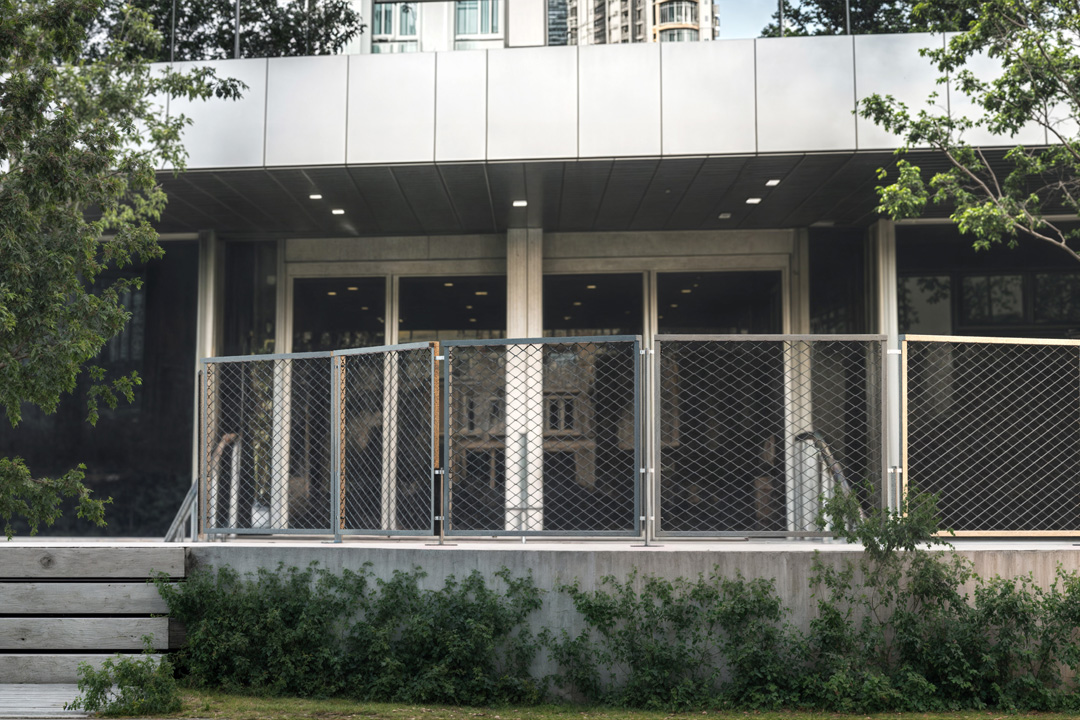
Jakob’s Webnet Modular Railing System delivered 400 linear feet of AISI 316 marine-grade stainless steel railing along the waterfront plaza, providing safe, code-compliant protection while maintaining unobstructed views of the revitalized Gowanus Canal. The modular system’s adaptability proved crucial when site conditions revealed significant grade variations—custom engineering solutions using both fascia mount and top mount configurations ensured perfect integration with the waterfront’s varied structural conditions.
The installation demonstrated how modular systems work for complex urban waterfront developments where marine environments demand corrosion-resistant materials and irregular topography requires flexible mounting solutions.
Project Details:
- 400 linear feet of Webnet mesh railing
- AISI 316 marine-grade stainless steel construction
- Dual mounting configurations for varied terrain
- 42″ primary height with 36″ secondary handrail
- Zero defects—not a single component missing or non-functional
Read the complete 420 Carroll Street case study →
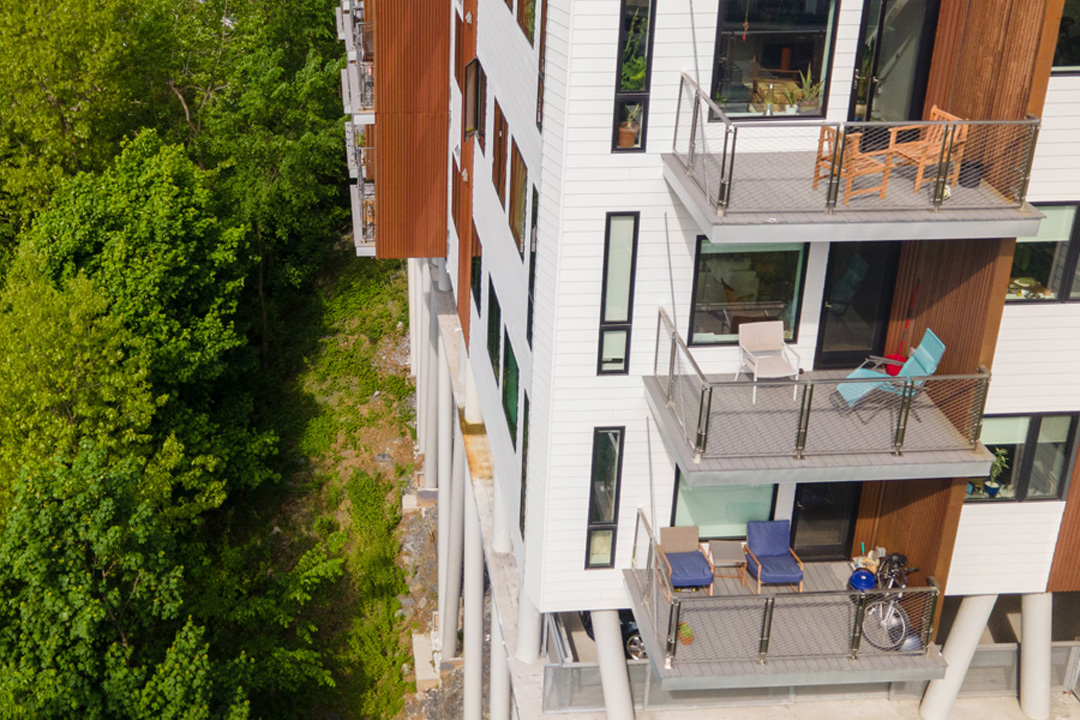
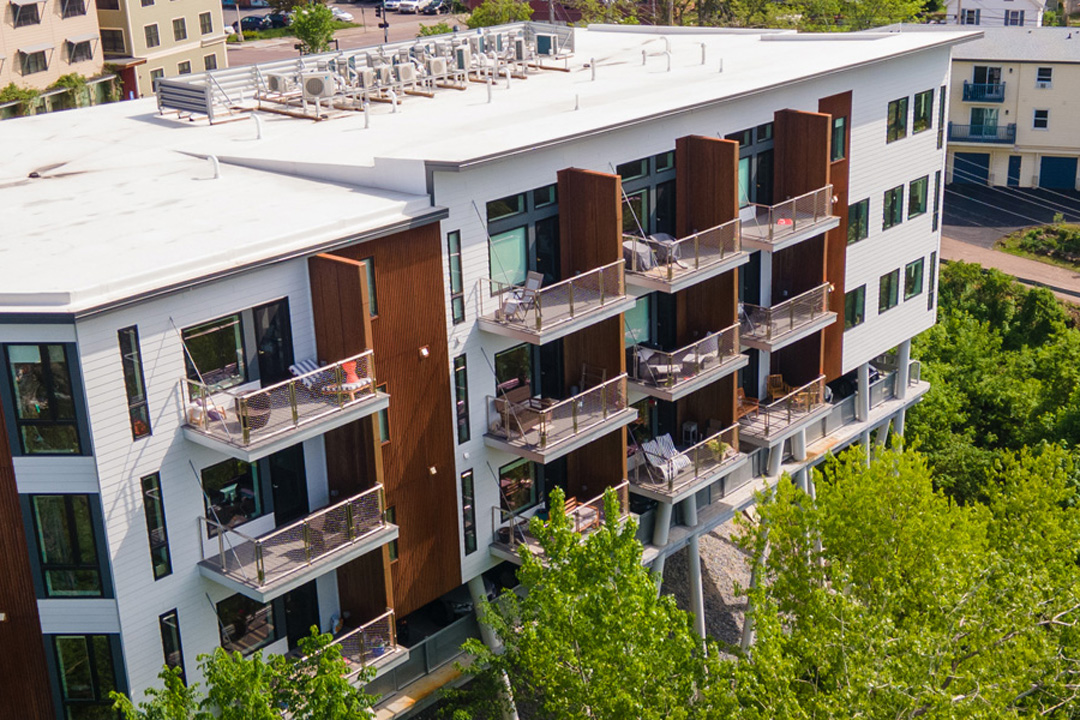
One Lakeview, Vermont: Residential Transparency with Natural Views
Located on the shores of Lake Champlain in Burlington, Vermont, One Lakeview is a modern apartment complex offering residents breathtaking views of the lake with the Adirondack Mountains as a backdrop. The red sunsets reflected in the lake can be enjoyed from apartment balconies with nothing obstructing the immensity of nature.
Jakob’s Webnet Modular Railing System was chosen to highlight the balconies without interrupting views of the lake or obscuring the facade. The system’s transparency, ease of installation, minimalist design, and scalability made it the ideal solution for this multi-family residential development where preserving natural views was paramount.
The project demonstrates how modular cable railing systems can be specified for multi-story residential applications where balcony railing must secure residents without compromising the visual connection to natural landscapes that justify premium lakefront real estate.
Project Details:
- Multi-story residential balcony installation
- Webnet mesh for maximum transparency
- Modular system scaled across multiple residential units
- Minimal maintenance requirements for property management
- View preservation as primary design driver
System Specifications: Engineering Details
Both Systems Feature:
- International code compliance (IBC, IRC)
- AISI 316 marine-grade stainless steel construction
- Factory pre-tensioning (vertical cable system)
- Factory pre-assembly (Webnet system)
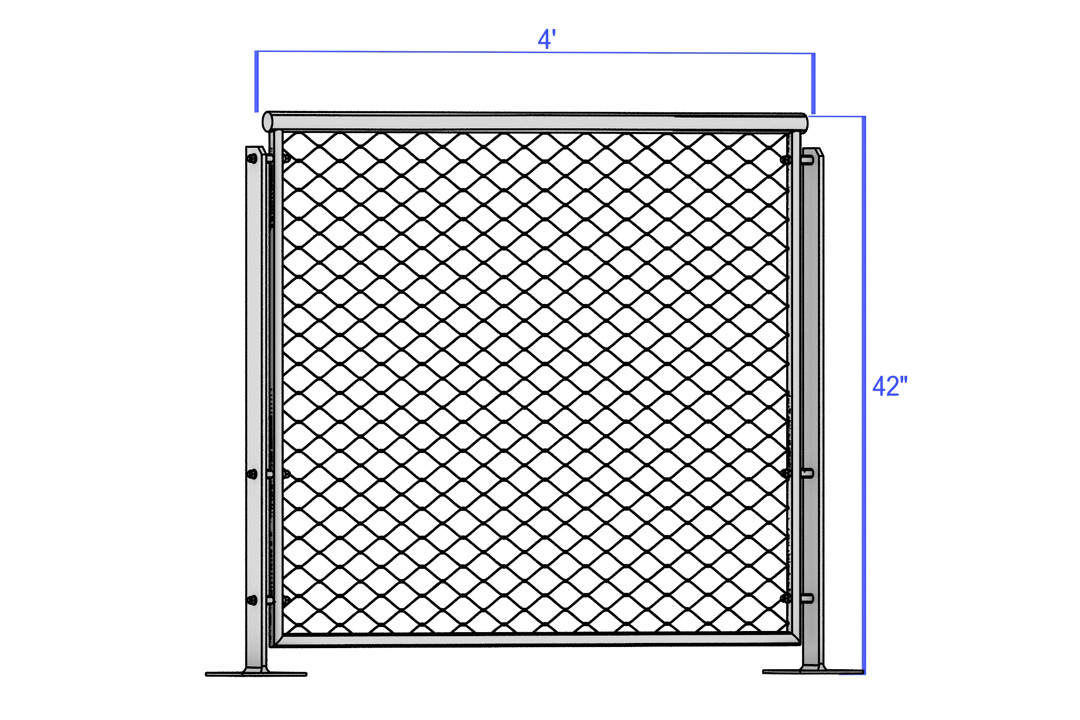
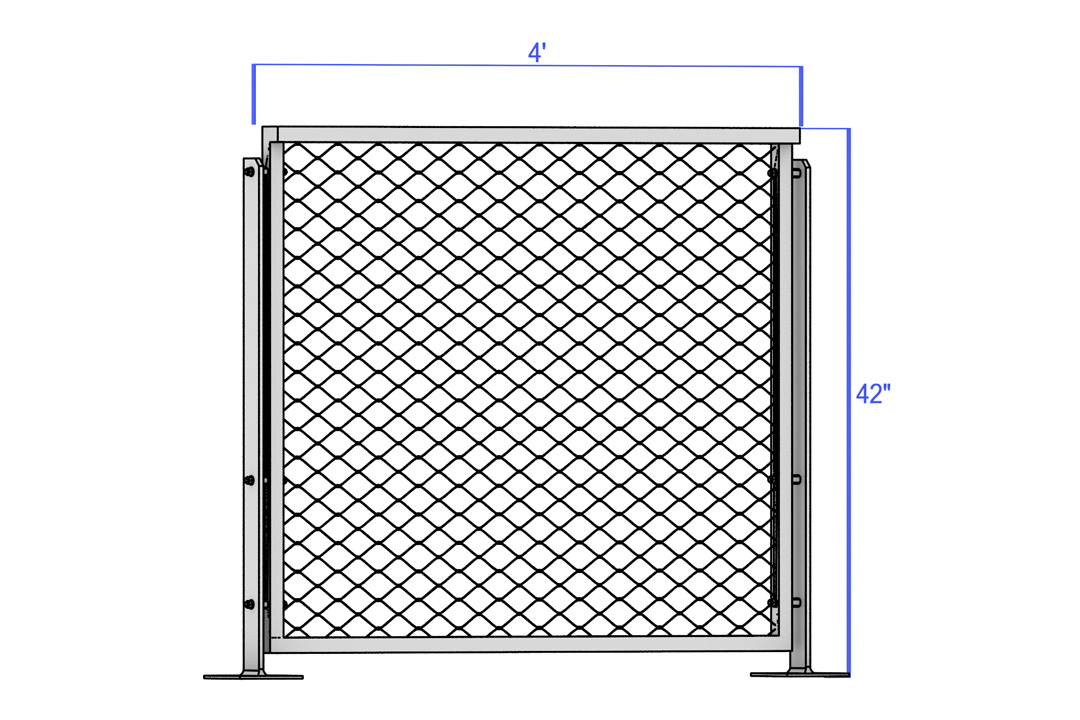
- Standard 4′ x 42″ modular frames
- Three post mounting methods: fascia, top mount, core drill
- Optional powder coating in RAL Classic colors
Vertical Cable Specifications:
- Cable diameter: 3mm (1/8″)
- Material: 7×19 stainless steel construction
- Typical spacing: 3″ on center (code-compliant)
- Load rating: Meets IBC load requirements for guardrails
Webnet Mesh Specifications:
- Rope diameter: 1.5mm
- Construction: 6×7 + wire core
- Mesh opening: 60mm (2⅜”) diamond pattern
- Mesh height: 100mm (4″)
- Load rating: Meets IBC load requirements for guardrails
Complete System Integration: Handrails & Hardware
Single or double handrail systems integrate seamlessly with all frame types, meeting ADA accessibility requirements while maintaining visual consistency. All mounting hardware designed for mechanical assembly—no welding required.
Handrail options:
- Single top rail for standard applications
- Double rail (top and mid-rail) for enhanced code compliance
- Stainless steel or powder-coated finishes matching frame selection
Mounting hardware:
- Fascia mount brackets for face-mounting to concrete or structural elements
- Top mount base plates for surface mounting to deck joists
- Core drill posts for embedded installation in concrete
- All hardware AISI 316 stainless steel construction
System Specifications: Engineering Details
Both Systems Feature:
- International code compliance (IBC, IRC)
- AISI 316 marine-grade stainless steel construction
- Factory pre-tensioning (vertical cable system)
- Factory pre-assembly (Webnet system)
- Standard 4′ x 42″ modular frames
- Three post mounting methods: fascia, top mount, core drill
- Optional powder coating in RAL Classic colors
Vertical Cable Specifications:
- Cable diameter: 3mm (1/8″)
- Material: 7×19 stainless steel construction
- Typical spacing: 3″ on center (code-compliant)
- Load rating: Meets IBC load requirements for guardrails
Webnet Mesh Specifications:
- Rope diameter: 1.5mm
- Construction: 6×7 + wire core
- Mesh opening: 60mm (2⅜”) diamond pattern
- Mesh height: 100mm (4″)
- Load rating: Meets IBC load requirements for guardrails
Complete System Integration: Handrails & Hardware
Single or double handrail systems integrate seamlessly with all frame types, meeting ADA accessibility requirements while maintaining visual consistency. All mounting hardware designed for mechanical assembly—no welding required.
Handrail options:
- Single top rail for standard applications
- Double rail (top and mid-rail) for enhanced code compliance
- Stainless steel or powder-coated finishes matching frame selection
Mounting hardware:
- Fascia mount brackets for face-mounting to concrete or structural elements
- Top mount base plates for surface mounting to deck joists
- Core drill posts for embedded installation in concrete
- All hardware AISI 316 stainless steel construction
Frequently Asked Questions: Cable Railing Systems
What is the best railing for a deck?
Cable railing systems offer superior views compared to traditional wood or metal picket railings while meeting all building codes. Jakob’s pre-engineered modular frames eliminate the installation challenges associated with field-tensioned cable systems.
How do you install cable railing?
Jakob’s modular system simplifies installation to two steps: (1) Install posts using your preferred mounting method, (2) Insert pre-engineered frames using mechanical connectors. No welding, no field tensioning, no specialized tools required.
Is cable railing code compliant?
Yes. Jakob’s cable railing systems meet IBC (International Building Code) and IRC (International Residential Code) requirements for guardrails when installed according to specifications. Our vertical cable spacing and Webnet mesh openings comply with the 4-inch sphere rule preventing child passage.
What is the difference between vertical cable and Webnet mesh railing?
Vertical cable railing uses parallel 3mm cables creating linear visual lines—ideal for contemporary aesthetics. Webnet mesh railing uses 1.5mm rope in a flexible diamond pattern—ideal for curved applications and traditional aesthetics. Both offer equivalent safety and code compliance.
Can cable railing be installed on stairs?
Yes. Both Jakob systems adapt to stair angles. The modular frames can be configured for stair applications while maintaining code-compliant spacing/openings throughout the angle transition.
What is AISI 316 stainless steel and why does it matter?
AISI 316 is marine-grade stainless steel with superior corrosion resistance compared to standard 304 grade. Critical for coastal installations, it also provides longer service life in any environment—especially important for permanent architectural railings.
How much does cable railing cost compared to traditional railings?
While initial material cost may be higher than wood or aluminum, cable railing systems offer lower lifetime cost through durability and minimal maintenance. Jakob’s modular approach also reduces installation labor compared to field-assembled cable systems.
What is the best railing for a deck?
Cable railing systems offer superior views compared to traditional wood or metal picket railings while meeting all building codes. Jakob’s pre-engineered modular frames eliminate the installation challenges associated with field-tensioned cable systems.
How do you install cable railing?
Jakob’s modular system simplifies installation to two steps: (1) Install posts using your preferred mounting method, (2) Insert pre-engineered frames using mechanical connectors. No welding, no field tensioning, no specialized tools required.
Is cable railing code compliant?
Yes. Jakob’s cable railing systems meet IBC (International Building Code) and IRC (International Residential Code) requirements for guardrails when installed according to specifications. Our vertical cable spacing and Webnet mesh openings comply with the 4-inch sphere rule preventing child passage.
What is the difference between vertical cable and Webnet mesh railing?
Vertical cable railing uses parallel 3mm cables creating linear visual lines—ideal for contemporary aesthetics. Webnet mesh railing uses 1.5mm rope in a flexible diamond pattern—ideal for curved applications and traditional aesthetics. Both offer equivalent safety and code compliance.
Can cable railing be installed on stairs?
Yes. Both Jakob systems adapt to stair angles. The modular frames can be configured for stair applications while maintaining code-compliant spacing/openings throughout the angle transition.
What is AISI 316 stainless steel and why does it matter?
AISI 316 is marine-grade stainless steel with superior corrosion resistance compared to standard 304 grade. Critical for coastal installations, it also provides longer service life in any environment—especially important for permanent architectural railings.
How much does cable railing cost compared to traditional railings?
While initial material cost may be higher than wood or aluminum, cable railing systems offer lower lifetime cost through durability and minimal maintenance. Jakob’s modular approach also reduces installation labor compared to field-assembled cable systems.