Animal Enclosures
More space, fewer animals — this is the guiding principle behind species-appropriate habitat design. The central challenge is balancing two needs at once: the human desire to observe animals up close, and the animal’s need for an environment suited to its natural behavior.
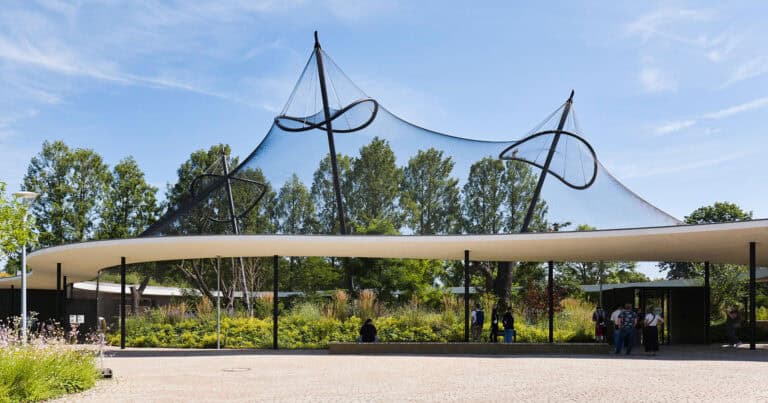
Webnet, Jakob Rope Systems’ robust wire rope mesh, makes it possible to build the kind of delicate, individualized enclosures that satisfy both. The goal is an environment that feels natural to the animal and engaging to the visitor: a solution with a long service life, that all but disappears visually, yet remains fully robust.
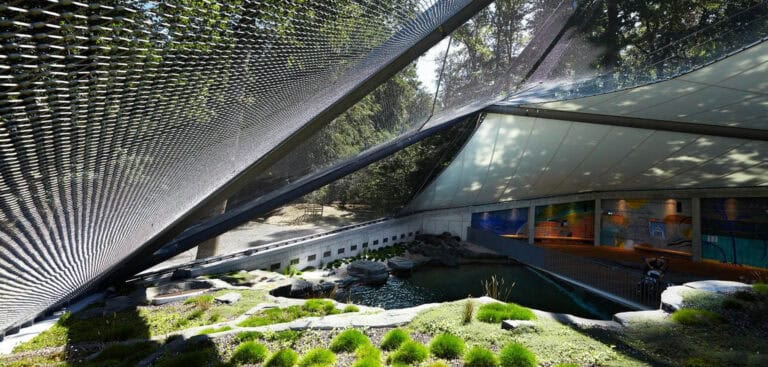
Jakob Rope Systems supplies both the materials and the engineering know-how behind functional, architecturally refined animal enclosures. Because the mesh is woven from flexible wire rope, it enables space-saving designs with a high degree of transparency and visual openness — while guaranteeing safety for both animals and visitors, at a low long-term maintenance cost.
Limitless Enclosures
For architects designing a new animal habitat, Webnet offers virtually limitless scope. The mesh can be shaped into landscaped enclosures of almost any size, form or complexity — giving zoos and aquariums the freedom to design for the animal first, without being constrained by a rigid cage structure.
Aviaries Built for Flight
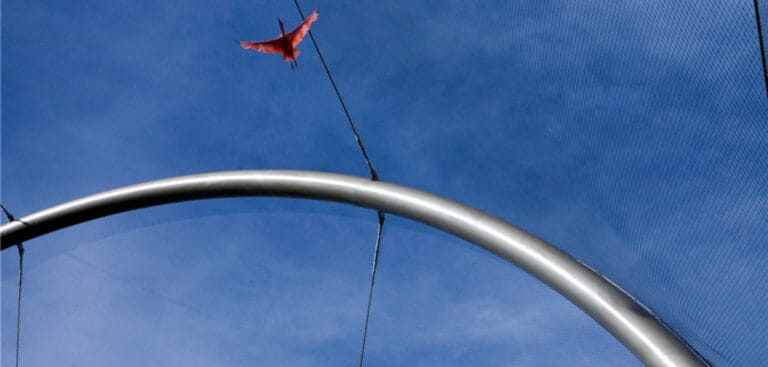
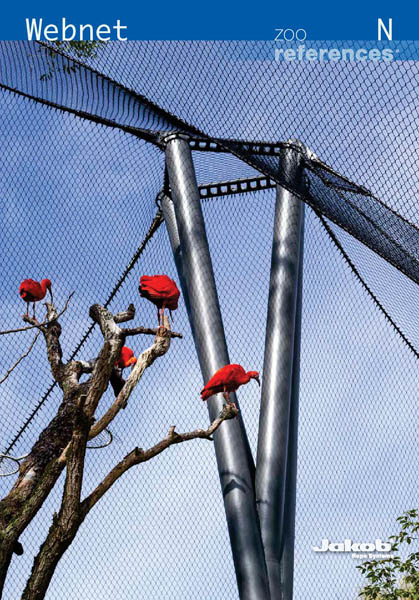
Woven from weather-resistant stainless steel rope, Webnet replaces traditional wire cages with a light, transparent structure that remains fully secure. Its low weight and minimal visual footprint make it possible to build aviaries large enough for birds to fly freely — while keeping the experience open and unobstructed for visitors.
Turnkey Solutions
Jakob Rope Systems delivers complete turnkey solutions, or supports individual project phases — consulting, planning, engineering and assembly. Every enclosure is designed individually, drawing on decades of experience with animal habitats built around the world.
A Global Commitment to Animal Welfare
Jakob Rope Systems works closely with zoo experts worldwide to better understand animal needs and habitat design. As a member of WAZA (World Association of Zoos and Aquariums), the European Association of Zoos and Aquaria (EAZA), and the German-speaking countries’ zoo association (VdZ), we support research that leads to safer, more naturalistic enclosures for animals and the public alike.